
Understanding Home Elevators: Costs and Functionality for Accessibility
Explore the essential aspects of home elevators for accessibility, including costs, models, and financial assistance options, to improve mobility and property value.
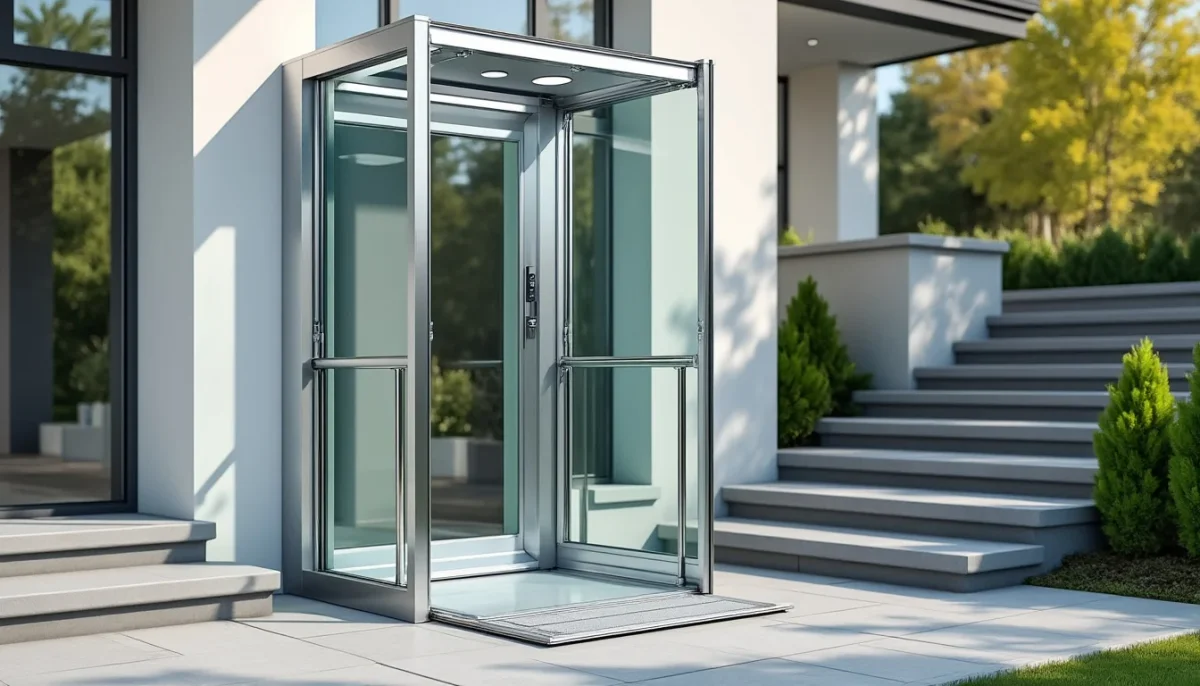
Making a home accessible when mobility becomes a challenge is no longer a concern limited to large infrastructures. Elevators are now making their way into private residences, providing individuals with reduced mobility a genuine sense of autonomy, all while maintaining aesthetics and safety. When considering the installation of such a device, it's crucial to engage in a structured thought process that encompasses model selection, understanding operational mechanisms, and budgeting. The market currently offers solutions tailored to various architectural configurations, ranging from small steps to complete floor elevations. Demand is on the rise, with INSEE data indicating a 25% increase in homes equipped with accessibility solutions between 2020 and 2023. This trend reflects both a collective awareness and regulatory evolution. Gaining insight into mechanisms, actual costs, and available assistance can lead to well-informed decisions without getting lost in a daunting technical catalog.
- In Brief
- The price of a home elevator ranges from €1,500 to €20,000, depending on the model and configuration.
- There are two primary categories: vertical elevators and rail-mounted inclined platforms.
- Installation can increase property value by 10 to 15%.
- Financial assistance is available to facilitate acquisition.
- Three essential criteria guide the choice: available space, frequency of use, and architectural constraints.
- Modern models are quiet, customizable, and comply with ERP standards.
Home Elevator for Reduced Mobility: Understanding Functionality Before Purchase
Before comparing prices or requesting quotes, it is essential to grasp what a home elevator truly entails. This device refers to a motorized piece of equipment that allows a person with reduced mobility to navigate a height difference, whether it involves a few steps or an entire floor, without needing to leave their wheelchair or perform a physical transfer.
The market distinguishes between two main types. The vertical elevator operates perpendicularly to the ground, moving between two defined levels. It is typically installed in a dedicated shaft or along a wall and is ideal for elevations exceeding one meter. In contrast, the rail-mounted inclined platform follows the slope of an existing staircase via a motorized rail fixed to the structure. This second option is often more cost-effective to install, as it adapts to the existing staircase without major construction work.
The operation is based on an electric motor, usually powered by the home’s electrical system, with a built-in backup battery to ensure functionality even during a power outage. Control can be managed through a fixed panel or a portable remote, depending on the model chosen.
Key Components of a Residential Elevator
Such equipment consists of several technical elements that should be identified before installation. The support structure, typically made of aluminum or treated steel, forms the skeleton of the device, determining its resistance and longevity.
The platform itself, where the user stands, usually incorporates foldable guardrails, an anti-fall system, and obstacle sensors. These safety features are now standardized and comply with current European requirements.
The motorization system deserves special attention. A properly sized motor ensures a smooth ascent without jolts, even at maximum load. Recent models operate at sound levels below 50 decibels, comparable to a normal conversation, enhancing daily comfort.
Cost of a Home Elevator for Reduced Mobility: What the Budget Really Covers
The price of a home elevator varies widely, ranging from €1,500 to over €20,000 based on the type of device, the height to be navigated, selected options, and installation complexity. This broad range can be surprising, but it reflects the diverse configurations encountered in real-world scenarios.
For a rail-mounted inclined platform designed to run alongside an interior staircase of about ten steps, the budget typically falls between €6,000 and €15,000. This type of equipment is often the first option considered, as it avoids the need for a dedicated shaft. In contrast, the entry-level cost for a vertical platform starts around €8,000 but can exceed €18,000 when covering significant heights or requiring specific customization options.
Beyond the cost of the equipment itself, it’s essential to account for often-overlooked ancillary expenses during initial budgeting. Civil engineering work, the creation of a technical shaft, electrical compliance updates, and structural adaptations can significantly impact the overall budget.
Anticipating Expenses During Installation
An experienced professional in the accessibility sector understands that the price listed on a product sheet reflects only part of the financial reality. Here are the main expense categories to consider:
- Equipment Cost: the price of the device itself, varying by model, maximum load, and customization options.
- Installation: labor can account for 20 to 30% of the total cost, depending on site accessibility.
- Preparation Work: structural adaptations, creation of a shaft, and floor reinforcement if necessary.
- Electrical Compliance: installation of a dedicated circuit with appropriate protection.
- Annual Maintenance: a maintenance contract is highly recommended, typically costing between €300 and €600 per year.
- Insurance: some companies require equipment declaration, which may slightly alter premiums.
This comprehensive view helps avoid unpleasant surprises and allows for realistic project budgeting from the outset.
Choosing the Right Model of Elevator Based on Your Home
The variety of models available on the market can quickly overwhelm uninitiated homeowners. However, the selection process becomes much simpler once clear constraints regarding space, expected usage frequency, and the architectural specifics of the home are identified.
Certain models are designed for short distances, under two meters of elevation: they can be installed quickly without major renovations and are ideal for slightly elevated ground-level access or a few entry steps. Other devices cater to multi-level movements, with heights reaching up to 20 meters for the most advanced models.
For instance, consider a townhouse built in the 1970s, featuring a ground floor elevated 80 centimeters above street level and a first floor accessible only via an internal staircase of sixteen steps. In this specific case, two distinct solutions can be considered: a compact vertical platform for external access and a rail-mounted inclined platform for internal circulation.
Maximum Load, Height, and Customization: Decisive Technical Criteria
The maximum load capacity is a fundamental safety criterion. Entry-level models generally support up to 300 kilograms, covering most standard situations, including an electric wheelchair and its user. More robust versions can accommodate up to 500 kilograms, essential in high-usage contexts or for larger equipment.
The maximum lifting height determines installation possibilities within a given building. Current ranges offer heights from 3 meters to 20 meters, suitable for both individual homes and mid-sized apartment buildings.
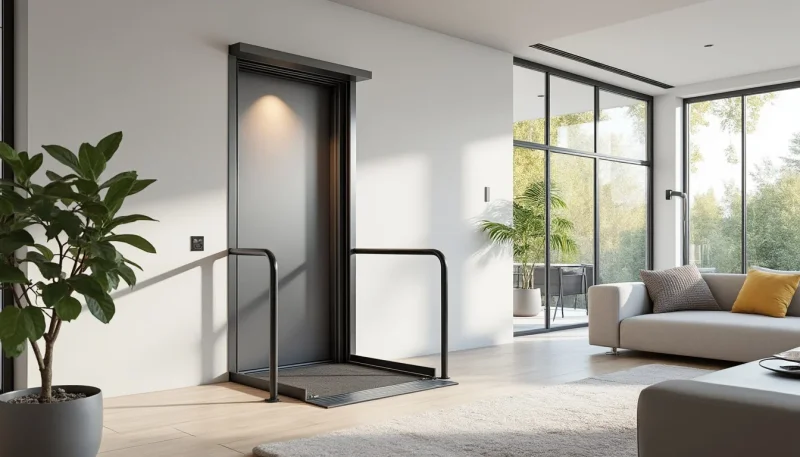
Customization options are significant: structure color, platform covering, control type (wired or remote), and presence of a semi-enclosed cabin for outdoor installations. Each detail contributes to the harmonious integration of the equipment into the existing environment. A well-integrated platform does not stand out; it blends seamlessly into the space.
Financial Assistance and Property Value Enhancement: Often Overlooked Benefits
Investing in a home elevator is frequently viewed as a necessary expense. However, upon closer examination, it can also be a financially strategic decision, provided one is aware of existing assistance programs and the impact on property value.
Several funding sources can be leveraged to significantly reduce out-of-pocket costs. Pension funds, social security agencies, and certain local authorities offer specific grants for modifications related to loss of autonomy. These aids are subject to income conditions and medical criteria but can cover between 30% and 70% of the total cost in the most favorable cases.
Tax incentives complement this framework: the tax credit for housing accessibility allows, under certain conditions, partial recovery of expenses directly from income tax. It is advisable to consult a specialized advisor to identify the applicable rights in each situation.
The Tangible Impact on Property Value
A lesser-known fact is that installing a home elevator can increase property value by 10 to 15%, according to estimates from the real estate sector. This added value arises from the broadened profile of potential buyers, particularly families anticipating needs related to aging or investors targeting adapted rentals.
A property that is accessible without further renovations presents a genuine selling point in a market where the demand for adapted housing far exceeds available supply. This reality transforms what may seem like a constraint into a differentiating asset, whether for resale or rental.
Compliance with ERP standards is another valuation lever, especially for owners of mixed-use properties or small apartment buildings. A building that meets accessibility requirements opens up broader usage possibilities and mitigates the risks of regulatory disputes.