Washing Sneakers in the Washing Machine – No More Yellow Edges
Wondering how to wash your sneakers in the washing machine without ruining them? Discover the safe method to achieve sparkling clean shoes without yellow stains or damaging your washing machine.
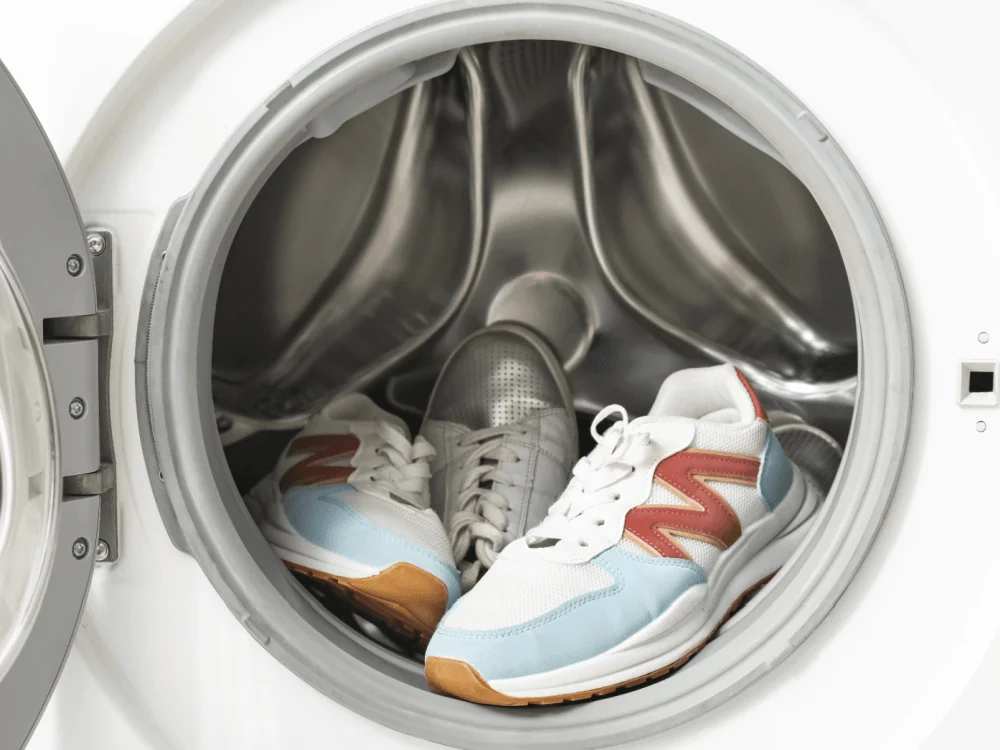
Washing sneakers in the washing machine? Stop! Before you just toss your dirty sneakers into the washing machine, consider this: what you are about to do could not only ruin your favorite shoes forever but also damage your washing machine. Do you know that loud, frightening banging noise? That’s not a normal sound.
Most of us wash our shoes completely wrong. We think, "Oh, it’s just fabric," and make three fatal mistakes that lead to yellow edges, broken cushioning, or a damaged machine.
But there is a safe way to wash your sneakers in the machine. And today, I will show you exactly how to get sparkling clean shoes in 30 minutes – without banging, without yellow stains, and without damaging your machine.
The Chemistry of Yellow Stains
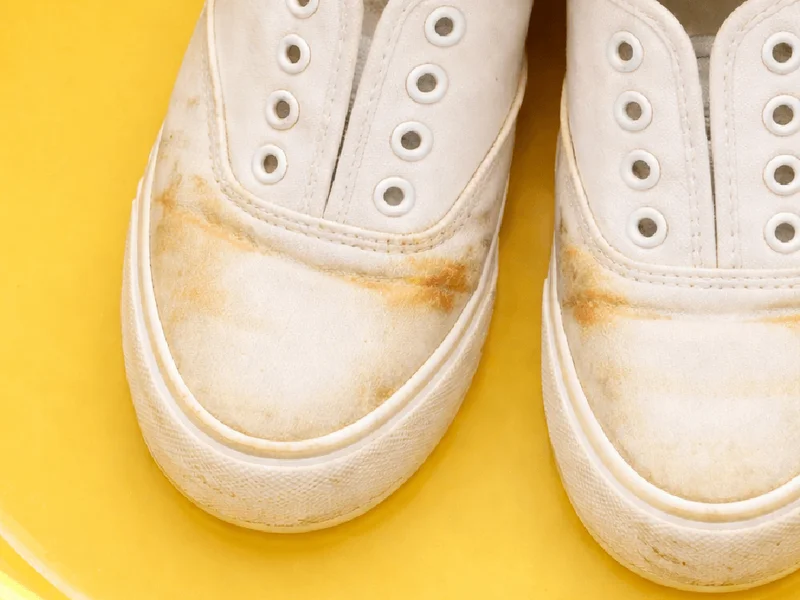
The problem isn’t the shoes. And it’s not the machine either. The problem is the glue. In almost every sneaker, the sole is glued to the upper fabric. And this glue has a crucial property: it reacts to heat and moisture.
Imagine it like an old piece of gum. When it’s cold, it’s hard and stable. But when it gets warm and moist, it becomes soft and sticky. Exactly this happens in your washing machine. As soon as you wash above 30 degrees, at the latest 40 degrees, this sole glue starts to dissolve. It becomes liquid. The drum spins, the water washes through the fibers of the shoe, and the liquid, yellow glue is carried along. It penetrates into the textile fibers.
Then comes the drying process. The water evaporates, but the glue remains. It dries firmly in the fibers and leaves those typical yellow-brown discolorations that are hardly removable. Therefore, the most important rule is: control the temperature. A cold wash cycle at 30 degrees is often the maximum that is safe. Anything beyond that is Russian roulette for your sneakers.
Washing Sneakers in the Washing Machine vs. Hand Washing
So when is the machine even an option for washing sneakers? And when should you steer clear? Shoes made of robust textiles are safe to wash in the machine. This includes canvas, mesh, and most synthetic materials. These fabrics are designed to withstand stress. They are the clear candidates for the machine.
It gets risky with all leather variants. Genuine leather, suede, and even patent leather. The machine destroys the natural fiber structure of the leather, it can become brittle or lose its color. Suede is usually ruined after a machine wash. Shoes with special coatings, water-repellent membranes, or elaborate prints also do not belong in the drum.
Absolute no-gos are shoes with non-textile elements. Wood, cork, or intricate embellishments will definitely break.
How can you be sure? Do the simple thumb test. Does the material feel soft and flexible, like a T-shirt? Then it’s a candidate. Does it feel stiff, leathery, or particularly sensitive? Then hand washing is the better and safer choice.
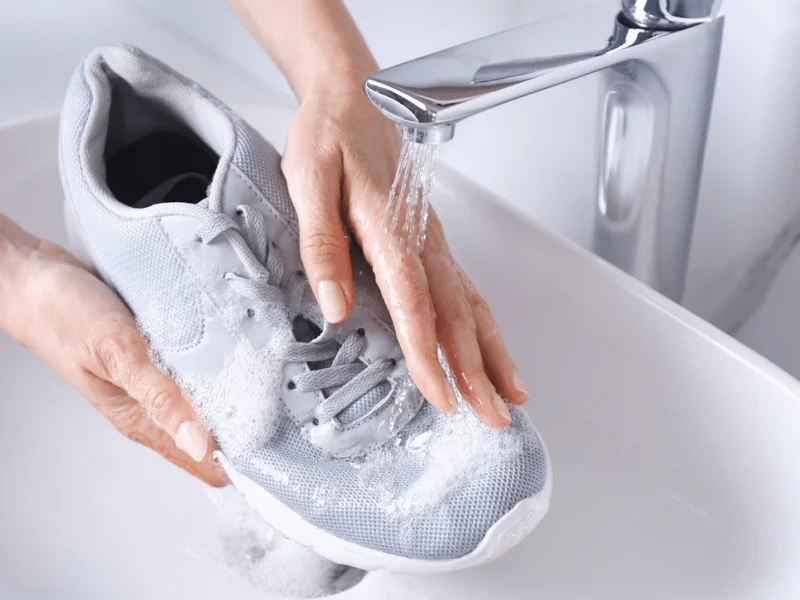
The Ordnungsliebe Washing Protocol for Washing Sneakers in the Washing Machine
If you choose the machine, do it right. Here’s the step-by-step plan that protects your shoes.
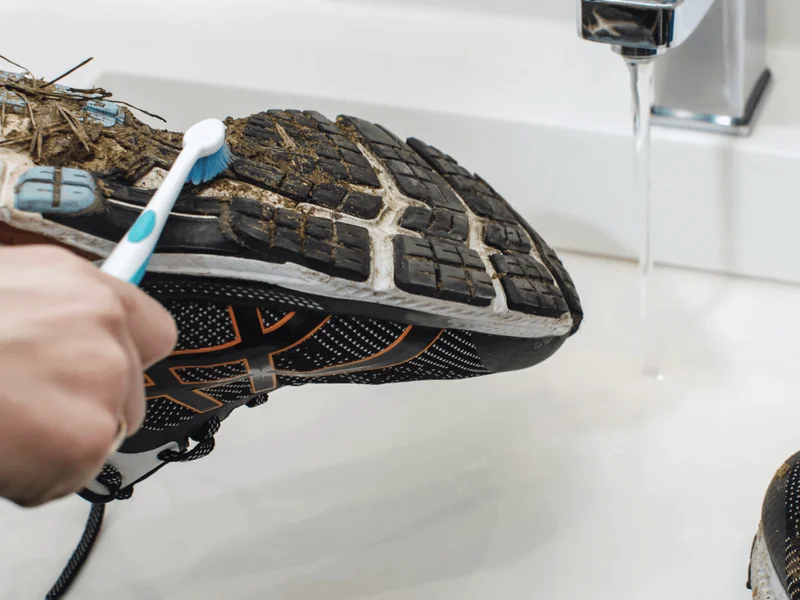
- Step one is preparation. And that’s everything. First, remove the shoelaces. Wash them separately in a laundry bag or even by hand. Remove the insoles. They should also be brushed or rinsed separately. Then take a dry brush and remove coarse dirt, stones, and soil from the sole and upper material.
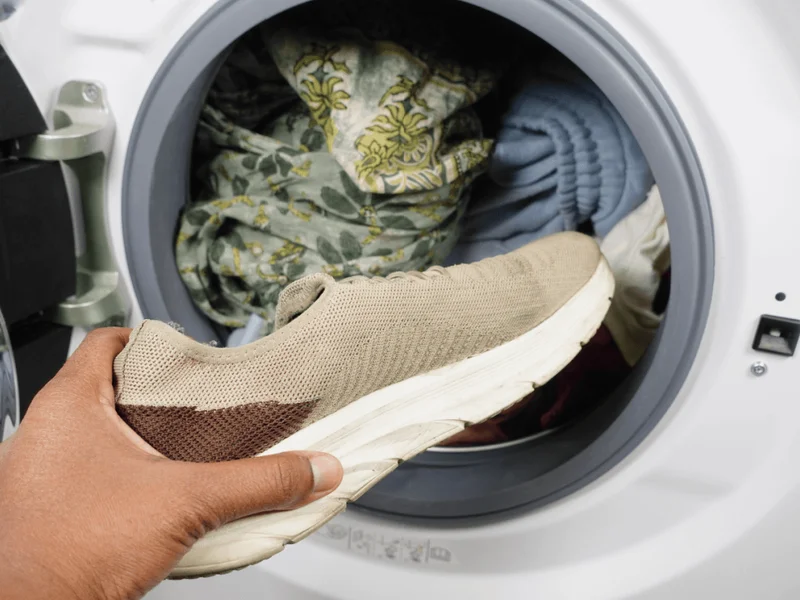
- Now comes the most important trick: the towel trick. Never, ever wash shoes alone in the machine. This banging is not only loud, but it unnecessarily stresses both the machine and the shoes. Take two or three old towels and put them in the washing machine with the shoes. The towels act as shock absorbers. They absorb the impacts and protect both the drum and the shoes from damage. At the same time, they support the washing process by acting like washing balls.
- Choose a short program. A 30-minute program at 30 degrees is completely sufficient. Skip pre-wash and high spin speeds. A gentle spin cycle at 600 revolutions is perfectly adequate, and use only a little detergent. One scoop for delicate laundry is enough. Aggressive stain removers or bleach are taboo; they attack the materials and colors.
The Rescue During Drying
The washing cycle is one thing. The drying process is another, as this is where most second mistakes happen. The biggest mistake of all: placing the shoes on the heater or in direct sunlight.
Why? The extreme heat does exactly what we wanted to avoid in the machine. It reactivates the glue. Now, with the shoes wet and the glue possibly already slightly dissolved, the heat permanently bonds it into the fibers. The yellow edges become fixed. Direct sunlight also fades the colors.
The right method is slow drying. Take the shoes out of the machine immediately after the wash cycle. Gently reshape them back to their original form with your hands. Stuff the inside of the shoes completely with kitchen paper and press it firmly so that it absorbs the moisture from the inside. The kitchen paper acts like a magnet, pulling water out of the fibers. And it also absorbs any yellow glue residues that may still be present before they can settle as edges.
Then place the shoes in a well-ventilated, shaded area. A hallway, a room without direct sunlight. Ideally, let them dry standing freely rather than leaning against a wall, so that air can circulate from all sides.
So it’s not the machine itself. It’s the combination of too much heat and improper drying that makes the glue the enemy. Stick to cold programs, use the towel trick as a shield, and trust in time and kitchen paper for drying instead of heat.
The Video on This
Did you like the post? Then share it on Pinterest!