
Do You Need Motivation or Routines?
You don’t need motivation to maintain order in your home. Discover how to start decluttering and organizing without waiting for that burst of enthusiasm.
In the realm of home organization, the belief that one must feel motivated to maintain order is a common misconception. You don’t need motivation to create a tidy space. In fact, motivation is often overrated when it comes to cleaning, decluttering, and managing household duties. While motivation can be a wonderful ally, waiting for that burst of enthusiasm to tackle your clutter is unlikely to yield results.
And that's perfectly fine; it doesn’t mean there’s anything wrong with you.
The Nature of Motivation
Motivation often stems from enjoyment. When you engage in activities you love, getting started feels much easier. For example, I find great motivation in organizing, which is why I’ve made it my profession. I can easily stay on task when it comes to decluttering, cleaning, and household management.
However, when it comes to exercising? I have absolutely no motivation. In the past, I exercised because my parents encouraged it. During my college years, it was mainly to maintain my figure. Nowadays, I recognize the importance of strength training for my long-term health, but understanding this doesn’t automatically ignite my motivation.
Many people feel similarly about organization. They understand that a tidy home is more pleasant and that an orderly closet can simplify mornings. They recognize that owning less can be liberating, yet this awareness doesn’t always translate into action.
The Brain’s Preference for Completion
Our brains are wired to prefer completed tasks. We crave the feeling of having something done, which provides a small dopamine boost. This isn’t necessarily because the task was enjoyable, but simply because it’s out of the way.

Take running, for instance. The initial moments are often dreadful. Yet once I’m in motion, it becomes easier. While I may never experience the famed runner’s high, I find my rhythm and continue because I’ve already started.
This principle applies to many everyday tasks:
- Brushing teeth
- Grocery shopping
- Cooking
- Taking the child to preschool
- Walking the dog
Do I wake up every morning excited to brush my teeth? No. But I do it anyway because it’s become an automatic habit. Similarly, I don’t find grocery shopping thrilling. However, once I begin collecting items in the supermarket, I don’t just abandon my cart when motivation wanes. I methodically place each item in my cart until the shopping is complete.
This principle can be applied to decluttering as well.
The Real Challenge: The Overwhelming Task
For most people, maintaining order isn’t a pressing necessity. A disorganized closet won’t lead to starvation or embarrassment. It may be frustrating, and you might struggle to find things in the morning, but there’s no immediate pressure like there is when grocery shopping. Additionally, your brain doesn’t see a small task; it sees a massive mountain of clutter.
There’s the overflowing closet, the jammed drawer, the cluttered desk, the box in the basement, the decorative items, and the pantry supplies. Suddenly, the thought of “cleaning up” seems like a project that could take weeks, requiring meticulous planning and numerous boxes. But here’s the truth: you don’t need a magical perfect day. You don’t need a divine spark of organization to motivate you. It would be nice, but it simply doesn’t happen.
The Key Step: Just Start
When I lack motivation, I don’t wait for it to arrive. I just keep going. There have been days, especially during extreme heat, when I’ve had no desire to declutter. Yet, despite the discomfort, I persist simply because I’m already engaged in the task.
You need a starting point. Nothing more. Don’t choose a massive project. Avoid tackling the entire closet, kitchen, or home.
Instead, select a small, manageable, and clearly defined area:
- A drawer
- A box
- Your socks
- Your underwear
- The cutlery drawer
- A single surface
- The contents of a bag
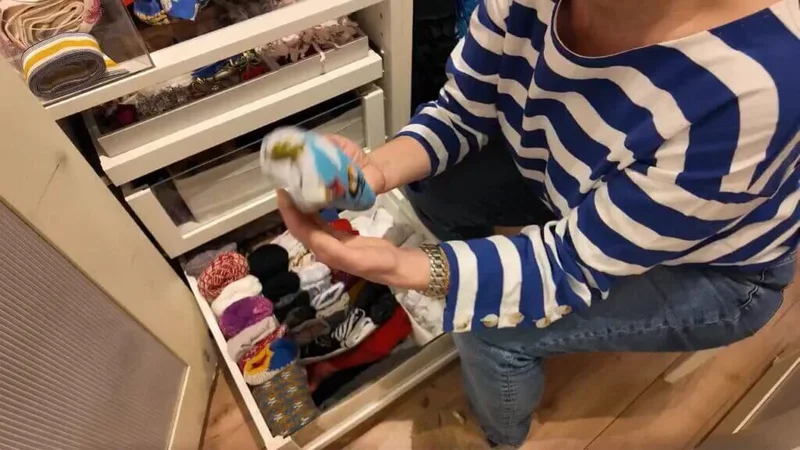
If you want to start with your closet, begin with your socks. Not because socks are the key to a tidy life, but because they’re an achievable task. You’ll have a clear endpoint, see quick results, and your brain can register: “Ah, that was doable.”
The Flow of Decluttering Emerges After You Start
The beauty of beginning with a small task is that it can lead to an underappreciated phenomenon: entering a flow state. You might start by organizing the refrigerator, then think, “I could tackle the cutlery drawer next.” After that, you might sort the pantry, only to realize you have too many jars and decide to donate a few. Before you know it, half your kitchen has been decluttered.
This isn’t about a grand motivation saving you; it’s about the incremental progress. Each completed task reinforces the belief: I can do this. This feeling propels you forward, just like with grocery shopping or running. You take one step at a time or sort one item at a time.
You don’t have to know in advance if you’ll continue after the initial task. What’s essential is to start with a small project.
The 5- to 15-Minute Method to Overcome Decluttering Blocks
If decluttering isn’t enjoyable for you, make the tasks so specific that they can’t become overwhelming monsters.
Instead of saying, “I need to declutter,” write a concrete task in your calendar:
- Spend 15 minutes decluttering the desk drawer
- Test all pens
- Sort out pens that no longer work
- Check scissors that don’t cut anymore
- Spend 5 minutes putting shoes back in the closet
- Spend 10 minutes sorting just one kitchen drawer
If you feel inclined to continue after those 15 minutes, that’s wonderful; you might find yourself in a flow. If not, that’s still a success. You can set aside another five or ten minutes the next day for another small task.

Motivation Is Not a Prerequisite for Order
Daily, we engage in activities that don’t bring us immense joy. We brush our teeth, go shopping, attend appointments, and transport items from one place to another. We do these things because they are part of life. Decluttering can be approached in the same way.
You don’t need to love organizing to maintain a tidy home. You don’t have to celebrate every decluttering session. You don’t need to transform into a minimalist with only 37 possessions, opening every drawer with glee. It’s enough to tell yourself: “This isn’t my favorite task. But I’m going to spend 15 minutes on this one thing.”
Over time, you may even find joy in the process. As you frequently experience the satisfaction of an organized area, your brain learns that starting doesn’t just mean work; it also brings rewarding outcomes. Eventually, motivation may follow, but it doesn’t have to come first.
Routines, Motivation, or Simply Following Through?
There isn’t a one-size-fits-all method. Some people find inspiration through images, podcasts, books, or organizing videos. Others require a solid routine, tidying a little bit each day. Still, others set a task and follow through, even when they lack enthusiasm. All approaches can work. The key is not to wait. Don’t wait for the perfect energy to strike. Don’t wait for that one big decluttering day. And please don’t label yourself as lazy just because order doesn’t ignite a passion in you.
This is a learned behavior, and your brain can relearn it through small tasks, defined timeframes, and numerous mini-successes.
Your Simple Start for Today
If you feel overwhelmed, take a straightforward approach:
- Set a timer for five or 15 minutes.
- Choose one small area.
- Clean or declutter only that area.
- Stop when the timer goes off, or continue if you’re in the groove.
And just like that, you’ve begun. That’s the crucial point.