
The Right Storage Box? Don't Buy One Yet!
Discover why we are drawn to storage boxes and learn the essential steps for effective home organization without falling into the trap of clutter.
Why We Are Tempted by Boxes
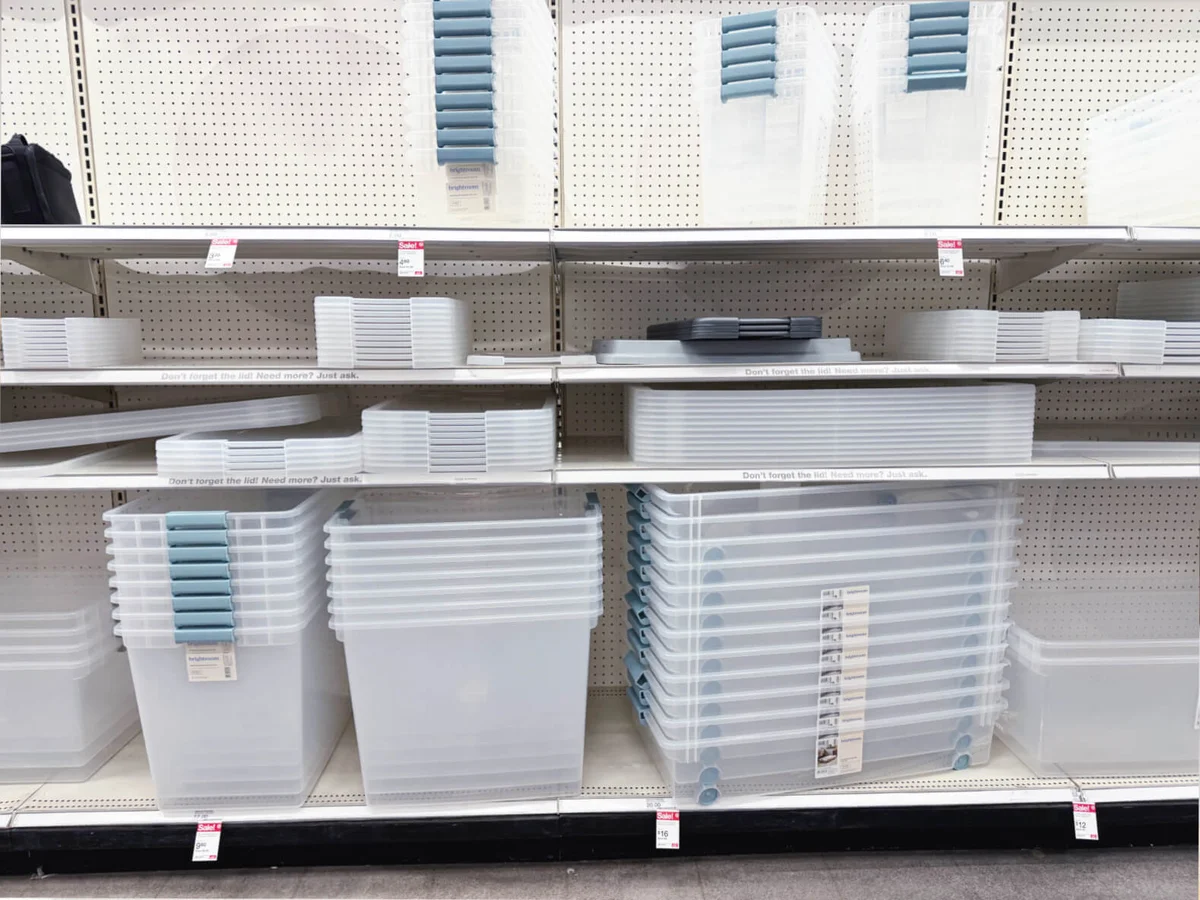
And why do we keep falling for the right storage box? Quite simply: Because it feels so damn good. A new box immediately gives us a sense of control. It promises: Everything will be organized here. Psychologically, it’s much easier to buy something new than to make the really tough decision: What can I actually get rid of?
The Endowment Effect
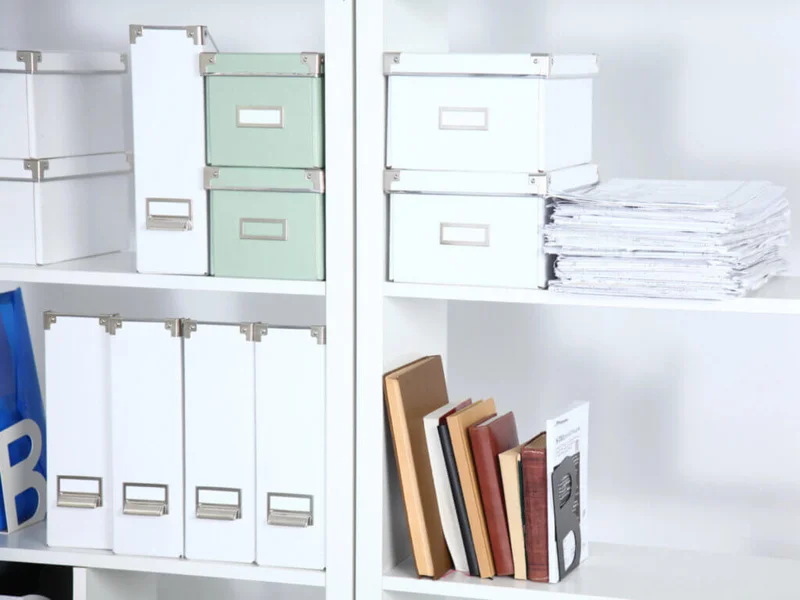
Then comes the endowment effect: As soon as we pack something into such a nice box, we suddenly find it more valuable. The old, crumpled gift ribbon suddenly becomes "craft material" that we might still need.
Boxes are an expensive postponement of the actual work. They are the excuse for why we don’t have to declutter. "I can’t throw anything away; I bought this box for it!" But the overwhelm you feel today comes from the sheer number of decisions you make every day. And boxes stuffed with stuff you don’t need only make that decision fatigue worse. They are not the solution. They are just a band-aid on a wound.
The First Thing: The Trash Bag
And this is where we come to the first and most important thing you need instead: The hard decision of decluttering. This is the step that almost everyone skips because it hurts. Letting go hurts, even with broken items or the fifth paprika powder.
Do you know why you feel overwhelmed? Because your brain is constantly busy with things. Every single item lying around asks your subconscious: "Am I important? Will you need me again?" And that adds up to this huge, unbearable feeling of "I can’t handle all of this." The solution is not to hide these questions in boxes. The solution is to answer the questions. And the answer is no. With "Get rid of it."
Your tool for this step is something you definitely already have at home: a large trash bag. With every item that goes into the bag, your brain becomes more relaxed. And in the end, you not only have less stuff – you have less decision fatigue in your daily life. Tomorrow morning, when you cook, you won’t have to think about which paprika powder to use. There will only be one. The decision has already been made.
The Truth About Fixed Places
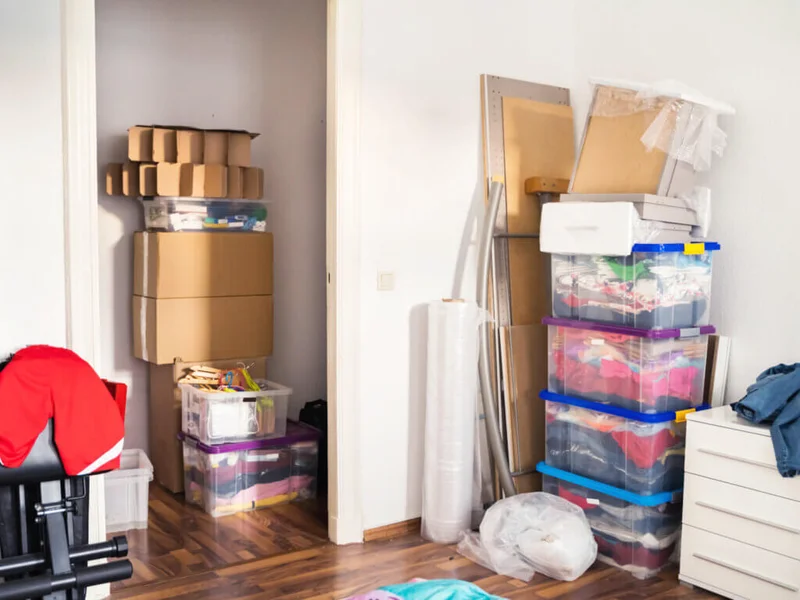
Now we come to the second point, which at first sounds like another box. But it’s not. After decluttering, you have created space. Now it’s about giving that space a clear purpose. The second thing you need is that every item needs a home, a clear address, before it even thinks about getting a box.
Chaos is nothing more than things without a fixed residence. They are homeless. They wander from here to there and create that feeling of disorder, even when everything is clean. A fixed place is like a clear message to your brain: "This is where it lives. And only this."
Your tool for this step is not a purchased organizer. Your tool is what is already there: a shelf compartment. A drawer. A specific corner. That is your "space budget." You need to ask yourself the very simple but radical question: How much space in my kitchen do I actually want to dedicate to spices? Is it this one shelf? Is it the small drawer next to the stove? You decide the budget. You say: "Only this space is available for spices." Period.
And now comes the genius part: The amount of spices you are allowed to keep must fit into this budget. Not the other way around! You do not buy a new box because the spices don’t fit. No, the spices must adapt to the space. When the shelf is full, it’s over. Then you have to make a decision. Which spice is less important? Which can go?
This "space budget" forces you to prioritize. It makes you aware of what you really need and what is just taking up space. And the beautiful thing is: When every item has its home, order almost creates itself.
Every Right Storage Box Needs a "Purpose"
And now the crucial difference that makes a box a solution: a box for a defined purpose. A box for "children’s craft supplies" is a defined purpose. You know what belongs in there. A box that you buy to clear the "stuff" off the countertop is a black box of disorder. That’s where things go for which you didn’t want to make a decision.
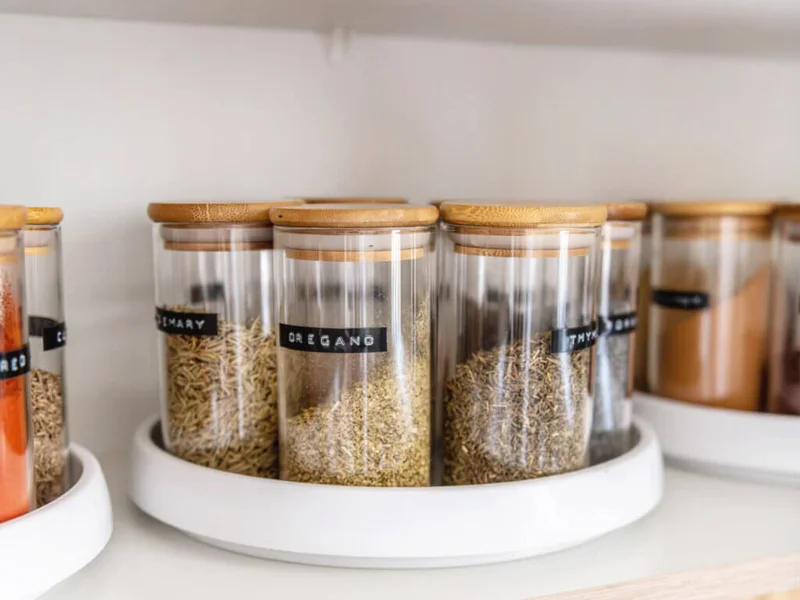
Conscious storage has a clear category. Your spice rack, for example, is the clear category. Here live the spices I use regularly. Everything else has no place here. If you define this fixed place before you buy anything, you prevent chaos before it starts.
The Third Thing: The Radical Buying Stop
And now we come to the third point that ties everything together and breaks the cycle once and for all. You have decluttered, you have defined your fixed place. But what happens if you don’t stop the source of chaos? Then the gap you have painstakingly created will fill up again immediately. The third thing you need is therefore the radical buying stop. You must interrupt the endless influx of new stuff.
Your tool for this step is a simple notebook. Or a checklist on your phone. This may sound unremarkable, but it is your most powerful tool against impulse buying. Before you even think about buying something new – and here comes the one question that changes everything – you must ask yourself: "Where will this thing live?"
This one question forces you to take the fixed place you have defined seriously. Do you want a new, great spice? Great! Show me the free space in your spice rack. Is there one? No? Then it doesn’t fit. Then you have two options: You leave the new spice on the shelf. Or you must declutter an old spice to make room. That is the one-in-one-out rule. It is the absolute minimum to keep your system stable.
And that’s what the notebook is for. You keep a small list of what you already have. "Spices: paprika powder, thyme, oregano, curry…" Before you go to the supermarket, you take a look at it. You see immediately: Ah, I already have paprika powder. I don’t need any. It sounds so trivial, but it prevents you from buying the fifth paprika powder out of sheer habit or ignorance. It interrupts the autopilot that has led you to overwhelm.
And that is more sustainable than any organizer box ever produced. A box consumes resources in its production, costs you money, and ultimately only masks symptoms. A buying stop saves you money, protects the environment at its root, and frees you mentally.
Why the System Breaks Down When One Step is Missing
And now we come to the part about why these three things are so inseparably linked. It’s like a tripod. If one leg is missing, the whole chair tips over.
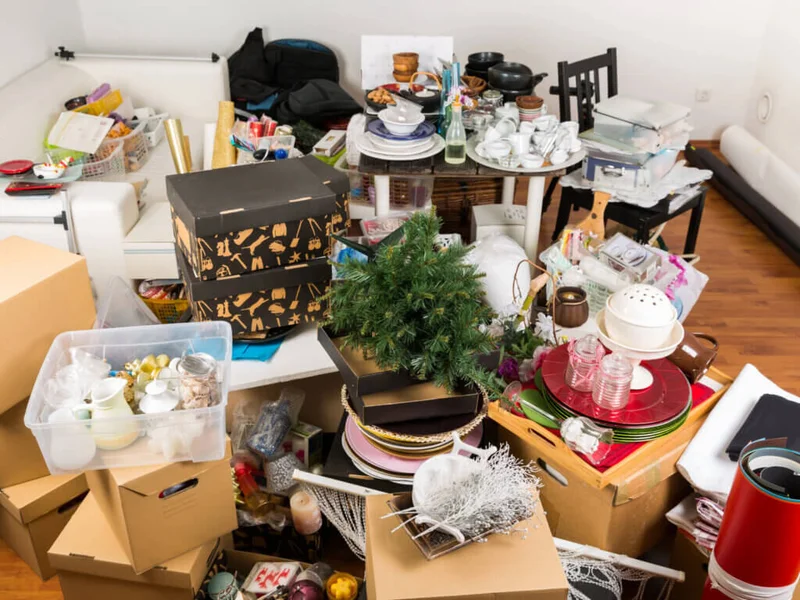
What happens if you declutter wonderfully but ignore the buying stop? That is the classic yo-yo effect of tidying up. You have freed your spice rack with the trash bag today; it is so beautifully empty and airy. But next week, you find yourself in the supermarket, see a new, tempting spice, and think: "Oh, I’ll try that out." You buy it without thinking about your space budget. It goes on the shelf. And then another one. And another one. Within two months, the shelf is just as full and overwhelming as before.
Even worse is the other scenario: What happens if you buy the right storage box but completely skip the decluttering? That is the most common trap. You buy the perfect spice storage, are thrilled with how it looks, and then just stuff ALL your spices in there. The expired ones, the duplicates, the exotic ones. The box is now packed to the brim. It looks tidy from the outside, but inside it’s a heap of unmade decisions. Every time you open the box to look for a spice, you are confronted with this chaotic mass. The buying frenzy for the next, even better box is then already pre-programmed.
When the Right Storage Box Really Helps
After all this criticism of boxes, here comes the big exception. Because there are situations where the right storage box can actually be your best friend. The crucial difference always lies in the groundwork. A box is helpful when it serves as a tool to support a decision you have already made. Not to replace a decision you don’t want to make.
If you have first decluttered and second established a fixed place for a clear, defined category. Only then can you ask yourself: Do I need a box here to better utilize or protect this fixed place?
That’s why the one question you must ask yourself before every box purchase is not "Where can I put this?" but: "For which exactly defined category of things that I have consciously kept will this box be the home?" If you cannot answer this question immediately and concretely – "For the sewing supplies that are left after decluttering" – then leave the box on the shelf. You don’t need it. You only want it to temporarily numb the uncomfortable feeling of overwhelm.