How to Easily Remove Nail Glue from Fake Nails
Removing nail glue from fake nails can be tricky, but with the right methods, you can do it safely. Learn effective techniques for different types of glue and care tips for your natural nails.
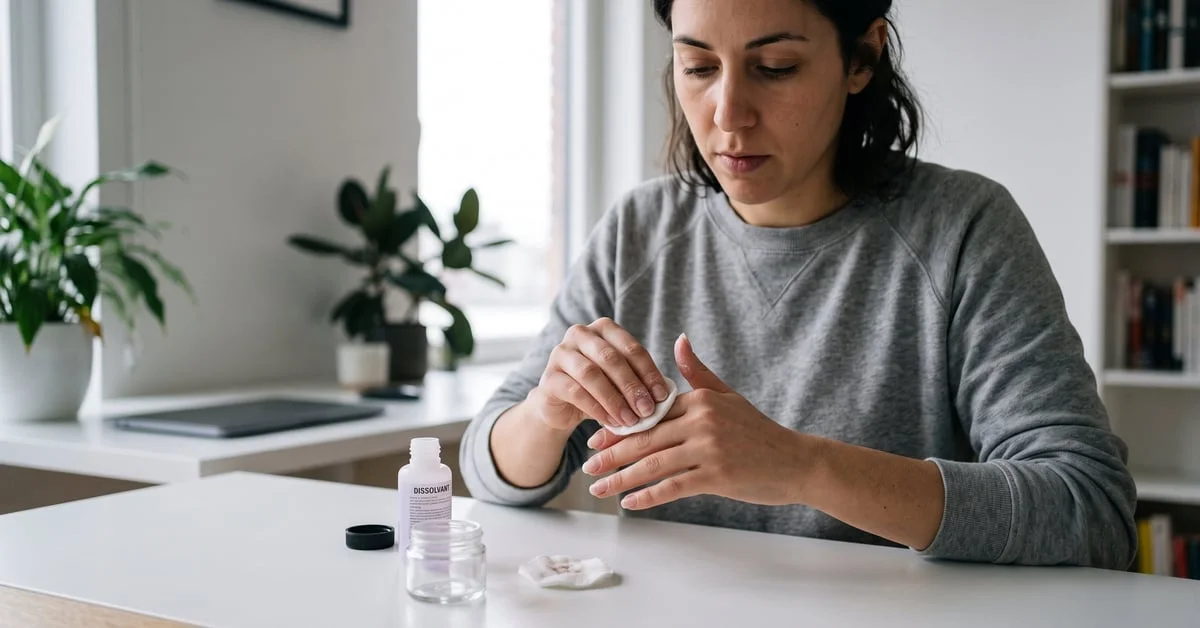
Fake nails can sometimes peel off at the most inconvenient times, leaving behind stubborn glue that can be tricky to remove. Rushing to yank them off is not advisable, as this can damage the natural nail, leaving it thin, white, and fragile for weeks.
Fortunately, removing nail glue doesn’t require a professional kit. With a few everyday products, you can effectively detach fake nails, provided you choose the right method based on the type of glue used and the condition of your nails.
Understanding Why Glue Holds So Well
Common Types of Glue
Not all nail glues behave the same way. Most fake nails sold in stores use cyanoacrylate, a type of super glue designed for nails. This glue polymerizes quickly when it comes into contact with moisture, creating a strong bond with keratin. As a result, it holds very firmly.
- Cyanoacrylate glue (pre-glued nails or separate pots): sensitive to acetone and oils.
- Double-sided adhesive (repositionable press-on nails): can be removed dry or with hot water, no solvent necessary.
Identifying the type of glue you've used is crucial for determining the removal strategy.
What Makes Damage Worse
Forcing, biting, or pulling can tear away layers of keratin along with the glue. The natural nail has an average thickness of 0.5 mm; removing part of it creates a porous and painful surface that is prone to breakage for weeks. Taking an additional 10 to 20 minutes for a careful removal is well worth the time.
⚠️ Important Note: Never cut the fake nail down to the natural nail before softening it; you risk removing the natural nail itself. First, file the surface to break the polish or gel, then apply your solvent.
🎯 Effective Methods for Glue Removal
Acetone: Fast and Effective for Cyanoacrylate Glue
This is the go-to method for removing fake nails glued with super glue. Pour pure acetone (not a diluted remover) into a small bowl, soak your fingers for 10 to 15 minutes, and the glue will begin to dissolve.
- File the Surface: Use a 100/180 grit file on the fake nail to break the polish or top coat, allowing acetone to penetrate.
- Soak in Acetone: Soaking for 10 to 15 minutes is usually sufficient for standard glue. The fake nail should come off on its own or can be gently pried off with a wooden stick (cuticle pusher).
- Moisturize Afterwards: Acetone dehydrates. It’s essential to apply cuticle oil or a thick cream immediately after — this step is non-negotiable.
Hot Water and Soap: For Double-Sided Adhesives
Repositionable press-on nails (like those from Ardell, Kiss, or generic brands) often use a less aggressive adhesive. Soaking in warm, soapy water for 10 to 20 minutes can soften the glue without needing a solvent. Simply slide a wooden stick under the fake nail and gently lift.
💡 Tip: Add a few drops of dish soap to the hot water; the surfactants help detach the adhesive without harming the keratin. This method is also effective for softening cyanoacrylate residues when combined with pre-filing.
Oil: A Gentle Method for Sensitive Skin and Nails
Olive oil, coconut oil, or even baby oil can penetrate under the glue and gradually break the bond. This method takes longer — expect 20 to 30 minutes with a cotton ball soaked in oil placed under the fake nail — but it’s chemical-free and ideal if your nails are already thin or if your skin reacts poorly to acetone.
| Method | Duration | Type of Glue | Gentle Level | |-----------------------|--------------|-------------------------|--------------| | Pure Acetone | 10-15 min | Cyanoacrylate | Medium | | Hot Water + Soap | 15-20 min | Double-Sided Adhesive | Gentle | | Vegetable Oil | 20-30 min | Both | Very Gentle | | Filing + Acetone | 20-25 min | Strong Cyanoacrylate | Technique |
Caring for Nails After Removal
Removing Residues Without Frustration
Even with the best method, a thin layer of whitish glue often remains on the natural nail. Gently rub it with a cotton ball soaked in acetone for 30 seconds, or use a fine-grit buffer. Avoid aggressive filing, as the nail is already weakened from extended wear.
✅ Remember: After removing fake nails, wait at least 48 to 72 hours before applying new ones. Your natural nails need time to rehydrate and rebuild their surface barrier; otherwise, the glue won’t adhere well, and the damage will accumulate.
Rebuilding Keratin Over Time
Using a strengthening nail treatment (like OPI Nail Envy or a fortifying base coat) for 2 to 3 weeks post-removal can make a significant difference. Daily cuticle oil — just a drop per nail each evening — hydrates the nail matrix and speeds up the growth of healthy nails. These are simple yet essential steps to maintain nail health.
FAQ — Removing Nail Glue from Fake Nails
Can nail glue be removed without acetone?
Yes. Vegetable oils (like olive or coconut) or a long soak in warm soapy water can suffice in many cases, especially for double-sided adhesives. For strong cyanoacrylate, acetone remains the most effective solvent, but pre-filing combined with oil can also work with more time.
Does acetone damage natural nails?
Acetone dehydrates keratin and the surrounding skin. Occasional use (once every 3 to 4 weeks) is generally not harmful, provided you moisturize immediately afterward. Problems arise with frequent use or prolonged soaking beyond 20 minutes.
What if the fake nail won’t come off?
Do not force it. Extend the soaking time by an additional 5 minutes. If the glue is particularly stubborn, combine methods: file the surface first, then soak in acetone while gently sliding a wooden stick under the free edge every 2-3 minutes to test the grip.
Is fake nail glue dangerous on skin?
Cyanoacrylate can indeed bond skin, but it can be easily removed with oil or acetone. If glue gets trapped between the fake nail and the skin (under the edge), never pull; instead, soak in warm water to soften it first.