How to Safely Remove Strong Adhesives from Your Skin
Learn how to safely and effectively remove strong adhesives like super glue and epoxy from your skin with these practical tips and techniques.
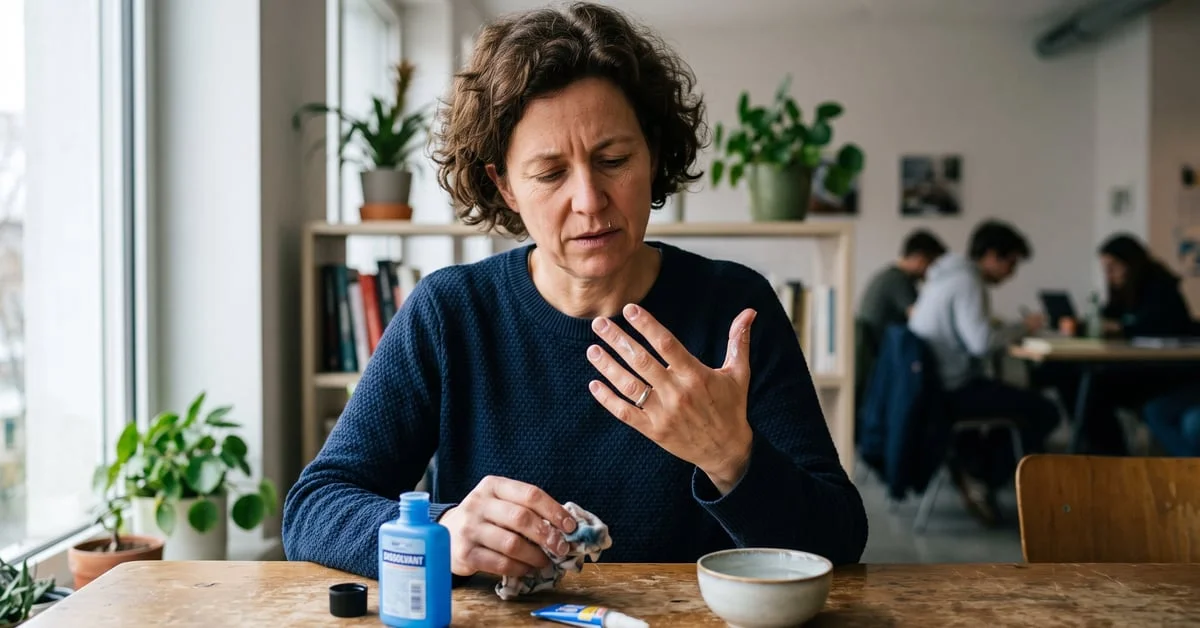
An instant of distraction can lead to a tube of super glue slipping, resulting in two fingers stuck together. This is a common mishap for DIY enthusiasts, model builders, and casual parents alike. Fortunately, no strong adhesive can bond indefinitely to skin, as skin cells naturally regenerate. The downside is that attempting to peel off the glue without proper methods can cause skin damage. Here’s how to effectively and safely remove adhesive from your fingers.
The techniques for removal depend on the type of glue involved: cyanoacrylate (super glue, Loctite, Pattex), two-part epoxy, or contact adhesive (neoprene). Each type reacts differently to solvents. Identifying the adhesive you’ve been handling can save you unnecessary scrubbing time.
Removing Super Glue (Cyanoacrylate) from Fingers
Acetone: The Fastest Method
Acetone can dissolve cyanoacrylate in under two minutes. Nail polish remover typically contains between 30% and 100% acetone — make sure to check the label. Here’s how to proceed:
-
Soak Soak a cotton ball or pad in pure acetone (or a remover without butyl acetate).
-
Hold for 60 to 90 seconds Place the soaked cotton on the glued area. Avoid rubbing; let the solvent work.
-
Gently Roll Roll the softened glue with your thumb or a cotton swab. If it resists, reapply the acetone.
⚠️ Important Note Acetone can dry out the skin significantly. After removal, rinse thoroughly with water and apply a moisturizer. Avoid contact with the eyes; if eyelids stick together, seek medical attention immediately.
Warm Water and Soap: Slower but Gentler
If acetone isn’t available, warm (not boiling) water combined with a greasy soap or dish liquid can work — though it takes longer. Soak your fingers for 5 to 10 minutes, then gently scrub with a nail brush or a rough bath glove. The glue will soften and peel off in layers. Be prepared for multiple sessions if the glue layer is thick.
💡 Tip Adding a spoonful of salt to the warm water creates a mild abrasive that can speed up the detachment process without irritating sensitive skin, making it ideal for children.
Removing Two-Part Epoxy
Act Before Full Polymerization
Epoxy can take anywhere from 5 to 24 hours to set, depending on the product. For the first 30 minutes, the resin remains partially soluble. Rubbing vigorously with a cloth soaked in isopropyl alcohol (available at pharmacies) can often remove most of the adhesive. After this time, the hardened resin is resistant to most solvents.
Once the epoxy has cured, your options become limited:
- Soak in acetone for 10 to 15 minutes (longer than for super glue)
- Scrub with a pumice stone under warm water — it’s slow but effective
- Wait: skin will naturally exfoliate in 2 to 4 days
✅ Key Point For epoxy, acting quickly is crucial. Keeping a bottle of isopropyl alcohol in your workshop costs less than €3 and can prevent lengthy abrasion sessions.
What Not to Do
Pulling sharply on hardened glue can cause micro-tears in the skin. Some forums suggest using coconut oil or olive oil — however, these fats have no real chemical effect on epoxy. They may moisturize the surrounding skin, but don’t waste time if the resin has fully set.
Contact Adhesive (Neoprene): A Different Approach
White Spirit and Naphtha
Contact adhesive, which is applied to both surfaces before bonding, is solvent-based. It responds well to white spirit or naphtha (sold as “paint thinner”). Soak a cloth, gently dab in circles without rubbing, and repeat. The adhesive softens in 1 to 3 minutes and can be peeled away.
🧴 Type of Glue 🔬 Effective Solvent ⏱ Action Time Super glue (cyanoacrylate) Acetone 1 to 2 min Two-part epoxy Isopropyl alcohol / acetone 10 to 15 min Contact adhesive (neoprene) White spirit / naphtha 1 to 3 min
Ventilation and Protection
Both white spirit and naphtha emit vapors. Work near an open window, and avoid flames nearby. While the exposure on your fingers is brief, it’s best not to inhale these vapors unnecessarily. After the adhesive is removed, wash thoroughly with soap and rinse.
Preventing Adhesive Mishaps
Simple Precautions Before Gluing
Wear nitrile gloves (not latex, as acetone can permeate latex in minutes). Prepare a cloth soaked in acetone before opening the tube. These two steps take just 30 seconds and can significantly improve your DIY experience.
- Disposable nitrile gloves: approximately €0.15 each
- Pure acetone in a 250 ml bottle: under €5 at a hardware store
- 99% isopropyl alcohol: €3 to €6 at a pharmacy or hardware store
“Super glue bonds in less than a second but dissolves in two minutes with the right solvent. The issue isn’t the glue — it’s not having acetone on hand.” — Practical workshop advice
If you frequently engage in DIY projects, consider keeping a removal kit in a drawer: acetone, isopropyl alcohol, and white spirit in small bottles. This takes up little space and can prevent 90% of panic situations with an open tube in hand.
Frequently Asked Questions
Can super glue be removed from fingers without acetone?
Yes. Warm water with greasy soap or dish liquid will gradually soften cyanoacrylate in 5 to 15 minutes. A nail brush or rough bath glove can help lift the layers. This method is slower than acetone but avoids skin drying.
Is strong glue on fingers dangerous to health?
Cured super glue on skin is generally safe — it does not penetrate the epidermis. The real risk lies with the eyes: if eyelids stick together or liquid glue gets in an eye, seek medical attention immediately without attempting to remove it yourself. The only thing to avoid is pulling forcefully.
How long should you wait for super glue to come off on its own?
Without intervention, super glue on fingers will disappear in 2 to 4 days due to the natural regeneration of skin cells. The skin will gradually exfoliate and carry the glue away. This option is viable if the amount is small and does not hinder movement.
Do olive oil or baby oil remove strong glue?
Fats (olive oil, baby oil, shea butter) may help remove cyanoacrylate residues from non-porous surfaces, but their effectiveness on skin is limited. They slightly soften the glue film when combined with friction but do not chemically dissolve the resin like acetone does.
What is the difference between super glue and epoxy for removal from skin?
Super glue (cyanoacrylate) dissolves quickly in acetone in 1 to 2 minutes. Hardened two-part epoxy is much more resistant: it requires 10 to 15 minutes of acetone or isopropyl alcohol, or mild abrasion (pumice stone). Fresh epoxy (less than 30 minutes old) can be easily removed with isopropyl alcohol.