How to Create a Home Cinema in Your House
Creating a private cinema at home enhances your movie-watching experience and adds value to your property. Discover how to design your own home theater step by step.
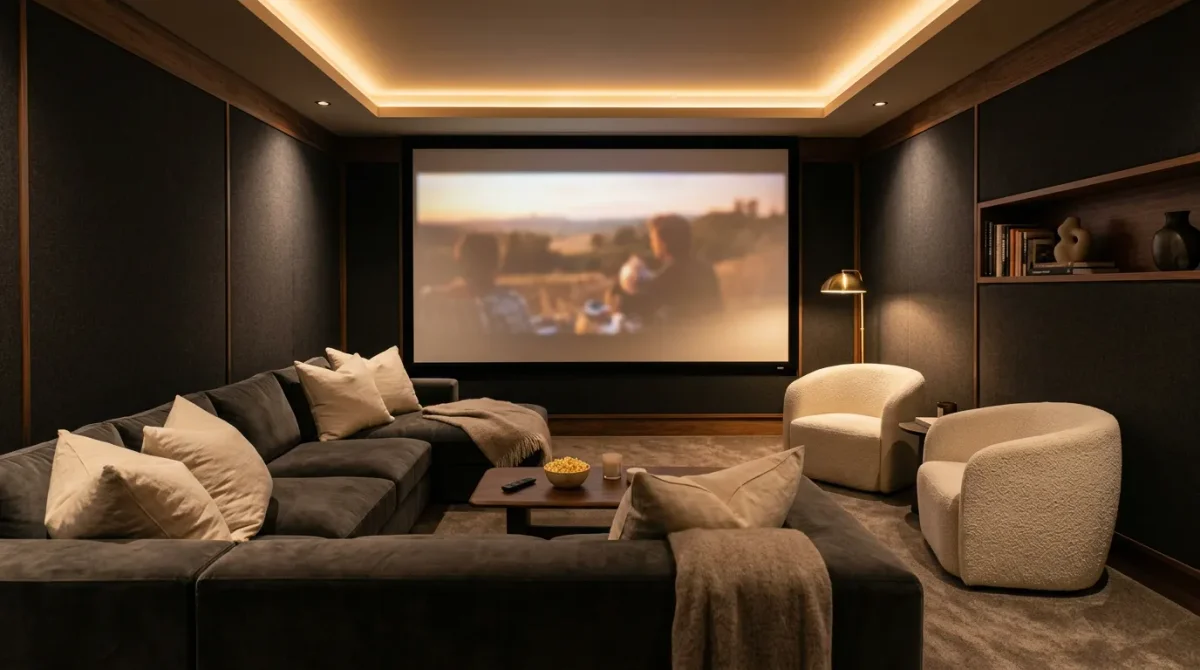
Setting up a private cinema at home is becoming increasingly popular among enthusiasts. Experiencing home cinema without leaving the comfort of your home, in a space designed for comfort and immersion, adds significant value to your property. From room layout and furniture selection to acoustic treatments and personalized design, every detail is crucial in transforming an ordinary room into a true home theater.
Let’s explore the step-by-step process of creating a dedicated cinema space, combining visual and auditory pleasure with practicality and aesthetics. From initial considerations regarding the space to finishing touches like specific lighting and seating selection, everything revolves around one goal: to enjoy an unforgettable home cinema experience.
Why Install a Private Cinema at Home?
Developing a home cinema goes beyond mere comfort; it fundamentally alters how you enjoy films, series, or video games. It also provides an ideal way to gather family and friends for unique screenings in a privileged atmosphere. Away from external noise and the constraints of public cinemas, the home cinema experience significantly enhances quality.
Such a project also represents a valuable asset for enhancing real estate. Creating a dedicated viewing space adds a touch of prestige to your property, appealing to fans of modern technology and interior design.
What Are the Key Steps to Designing a Home Cinema?
Turning an idea into reality involves several essential steps. Each phase requires careful attention to ensure the outcome meets expectations. From finding the perfect location to technical configuration, nothing should be left to chance in this creation process.
For those dreaming of an authentic home cinema experience, there is a structured path that allows for anticipating challenges and making the right technical and aesthetic choices.
Choose the Location and Consider Room Dimensions
Selecting the most suitable space in the house is crucial for the entire project. A basement, a large unused bedroom, or an attic can be ideal for setting up a private cinema, provided the dimensions are adequate. Aim for a comfortable area that can accommodate several viewers while also allowing for optimal distance based on the size of the intended screen.
Checking for access to electricity, ventilation, and proximity to other rooms helps avoid noise and disturbances. Ceiling height, absence of windows, and overall shape also influence acoustic insulation solutions and equipment integration.
Optimize Acoustics and Plan for Insulation
Acoustic insulation is a cornerstone of a good home cinema. Without an effective barrier against external sounds and internal reverberations, fully enjoying dialogues, music, and sound effects is impossible. Ceilings and walls should be equipped with absorbent or insulating materials, such as dedicated panels, thick carpets, or heavy curtains.
Enhancing internal acoustics also improves the immersion experience. Installing wall panels, bass traps, and discreet diffusers avoids unpleasant vibrations and unwanted echoes. This optimizes the audio setup, whether it’s a simple home cinema or a sophisticated multi-channel system.
What Equipment to Choose for a High-End Home Cinema?
The quality of both image and sound transforms an ordinary viewing session into an exceptional moment. The current technological offerings provide a multitude of solutions tailored to various needs and budgets, with devices specifically designed for private cinema.
It’s not necessary to aim for absolute excellence to achieve an impressive result. The key is to find the right balance between screen format, audio performance, and ease of use, ensuring the enjoyment remains intact at every screening in your home cinema.
Select the Ideal Screen and Image
The choice between a video projector and a large television depends on the available space and personal preferences. A projector, combined with a stretched screen facing the seating area, offers that unique cinema feel. Current models provide excellent brightness and true-to-life colors, even with specific dimmed lighting.
Large televisions are appealing due to their simplicity and quick installation, making them ideal for smaller spaces. Resolution should not be overlooked: UHD, 4K, and HDR bring even the finest details to life for an immersive home cinema experience.
Assemble a High-Performance Audio System
Sound plays a central role in the home cinema experience. Investing in a balanced surround system, including front, center, satellite speakers, and a subwoofer, ensures sensations akin to professional theaters.
Some setups incorporate immersive formats like Dolby Atmos, where sounds circulate around the viewer to enhance immersion. Depending on preferences, the installation can remain discreet with built-in speakers or showcase high-tech components.