
How to Properly Wear Cufflinks Without Mistakes
Cufflinks can seem complicated to wear, but with the right technique, it becomes easy. Learn how to fold the cuff, align the holes, and secure the cufflinks effortlessly, even for beginners.
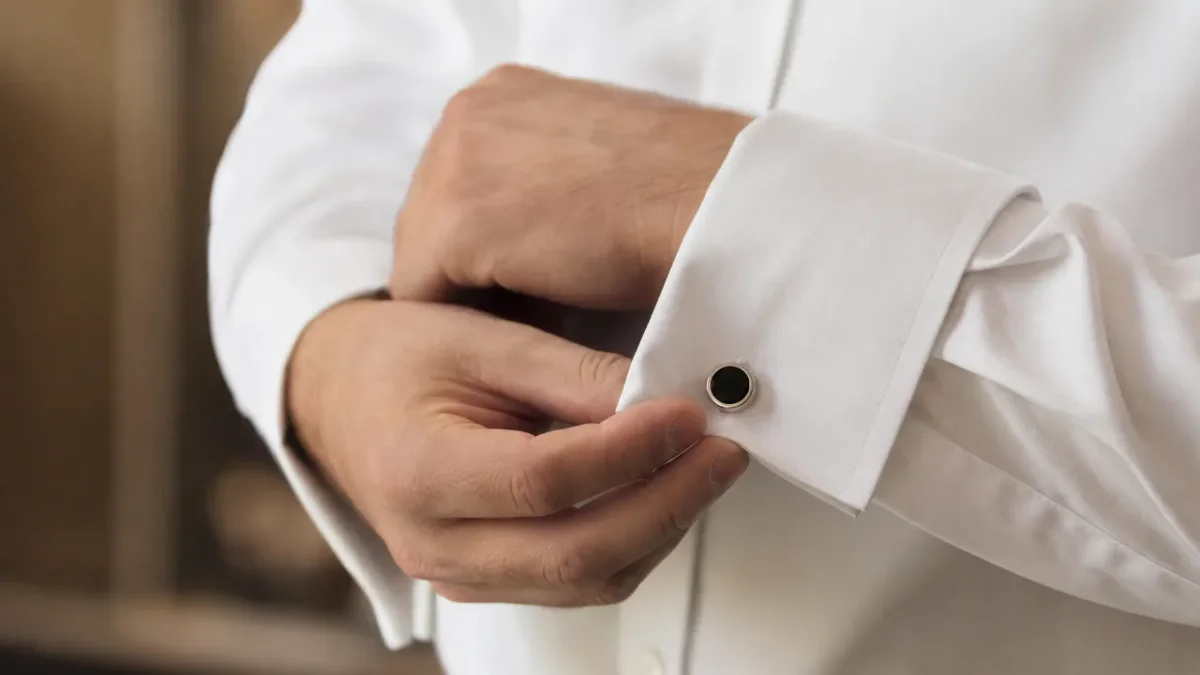
Cufflinks can seem tricky to put on, but with the right method, the process becomes straightforward. Learn how to fold the cuff, align the holes, and secure the cufflink easily, even if it's your first time.
The fundamental rule is to always wear the shirt before fastening the cufflinks. This prevents fabric creasing and makes handling easier.
Once the shirt is worn, preparing the French cuff is a matter of a few simple steps. Here’s the method to follow.
Folding and Aligning the Cuff
Unfold the cuff and then fold it back on itself to align the four buttonholes. The holes must be perfectly stacked before inserting the cufflink. Keep the two edges together to create a clear passage, making it easier to secure the cufflink.
Inserting and Locking the Cufflink
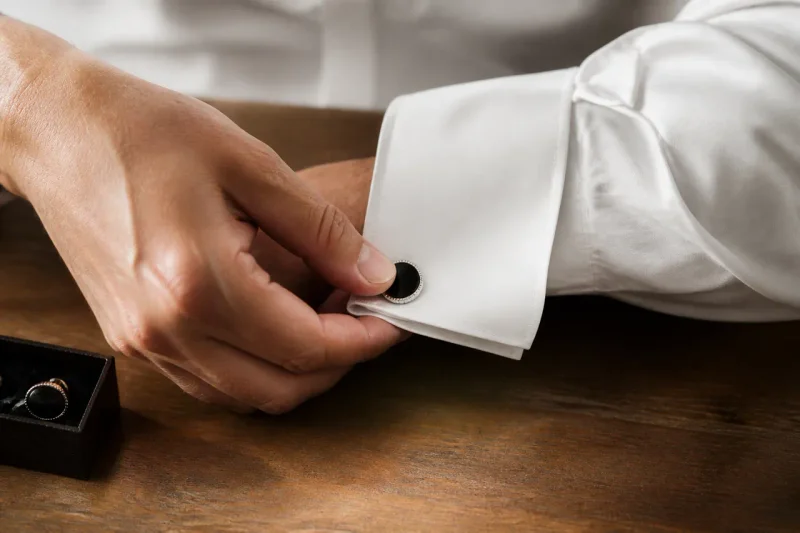
Insert the post of the cufflink vertically through the four layers of aligned fabric. Once it passes through to the other side, turn or straighten the backing to lock it in place.
For double-action models, a slight click indicates that the closure is secure. For silk or knot cufflinks, simply push the ball through the buttonholes without rotation. Then check that only the decorative part is visible on the outside of the wrist when your arm is at your side. Repeat the same steps on the other cuff.
What Shirt is Suitable for Cufflinks?
The appropriate shirt for cufflinks features French cuffs, also known as double cuffs. This style fastens solely with cufflinks and does not have a standard sewn button.
The cuff is designed with multiple buttonholes that fold and align to accommodate the cufflink. This type is commonly found on dress shirts and formal attire.
A single cuff shirt can also work if it has two aligned buttonholes. Otherwise, an alteration by a tailor will be necessary.
Can You Wear Cufflinks with Any Shirt?
No, not all shirts are suitable for cufflinks. A standard shirt with a single cuff and a sewn button does not allow for the post to be inserted without modifying the cuff. Therefore, to wear cufflinks, you need a shirt designed for this purpose or one modified by a tailor.
There are two solutions to bypass this limitation:
- Single cuff shirt: If it has two overlapping buttonholes, they are sufficient to accommodate a standard cufflink.
- Standard shirt not designed for cufflinks: You must remove the existing button and have a buttonhole created wide enough to allow the post to pass through.
Without one of these two adaptations, forcing a cufflink into fabric not designed for it will likely fail. If you enjoy experimenting with sleeves, also check out how to roll up shirt sleeves stylishly to vary your everyday looks.
How to Wear and Match Cufflinks with Your Outfit
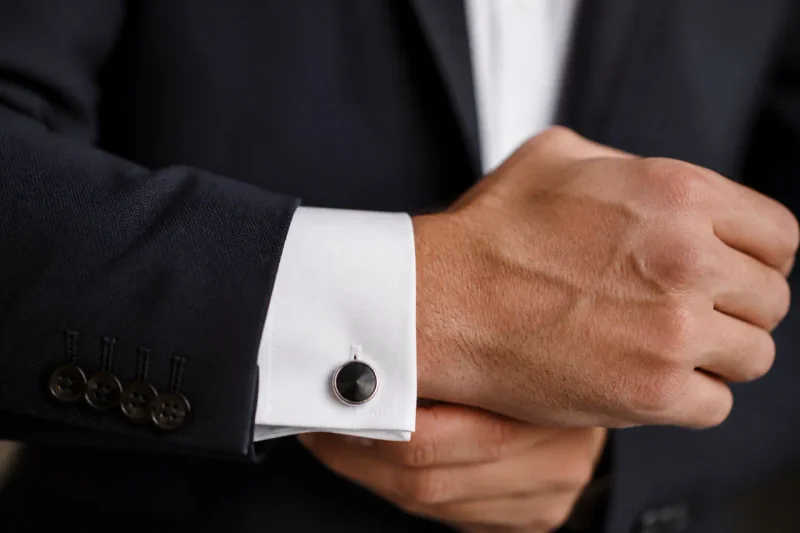
Wear cufflinks with a French cuff shirt, ideally paired with a suit or elegant attire. They should remain at the wrist, with only their decorative part visible.
For a polished look, allow the shirt cuff to extend slightly beyond the jacket sleeve. This length enables the cufflink to be subtly displayed without overwhelming the outfit.
Here are a few simple guidelines for matching your accessories:
- Metal of the cufflinks: Match it with your watch or belt buckle for visual coherence.
- Context of the outfit: Reserve cufflinks for formal or professional occasions.
- Desired subtlety: Opt for understated styles in silver or gold metal rather than overly elaborate patterns.
For more casual shirts, the style shifts entirely. Check our guide on how to wear an oversized shirt stylishly if you're looking for further fashion inspiration.
What Mistakes to Avoid with Cufflinks?
The most common mistake is assuming that cufflinks are suitable for all shirts. In reality, a compatible shirt or a modified cuff is necessary for comfortable and lasting wear.
Other frequent pitfalls include:
- Misaligned holes: A poorly folded cuff complicates the insertion of the post and damages the fabric through excessive force.
- Decorative side misoriented: The decorative face must always point outward from the wrist, never inward.
- Incorrect dressing order: Always fasten the cufflinks after putting on the shirt, not before.
- Incompatible cuffs: A standard cuff closed with a sewn button cannot accommodate a cufflink without modification.
- Post too wide: A buttonhole that is too small prevents smooth passage and risks damaging the fabric.
Avoid wearing cufflinks with overly casual shirts or those lacking suitable cuffs. Reserve them for formal outfits, where their elegant touch truly enhances your style.