
Understanding the Stone Pilaster: Functions and Construction Techniques
The stone pilaster is a unique architectural element that serves both decorative and structural purposes. This article explores its history, variations, and construction techniques.
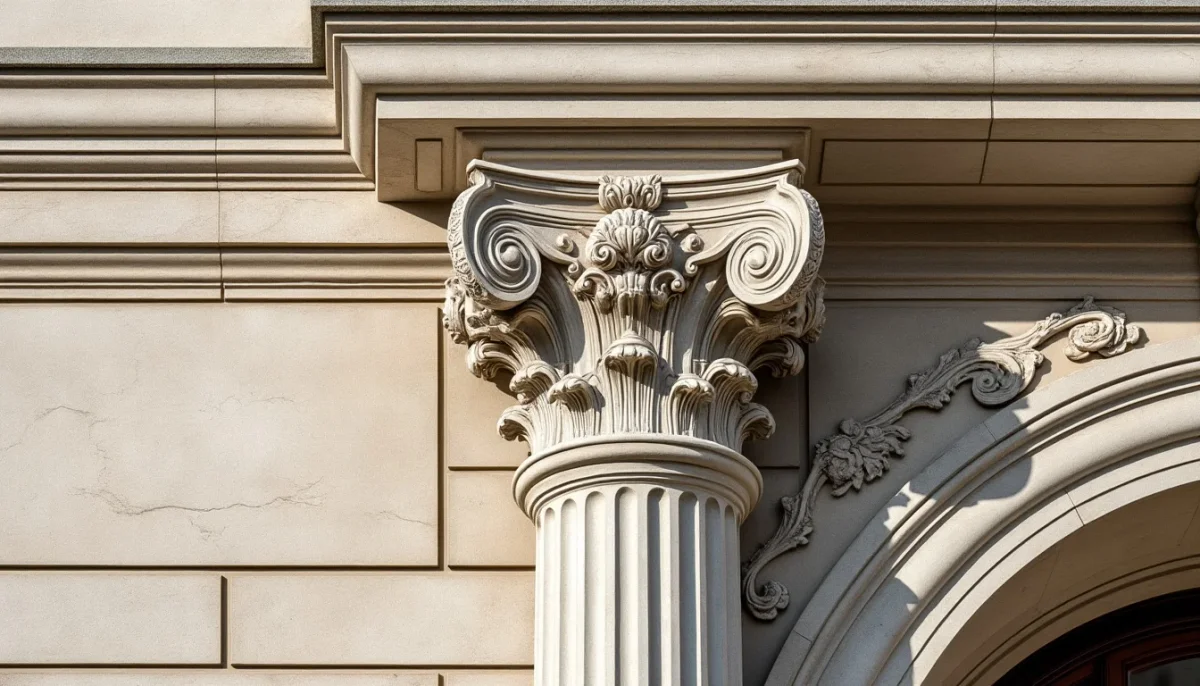
The stone pilaster holds a unique place in architectural terminology. Straddling the line between pure ornamentation and structural element, it punctuates facades, frames gateways, and imparts a visually recognizable clarity to buildings. Frequently mistaken for columns or pillars, the pilaster possesses a distinct identity that has evolved over centuries through major stone carving traditions. From Greek pediments to classic French châteaux, the pilaster has remained relevant throughout the ages. In contemporary projects, it is experiencing a resurgence, driven by a renewed interest in natural materials and artisanal craftsmanship. Understanding its role, variations, and construction guidelines enables the realization of structures that are both robust and aesthetically pleasing.
- The pilaster is a vertical architectural element attached to a wall, distinct from a column due to its lack of an independent cylindrical shaft.
- It serves both decorative and rhythmic functions on facades, portals, and property entrances.
- Numerous variants exist: engaged pilaster, fluted, corner, sloped, and revetted, each tailored to specific contexts.
- Natural limestone remains the reference material for artisanal fabrication, with significant variations depending on the quarries of origin.
- Constructing a pilaster requires serious preparation: suitable foundations, choice of binding agent, and adherence to classical proportions.
- Maintenance and consolidation are essential to ensure the durability of the structure against the elements and freezing conditions.
The Stone Pilaster: Definition, History, and Architectural Distinctions
A pilaster is, in its most precise definition, a vertical architectural element with a rectangular cross-section, attached to a wall or partially embedded in its masonry. It visually mimics the appearance of a column, complete with a base, shaft, and capital, but does not project independently. This fundamental characteristic distinguishes it from a pillar or a free-standing column.
The term originates from the Italian pilastro, derived from the Latin pila, which signifies a massive support. Since ancient Greek times, builders have utilized this element to reinforce wall heads or mark right-angle returns. In Rome, it evolved into a vital architectural tool, integrated into the Doric, Ionic, and Corinthian orders with remarkable precision.
In France, the pilaster reached its zenith during the Renaissance and classicism. The facades of the Louvre, Versailles, and numerous bourgeois residences in the provinces bear its mark. François Mansart, a leading architect of the 17th century, employed them with exemplary subtlety, as seen in his Parisian hotels.
Distinguishing Between Pilasters, Columns, and Pillars
The confusion between these three elements is common, even among construction professionals. A column is an independent cylindrical shaft that supports a real load. A pillar is a massive support, often square or rectangular in section, also load-bearing. The pilaster, however, is structurally attached to the wall it leans against.
In contemporary construction, the pilaster typically does not bear direct loads. Its primary role is visual: it adds rhythm to a flat facade, frames an opening, marks a building corner, or highlights an entrance portal. It creates the illusion of architectural order while remaining anchored in masonry.
This distinction is critical when planning a project. A project manager or stone carver will not size a purely decorative pilaster the same way they would a load-bearing pillar. Confusing the two can lead to structural miscalculations or, conversely, unnecessary costs.
Various Pilaster Types and Their Specific Uses
The richness of architectural vocabulary surrounding the pilaster reflects the diversity of its forms and functions. Diderot's Encyclopedia already listed around twenty distinct types, each suited to a specific construction or aesthetic situation. Understanding these variants allows for the selection of the most appropriate form for each project.
The corner pilaster, also known as angular, is positioned at the angle of a building to emphasize its structure. Beautiful examples can be found on the facades of the Louvre's portal. The fluted pilaster replicates the flutes of ancient columns, featuring seven flutes per face of the shaft according to classical rules. It adds a textured visual element that dynamically captures light.
The engaged pilaster, common in chapels and churches, is placed behind a column to which it is attached, without following the curved contour. It retains its own base and capital. The revetted pilaster, on the other hand, features a carved facing embedded with marble or relief ornaments, as seen in the Sixtine and Pauline chapels of Santa Maria Maggiore in Rome.
Pilasters for Every Construction Context
In gardening and outdoor space architecture, the trellis pilaster is a long, narrow structure made from stakes, designed to decorate French garden porticoes. This lesser-known application illustrates the ability of this element to adapt to very different contexts.
The ramp pilaster accompanies stairs and balustrades: it is a support at handrail height, sometimes featuring a base and capital, which supports the baluster spans. In prestigious residences, these pilasters accentuated grand stone staircases. The sloped pilaster follows the incline of a staircase while remaining plumb, enhancing the decoration of the stairwell walls.
Each of these variants serves a precise logic. Before making a selection, it is useful to consider the following question: what message should the structure convey? Simplicity, ornamental richness, continuity with an existing edifice? The answer will naturally guide the choice of the most relevant form.
Selecting the Right Stone for a Durable Pilaster
Choosing the material is one of the most critical decisions in constructing a natural stone pilaster. Not all limestones are equal when it comes to weather conditions, particularly the repeated freeze-thaw cycles that can weaken outdoor structures.
Among the stones most commonly used by French stone carvers, two types of limestone stand out. The Estaillades stone, quarried from the Provençal quarries on the slopes of Mont Ventoux, is a soft limestone, fine-grained and white in appearance. It is valued for its ease of carving and aesthetic quality, but it is sensitive to freezing (gelive at 24 cycles), necessitating precautions in regions with harsh winters.
In contrast, the Avy stone, quarried in Charente-Maritime, offers a very different profile. Firmer and slightly coquina-colored, it is naturally resistant to freezing. This characteristic makes it particularly suitable for structures exposed to the elements: portal pilasters, fence columns, and facade elements in frequently frozen areas. For projects in regions where temperatures regularly drop below zero, this limestone is often the most prudent choice.
Customization and Finishing: A Valuable Artisan Craft
Artisan stone carvers working exclusively with natural stones from French quarries offer extensive customization for each piece. Numerous adjustable parameters include: custom dimensions, surface finishing, patina, artificial aging, type of sculpted decoration, core drilling for integrating lighting or posts, and the addition of kickboards for portal pilasters subjected to vehicle traffic.
The finishing plays a significant role in the final appearance of the structure. A bush-hammered stone will provide a rustic and matte texture, suitable for characterful properties. A softened or polished finish is better suited for a sleek contemporary architecture. Artificial aging, achieved through chemical or mechanical patina techniques, allows a new structure to blend seamlessly into an older environment without visual disruption.
It is always advisable to request a detailed quote from a specialized stone carver before commencing a project to assess available options and achieve a result consistent with the existing architectural ensemble. The quality of the material directly influences the longevity of the structure.
Estaillades Stone vs Avy Stone
A detailed comparison for constructing natural stone pilasters
| Criterion | Estaillades Stone | Avy Stone | |-------------------------------|-----------------------------------------------------------------------------------|-------------------------------------------------------------------------| | Geographic Origin | Quarries of Ménerbes, Luberon (Vaucluse, Provence) = Equality | Quarries of Saint-Fort-sur-Gironde, Saintonge region (Charente-Maritime) | | Hardness | Soft limestone (Mohs ≈ 2.5 – 3). Easy to carve but more fragile against impacts. | Medium-hard limestone (Mohs ≈ 3 – 3.5). Good resistance to wear and impacts. ★ Advantage | | Color & Appearance | Creamy white to soft beige, fine homogeneous grain, very appreciated for facades. ★ Advantage | Light golden to ochre beige, slightly rustic medium grain, warm patina. | | Freeze Resistance | Limited freeze resistance (high porosity ~35%). Not recommended in areas with intense frost. | Good freeze resistance (porosity ~20%). Suitable for facades in cold temperate climates. ★ Advantage | | Ease of Carving | Excellent workability. Ideal for fine details, moldings, and capitals of pilasters. ★ Advantage | Pleasant to carve but requires slightly more robust tools. Suitable for geometric shapes. | | Aesthetic in Facade | High-end rendering, natural brightness, highly valued in classical and contemporary architecture. ★ Advantage | Warm aesthetic, natural golden patina, ideal for regional Saintonge style. | | Recommended Use | Decorative interior pilasters, sheltered facades, heritage restoration in Southern France. = Equality | Exterior pilasters, new constructions, facades in areas with moderate frost (Western France). | | Availability & Transport | Very available in the South. National delivery possible. Many qualified stone carvers. = Equality | |