
Toilet Cleaning: 7 Practical Tips for a Spotless Bowl
Discover practical tips for maintaining a spotless toilet bowl with simple, effective cleaning methods. Learn about essential tools and products for tackling stains and limescale.
4.8/5 - (6 votes)
Brown deposits at the bottom, limescale, odors, and stains under the rim can be effectively tackled with seven targeted actions and a simple routine. Achieving a truly spotless toilet bowl doesn’t have to take an hour or involve dangerous mixtures.
Key Takeaways
- Limescale and residues accumulate mainly under the rim and in less visible areas, which should be the focus of your cleaning efforts.
- White vinegar and citric acid are effective descalers that won’t harm ceramic, unlike hydrochloric acid.
- While bleach disinfects, it does not descale and should never be mixed with acids or urine due to the risk of toxic gas.
- A daily routine of just 10 minutes is sufficient; heavily scaled toilets may require a longer application time, ideally left overnight.
- A minimum of weekly cleaning prevents persistent brown deposits and recurring odors.
Why Toilets Get Dirty Quickly and Where to Look for Stains
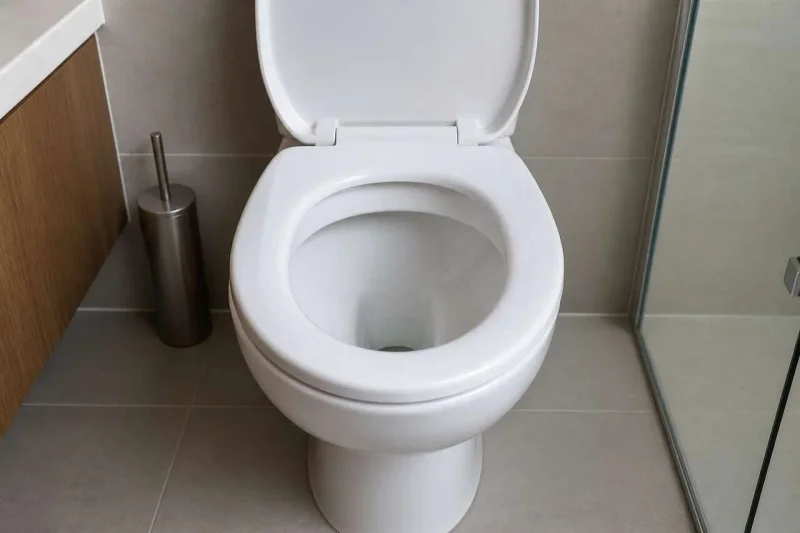
Toilets tend to get dirty faster than other sanitary fixtures due to stagnant water, the accumulation of organic residues, and the limescale present in tap water, which adheres to the ceramic with each flush. Over weeks, this limescale hardens into the notorious tartar, often colored brown or gray depending on water hardness and cleaning frequency.
The rim of the bowl is particularly problematic. The tiny water drainage holes, invisible to the naked eye, retain moisture and encourage bacterial growth. This is also where the brown deposit, sometimes referred to as urinestone, forms—a mix of limescale and urine residues that can become ingrained if not treated promptly.
Other areas to monitor include:
- the bottom of the bowl, where stagnant water concentrates deposits;
- the hinges of the seat, often overlooked during routine cleaning;
- the siphon, which can trap residues and generate persistent odors;
- the seat and lid, exposed to splashes and fingerprints.
Focusing solely on the center of the bowl without addressing the rim or hinges explains why some toilets remain dirty despite regular cleaning. Once these areas are identified, it becomes easier to select the right products based on the specific issues.
Essential Tools and the Most Effective Products
An effective toilet cleaning kit does not require a full cabinet of products. A few carefully chosen items based on your cleaning goals—descaling, disinfecting, or general maintenance—are sufficient:
- a pair of rubber gloves for safe handling of cleaning products;
- a toilet brush with sturdy bristles, dedicated solely to this task;
- a microfiber cloth for exterior surfaces and the seat;
- white vinegar, baking soda, and citric acid for natural descaling;
- a commercial toilet descaler gel for more stubborn cases.
The distinction between descaling and disinfecting is crucial and often misunderstood. Bleach, composed of chlorine and potash, effectively disinfects but does not remove grease or limescale. Therefore, it is ineffective against tartar or brown deposits. In contrast, white vinegar acts as both a descaler and a mild disinfectant, making it a versatile base for regular maintenance.
So, which product is the most effective for cleaning toilets? It depends on the problem: for established tartar, citric acid or commercial descaling gel yields the best results. For daily maintenance and disinfection, a mixture of white vinegar and essential oils, such as citrus or lavender, recognized for their antibacterial and antiseptic properties, is quite sufficient. Thus, the choice of cleaning product depends on the level of soiling, not a one-size-fits-all formula.
Quick Method: Clean Toilets in 10 Minutes
This quick method is suitable for regular maintenance on a bowl that is not heavily scaled. It consists of five simple and rapid steps to be repeated weekly:
- Step 1: Remove objects around the bowl (toilet paper rolls, plants, towels) to access all corners;
- Step 2: Flush the toilet to partially empty the bowl before applying the product;
- Step 3: Pour the cleaner under the rim to cover the entire interior surface, then let it sit for a few minutes;
- Step 4: Scrub with the brush, focusing on stained areas and under the rim, where mechanical action loosens ingrained tartar;
- Step 5: Wipe the exterior of the bowl, the flush handle, the seat, and the tank with a microfiber cloth soaked in disinfectant.
This concrete response addresses the question of five tips for perfectly cleaning toilets: prepare the area, empty the bowl, apply the product under the rim, scrub methodically, and disinfect contact points. Always finish with a flush to rinse away product residues.
For stubborn water stains that resist quick scrubbing, a simple trick is to place a paper towel soaked in white vinegar directly on the stain, let it sit for several hours or overnight, and then scrub the next day. This approach naturally leads to the more extensive use of white vinegar against limescale.
White Vinegar: The Simple Descaler for the Bowl and Rim
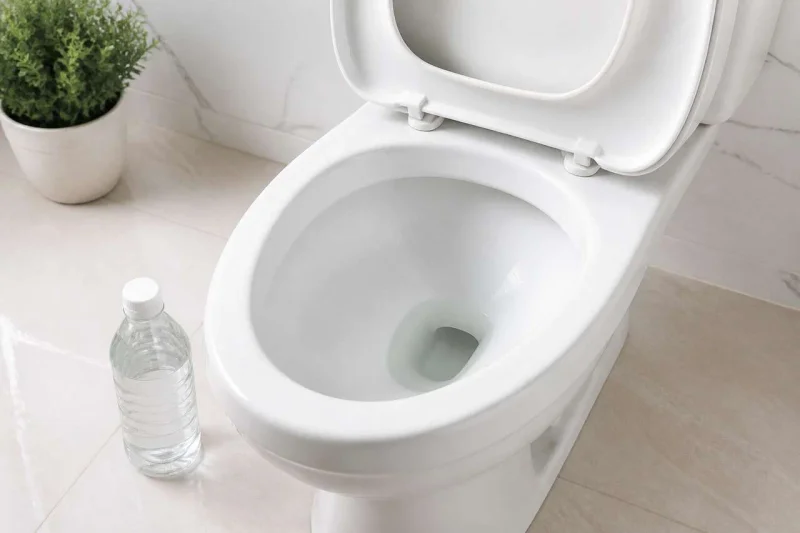
White vinegar remains the go-to natural solution for descaling a bowl without damaging it. Its acidity gradually dissolves limescale without harming the ceramic or seals, in contrast to more corrosive products. The most effective method involves heating about 300 ml of white vinegar without boiling, then pouring it into the bowl and over the walls. This process allows the vinegar to work effectively, ensuring a clean and fresh toilet bowl.