Why Baking Powder for Cleaning is Pure Waste - Orderliness
Baking powder for cleaning: the big lie. This little white powder that sits in almost every kitchen and is said to do everything is repeatedly recommended. Find out why it's a waste and what you should use instead.

Baking Powder for Cleaning: The Big Lie
This little white powder that sits in almost every kitchen and is said to do everything is repeatedly recommended. From the caked oven glass to the yellowed T-shirt. So should you use baking powder for cleaning?
To make it short and painless: Baking powder is a pure waste of money and time when it comes to cleaning. Period. It's like trying to tighten a screw with a hammer – the wrong tool for the job. And today, I will not only show you why, but above all, which two powders you really need instead to achieve better results with less effort.
Chemistry Simplified: What’s Really in the Powders
Baking powder is actually a mixture of:
- Sodium bicarbonate (baking soda)
- An acid (often citric or tartaric acid)
- Starch
You might know sodium bicarbonate as baking soda. The acid – often citric or tartaric acid – is there to make the dough rise. And the starch prevents the two from reacting prematurely. This very mixture is the problem! Only through heat (e.g., in the oven) and moisture does sodium bicarbonate react with the acid and release carbon dioxide, creating small gas bubbles that make the dough rise.
Because when you use baking powder for cleaning, you automatically bring this acid along. But the acid only wants one thing: to react with the sodium bicarbonate. In baking, this is great, as it produces carbon dioxide and the cake becomes fluffy. But on your countertop or in the laundry? There, the acid hinders the actual cleaning effect. All the chemical energy goes into the components of the baking powder interacting with each other instead of attacking your dirt.

The Two Powders You Really Need Instead of Baking Powder for Cleaning
Now let’s take a look at what you really need:
1. Pure Baking Soda
- Just sodium bicarbonate without acid and starch
- Neutral to slightly basic
- Perfect for sensitive surfaces and odor absorption
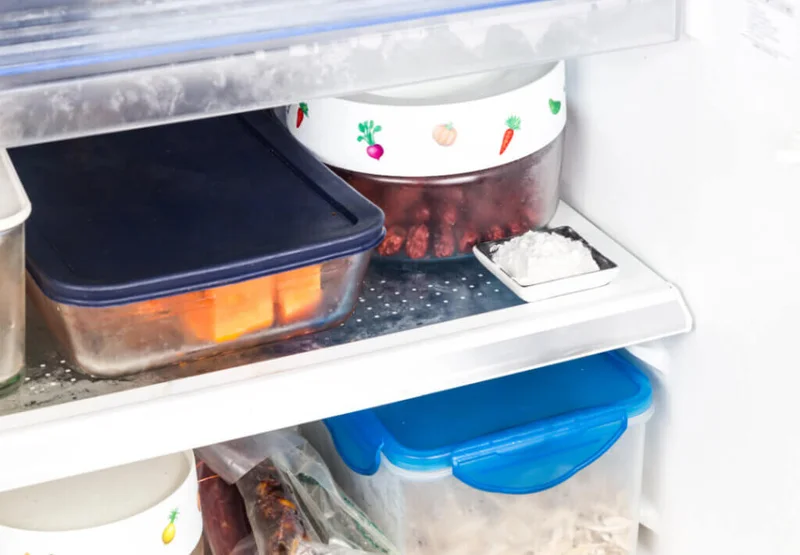
Pure baking soda is just sodium bicarbonate without acid and starch. A gentle, fine powder that is neutral to slightly basic. Perfect for everything where you don’t want aggressive chemicals: odor absorption in the fridge, gentle scrubbing paste for sensitive surfaces, or as an additive when washing wool and silk.
2. Soda (Sodium Carbonate)
- The powerhouse for stubborn dirt
- Strongly basic, dissolves grease and proteins
- Ideal for kitchen and laundry
And then there’s soda. That is sodium carbonate. This is the real powerhouse. Much more strongly basic than baking soda, but without the troublesome acid of baking powder. Soda dissolves grease, breaks down proteins, softens water, and is a true all-rounder for the entire household. From the caked kitchen to the gray laundry.
So remember: Baking powder is for dough, baking soda for gentle cleaning, and soda for the heavy-duty jobs. You don’t need anything more.
In American recipes, you will find terms like Baking Soda or Baking Powder on the ingredient list. Generally speaking, they can be equated as follows:
- Baking Soda = Baking Soda
- Baking Powder = Baking Powder
Baking Soda is also known in Germany under the terms Speisesoda, Speisenatron, Backsoda, or Backnatron.
The Three Biggest Baking Powder Fails
Let’s get to the practical cases where baking powder disappoints the most – and what you should do instead.
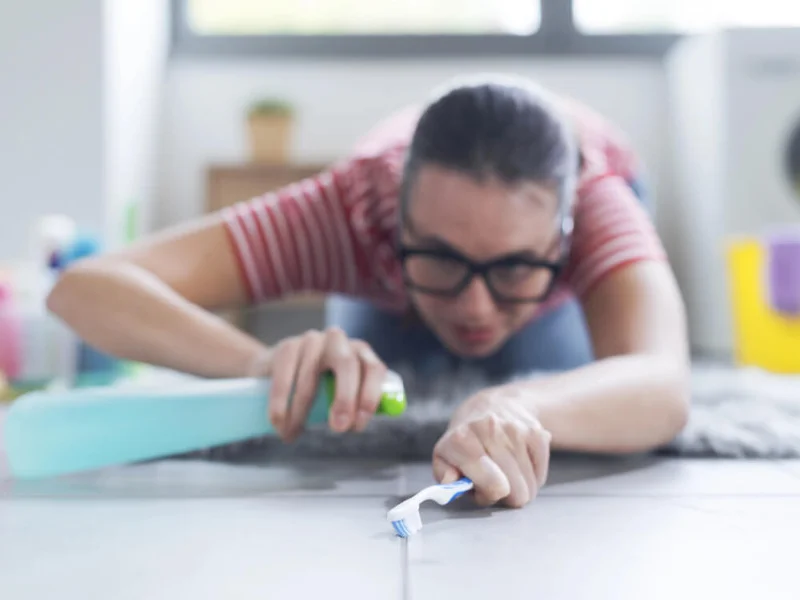
1. Grout Cleaning
You often read this tip: Mix baking powder with some water to make a paste, apply it to the grout, let it sit, and voilà – clean. The reality? The paste dries out, the starch sticks everything together, and you scrape for hours to get that caked mass out of the grout without it becoming truly clean.
Baking powder paste dries out and sticks. Solution: Soda paste with hot water, let it sit for 10-15 minutes.
2. Laundry Washing
Especially with white laundry, baking powder is supposed to help against gray haze. The opposite is true! The starch in baking powder can settle in the fibers and even enhance the gray haze. You wonder why your whites are getting grayer and might even add more baking powder. A vicious cycle.
Baking powder enhances gray haze. Solution: Add soda directly to the drum for white laundry.
3. Oven Cleaning
The absolute myth: baking powder and vinegar. A paste of baking powder and water is spread in the oven, then sprayed with vinegar, it fizzes and foams… and in the end, the oven is still dirty. Why? Because all the energy goes into the foam show and not into the cleaning.
Baking powder + vinegar = foam show without cleaning effect. Solution: Let soda paste sit overnight.
Material Trap: When Baking Powder Becomes Harmful
Now comes the point where baking powder can become not just useless but really dangerous. Namely, when it meets sensitive materials. The classic example I see repeatedly is marble. Marble is a type of limestone, so it is basically sensitive like our faucets. And now you remember: baking powder contains an acid. Acid and limestone – that’s a chemical reaction you don’t want. The acid literally etches into the surface, dulling it, leaving milky stains that you can’t remove. That’s not cleaning anymore; that’s destruction. And marble is not alone. Other natural stones like granite, but also aluminum are affected. If you use baking powder on an aluminum tray in the oven, this reaction can attack the protective oxide layer. With sensitive fabrics, especially silk or wool, the starch from the baking powder can settle in the fibers, making them look dull or even causing stains. The simple rule is: the more sensitive the surface, the greater the likelihood that baking powder will do more harm than good. For all these sensitive materials, pure baking soda is the safe choice. It works gently, without aggressive accompanying substances.
- Marble: Acid etches the surface
- Aluminum: Attacks protective layer
- Sensitive fabrics: Starch settles in fibers
Your Minimalist Cleaning Cabinet
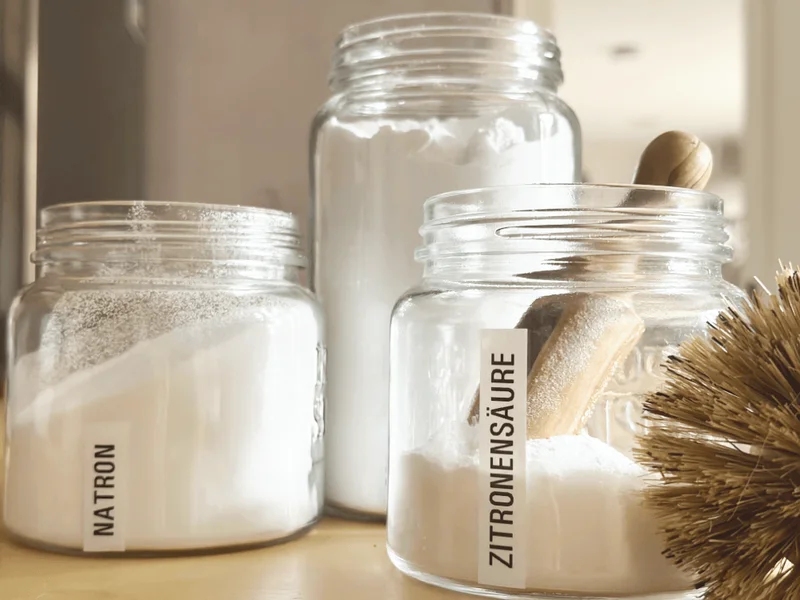
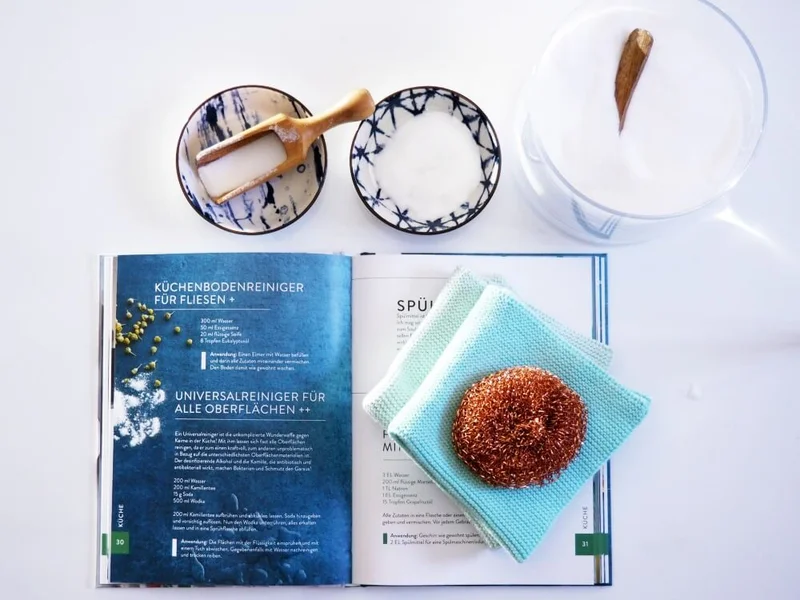
What does this mean concretely for your cleaning cabinet? You can safely forget all the specialty cleaners. You basically only need two powders for 90 percent of all tasks: soda and baking soda. And storage is crucial to avoid sinking into chaos. I recommend two large, well-labeled storage jars. One for soda, one for baking soda. Important: seal them airtight, as both powders attract moisture. Next to them, provide a small measuring aid, such as an old, clean teaspoon.
- 1 large jar of soda
- 1 large jar of baking soda
- Airtight sealed
- Measuring aid (teaspoon)
Nothing more for 90% of all cleaning tasks!

Conclusion on Baking Powder for Cleaning
Baking powder belongs in cake batter, not in your cleaning routine. With soda and baking soda, you achieve better results, protect your surfaces, and save real money. Just try it out during your next cleaning.
The Video

*Amazon Affiliate Link
https://amzn.to/4rtoNMP
Did you like the article? Then feel free to save it on Pinterest