Stone Carpet: Costs and Installation for an Outdoor Driveway
Creating an outdoor driveway with a stone carpet combines natural aesthetics, weather resistance, and longevity. Explore costs, installation options, and technical details to enhance your home.
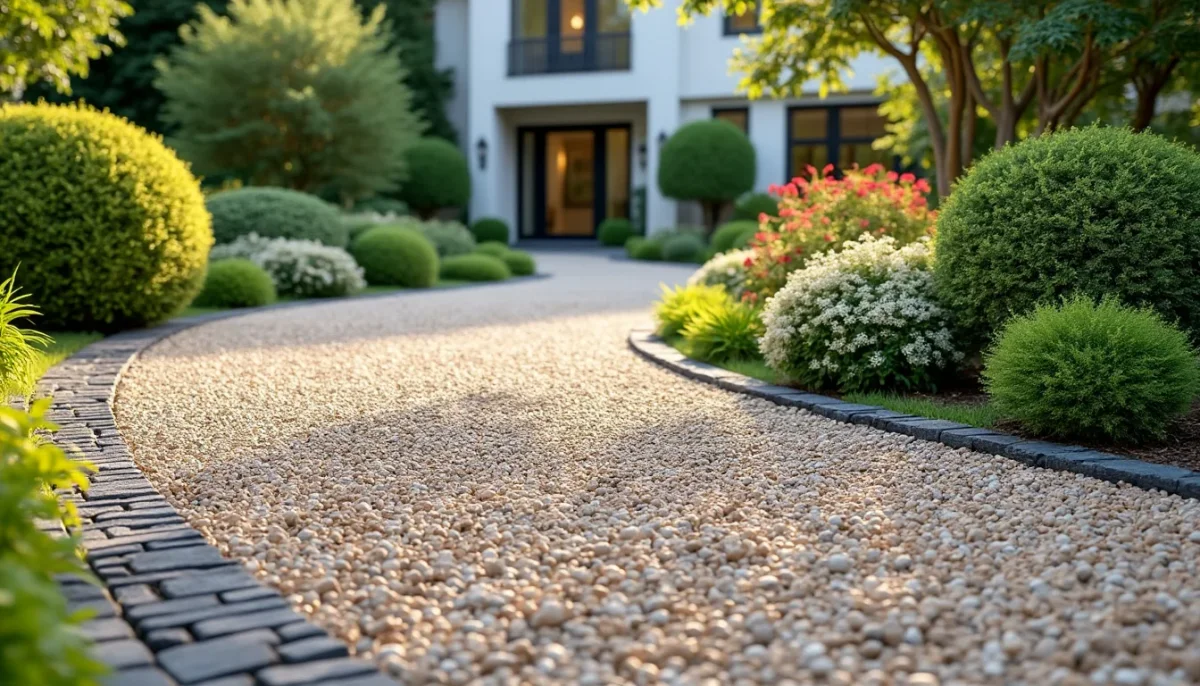
Creating an outdoor driveway with a stone carpet is an appealing choice for homeowners looking to enhance their property's aesthetics while ensuring durability and weather resistance. This material, made from marble aggregates bound by polyurethane resin, is gaining popularity among those who want to improve their outdoor spaces without compromising on functionality. Whether for a pedestrian walkway leading to a home, a driveable access in front of a garage, or a garden path, the stone carpet adapts to various configurations. However, before embarking on such a project, a crucial question arises: what are the actual costs, and how is the installation process carried out? The price ranges can vary significantly between DIY kits and professional services, influenced by technical choices such as the type of resin used and the condition of the existing surface. Understanding these factors is essential to avoid unexpected costs and ensure a smooth project.
In brief:
- The cost of stone carpet for an outdoor driveway ranges from €30 to €75 per m² for materials alone, and between €80 and €120 per m² when including professional installation.
- Aliphatic polyurethane resin is highly recommended for outdoor use due to its UV resistance and longevity.
- Complete kits are available for self-installation, covering areas from 8 m² to 100 m².
- The condition of the existing surface can increase costs by 30% if repairs are necessary.
- A driveable surface is structurally 30% to 50% more expensive than a pedestrian walkway due to greater thickness and resin content.
- A 10% VAT applies to renovation work on homes over two years old.
Understanding the Stone Carpet for Outdoor Driveways
The stone carpet, also known as a stone rug, consists of natural aggregates, typically rolled marble, coated in a binding resin. This mixture is spread over a prepared surface, creating a continuous, aesthetically pleasing, and permeable layer. Unlike exposed concrete or tiles, it does not produce joints, offering a visually continuous surface that is highly valued in modern landscaping.
This type of covering is particularly suitable for outdoor driveways as it naturally manages rainwater drainage due to its porous structure. No more standing water after a rain shower; the water seeps directly through the gaps between the aggregates. This feature is a significant advantage in areas with heavy rainfall, but it also presents technical requirements for the underlying surface.
Marble aggregates come in various colors, allowing customization to match the architectural environment. A light facade might call for a white or ivory carpet, while a stone house would harmonize better with beige or ochre tones. Additionally, mixing multiple colors can create specific visual effects, provided that the logistics of blending are well planned.
A technical detail worth noting is that the standard grain size for pedestrian walkways is between 2.5 to 5 mm. For a driveable area, coarser aggregates are used, and a higher resin content is required, which significantly affects the cost and installation technique. Understanding these fundamental distinctions helps avoid sizing errors and post-installation disappointments.
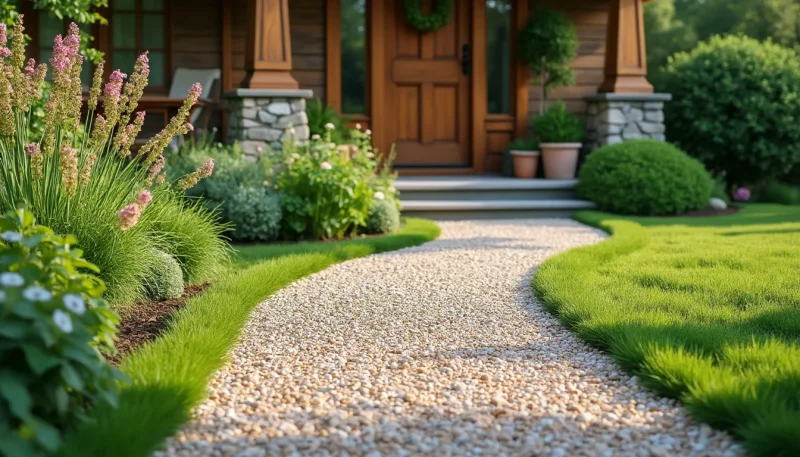
Price of Stone Carpet per m²: Realistic Ranges for a Driveway
Price is often the first consideration, and understandably so. For an outdoor driveway, costs vary depending on whether you choose to install it yourself or hire a professional. For materials alone, expect to pay between €30 and €60 per m², depending on the quality of the aggregates and the type of resin selected. With a qualified artisan handling the installation, the total budget typically falls between €80 and €120 per m², including materials and labor.
However, these ranges can obscure the realities of different projects. A homeowner with a sound concrete base will likely fall into the lower price bracket, while a deteriorated surface requiring extensive repairs will see costs rise significantly.
Factors Affecting the Budget
The type of resin used is a crucial yet often underestimated variable in cost estimates. There are two main categories: epoxy resin and aliphatic polyurethane resin. Epoxy is cheaper initially but tends to yellow under UV exposure within two to four years, necessitating early project rework. In contrast, aliphatic polyurethane resin is UV resistant, maintains flexibility in cold weather, and adheres well to older surfaces. Its lifespan can reach 20 to 25 years with minimal maintenance. The price difference per m² between these two resins is around €15 to €20, but this is more than offset by the superior longevity of polyurethane.
The condition of the surface is another significant factor. A simple dusting and application of a bonding primer suffice for a recent, healthy concrete surface, adding a cost of €3 to €8 per m². However, if the ground shows signs of distress, preliminary work can quickly accumulate:
- Light leveling for minor irregularities: €8 to €15 per m²
- Deep leveling or repair of significant cracks: €15 to €25 per m²
- Moisture treatment or capillary rise issues: €10 to €20 per m²
- Removal of an old bonded covering: €5 to €15 per m²
In many analyzed projects, most defects observed after installation were directly related to insufficient preparation of the underlying surface. Therefore, a thorough pre-assessment, including a moisture test and flatness check, is essential before any serious cost estimates.
The total area of the job also influences the unit price. For areas less than 15 m², fixed costs for travel and equipment preparation are spread over a small surface, raising the cost beyond €150 per m². Conversely, for areas exceeding 50 m², a discount of 8% to 15% is typically applied. If another area needs treatment within two years, it may be wise to consolidate the work into a single project.
DIY Installation or Professional Help: Choosing the Right Approach
Installing a stone carpet is feasible for experienced DIY enthusiasts, provided they meticulously follow the steps and use appropriate materials. Complete kits are available for areas ranging from 8 to 100 m², including epoxy bonding primer, UV polyurethane resin, and marble aggregates. For a common driveway size of about 33 m², a standard kit typically includes 6 liters of primer, 20 kg of resin, and 500 kg of aggregates divided into twenty 25 kg bags.
For those wanting to test the material before committing to a larger area, a trial kit covering approximately 1.5 m² is available. It contains a 25 kg bag of aggregates and 1 kg of resin, without the bonding primer. This is a smart way to validate the visual outcome and grasp the technical process before ordering the final quantities.
Key Steps for Successful Installation
Installation begins with preparing the surface. The ground must be clean, dry, and free of dust. Applying the bi-component epoxy bonding primer, mixed at a 1:1 ratio, creates a barrier against residual moisture and prevents bubble formation on the surface. This product should cover the entire area and must dry completely before proceeding to the next step.
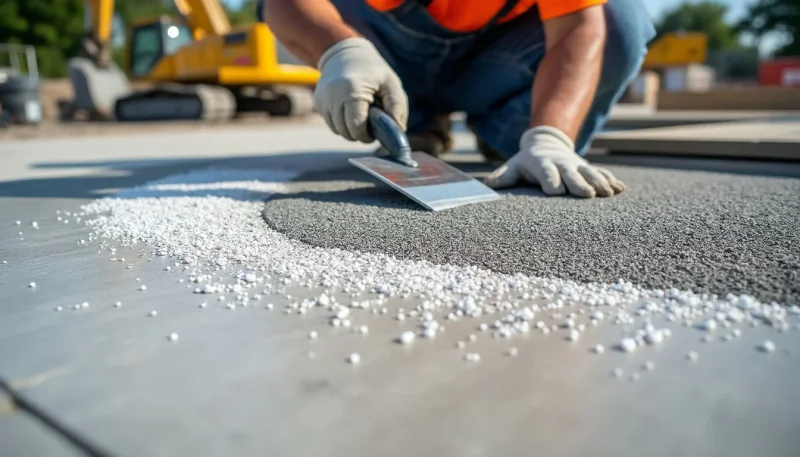
Next comes mixing the aggregates with the polyurethane resin. This mixture must be homogeneous, with the resin content adjusted based on usage: less than 5% for pedestrian areas, more for driveable surfaces. Using a specific pouring box facilitates even distribution of the mixture across the surface, avoiding irregularities. This tool saves considerable time, especially on flat and continuous surfaces.
For driveable areas, such as a parking space or access in front of a gate, the thickness increases to 20 mm compared to 8 mm for pedestrian use. A renovation resin can be applied as a finish to enhance the surface and fill gaps between aggregates, making the covering waterproof if needed. This surface treatment alters the permeable nature of the carpet but improves its mechanical resistance.
Aluminum finishing profiles, available in straight or bendable versions, allow for clean edges at the driveway's borders and ensure a neat separation between the carpet and surrounding areas. This detail can significantly impact the final appearance. For well-planned projects, the overall outdoor layout deserves comprehensive consideration, mirroring the cohesive material approaches seen in contemporary interior design inspirations.
Driveable Stone Carpet: Technical Specifications and Additional Costs
A driveable stone carpet represents a specific application of the material, subject to higher mechanical constraints than simple pedestrian traffic. Cars, scooters, and motorcycles require the covering to withstand repeated loads without deforming or detaching. Technical rules differ significantly from those for terraces or garden paths.
The minimum thickness for a driveable area is 20 mm, compared to 8 mm for pedestrian use on concrete slabs. The grain size of the aggregates is also adjusted, with coarser grains providing better mechanical grip. The resin content, which remains below 5% for pedestrian areas, rises to about 10% for surfaces intended for light vehicles. These technical adjustments directly affect the volume of materials required and, consequently, the cost per m².
Driveable Kits: What They Really Include
A complete kit for a driveable area covering 12 m² typically includes 2 liters of epoxy primer, 20 kg of polyurethane resin, and twenty bags of aggregates, ensuring everything needed for a robust installation is at hand. Understanding these components is crucial for anyone considering a stone carpet for their outdoor spaces.