Storing Tupperware
Learn how to effectively manage your Tupperware storage, reduce clutter, and adopt sustainable practices in your kitchen.
contains advertising
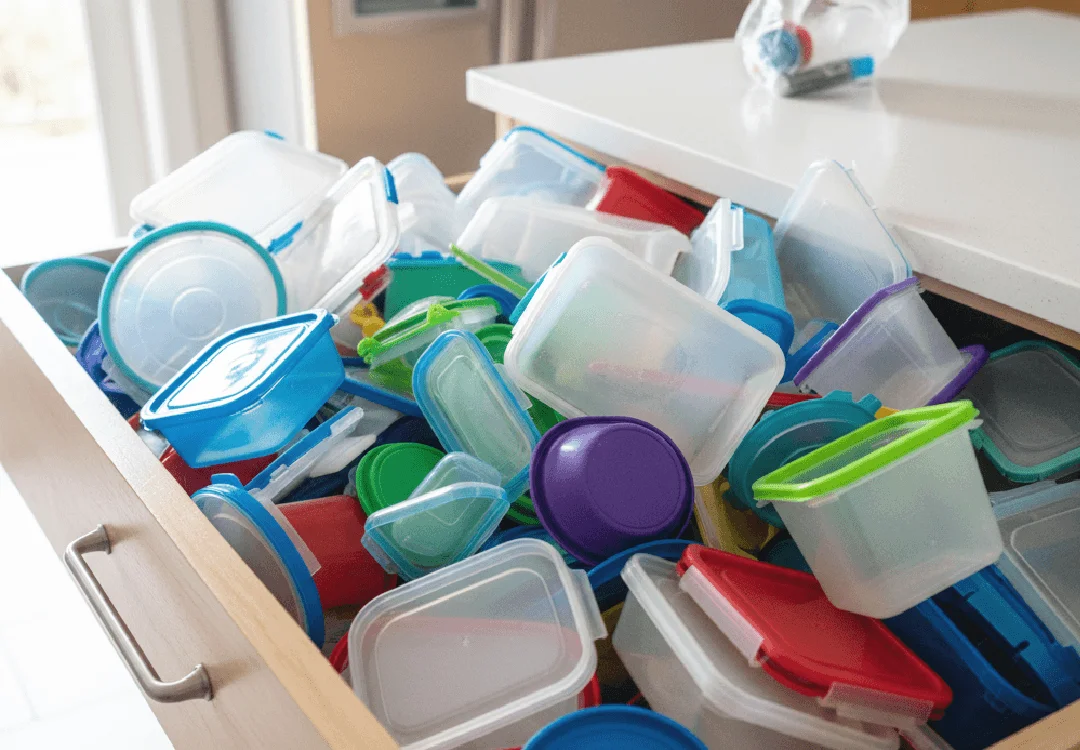
You know exactly which drawer (or shelf) I mean, because it’s that one place that you use regularly but never really want to look at, as it has developed its own chaos over time: a collection of plastic containers, lids that no longer match, and containers that you’re not quite sure when they were last used.
And even though you think every time you open it that you should finally take care of it, you keep putting it off because you tell yourself that all of it can still be useful. And because it’s so uncomfortable to deal with, everything gets thrown in haphazardly.
That’s exactly how I felt about storing Tupperware.
Why We Find It Hard to Let Go
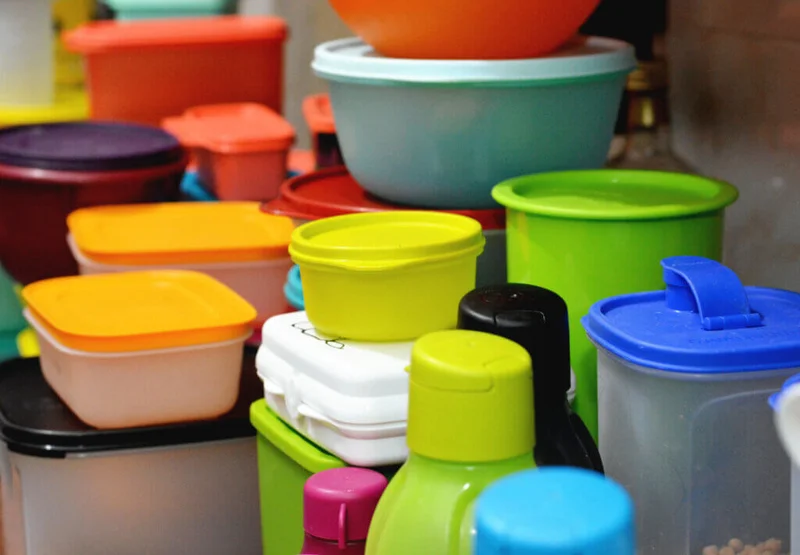
For me, it was mainly those typical everyday containers like Tupperware, small plastic boxes, or packaging that is "still good" and that I kept with the thought of using them meaningfully someday.
We all know that we are harming our planet with all this plastic. And so I wanted to act consciously, waste nothing, and live as sustainably as possible. That’s exactly why it was so hard for me to part with these items, even though I simultaneously realized that they neither helped me in my daily life nor really contributed to more order.
At some point, I found myself in front of a mountain of individual pieces, where hardly anything matched anymore, and I realized that I had not only lost space but also a little bit of energy every time I tried to find something in there.
But there are other reasons why we find it so hard to part with plastic containers: The first reason is the Scarcity Mindset. This often comes from childhood or from parents, often with the phrase: "You don’t throw anything away; it can still be used!"
Then comes the next effect: the Sunk Cost Fallacy. You hold a broken container in your hand and think, "But that cost two euros back then!" Your brain cannot bear to feel that "loss" of two euros again when you throw the container away now.
The “What-if” trap also prevents us from disposing of things: "What if I need to make potato salad for the whole soccer team and need to transport it?" "What if I suddenly want to freeze three different soups?" We plan and hoard for hypothetical scenarios that probably will never happen.
What Changed for Me in Storing Tupperware
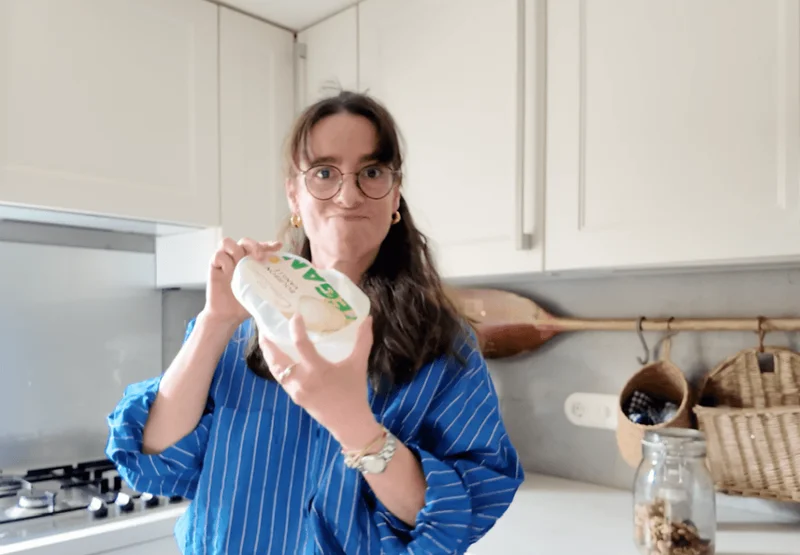
The crucial point was not that I thoroughly sorted things out (of course I did; you know me!), but that I started to fundamentally question and change my system. What do I really need? How many bread and freezer containers do I need in daily life? What do I only need once a year and could I borrow instead?
In this context, I came across vacuum sealing, which surprisingly turned out to be a very practical solution for more clarity and structure in everyday life.
Why Vacuum Sealing Makes a Difference in Daily Life
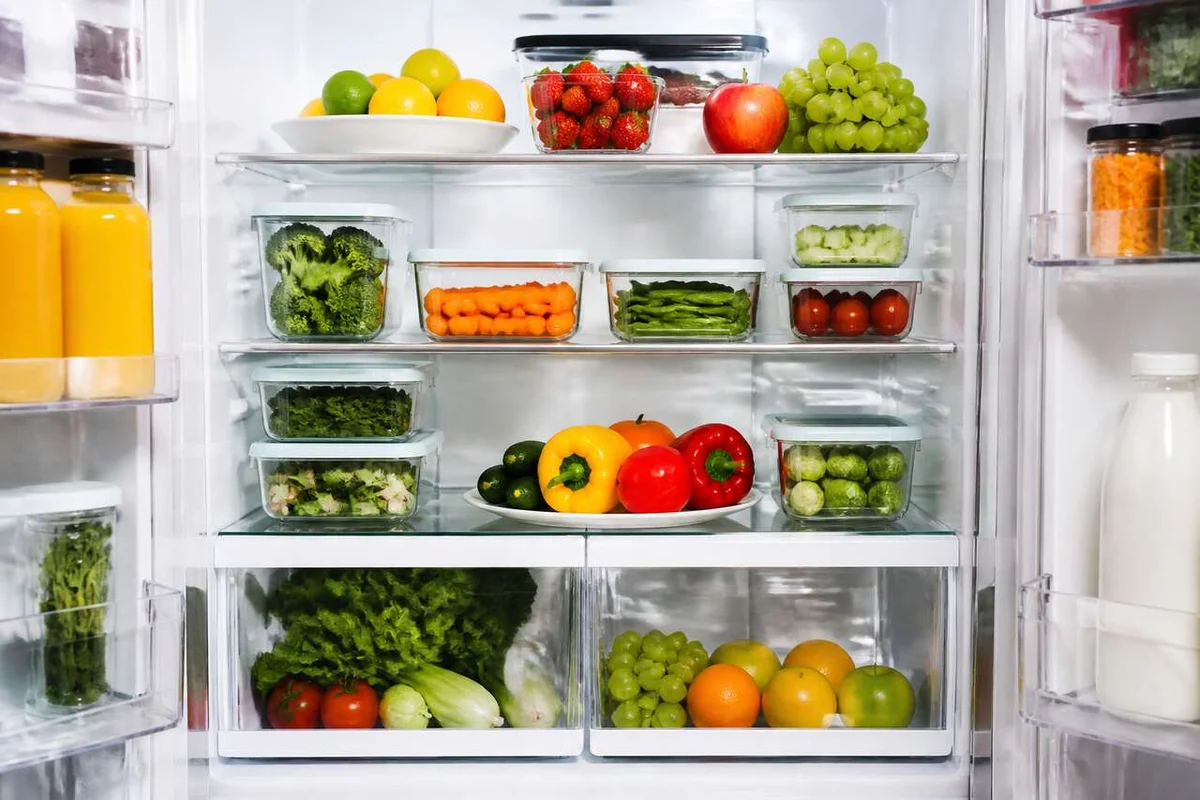
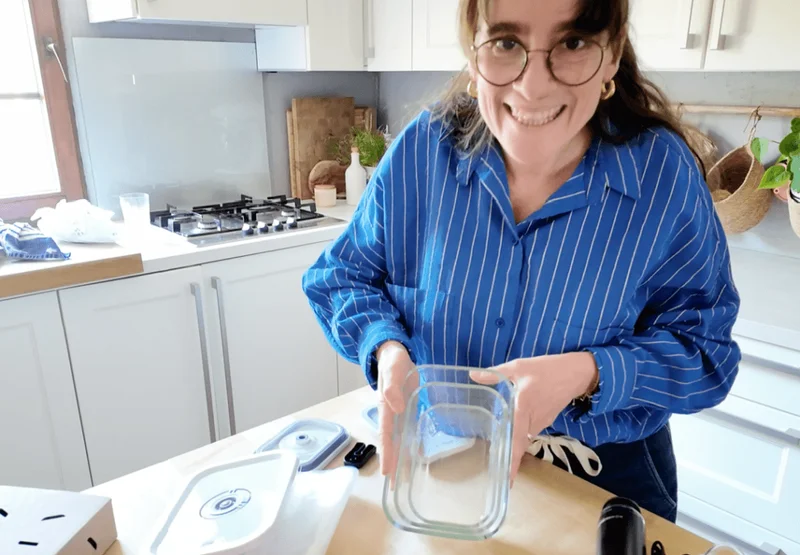
Since I started vacuum sealing food, my approach to supplies and leftovers has changed significantly. By removing the air, food stays fresh much longer, which not only means that I have to throw away less, but also that I can shop and cook more relaxed, and almost everything can be stored without needing to be consumed immediately.
At the same time, more order is automatically created because vacuum-sealed bags or the appropriate containers take up significantly less space and can be stacked neatly, so the refrigerator and freezer no longer appear overcrowded and disorganized.
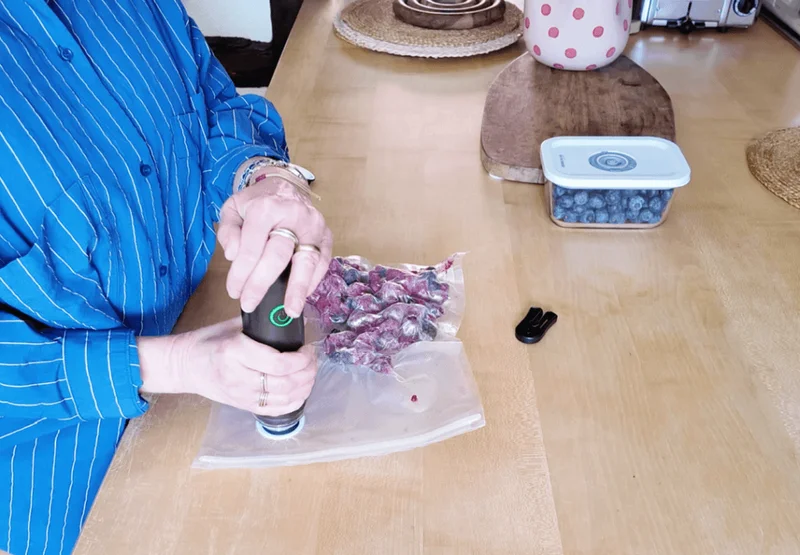
What I Use for This
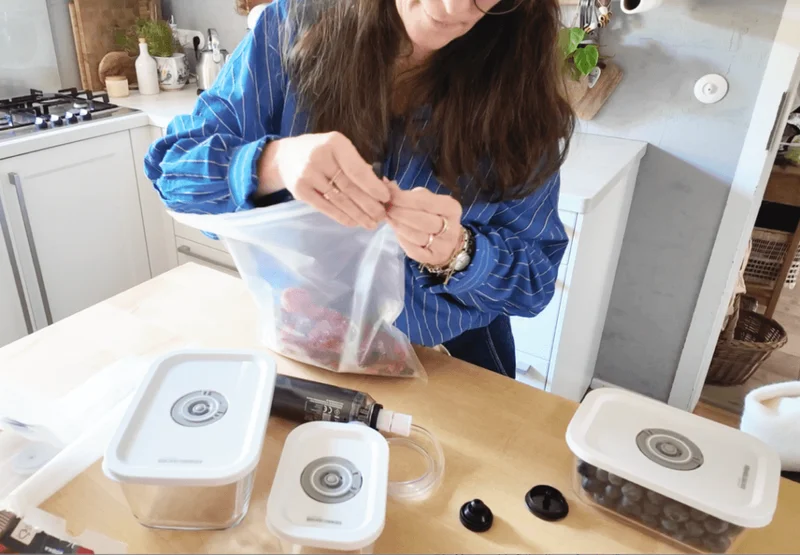
I use a small handheld vacuum sealer, the VAC 25 (there is a starter set VAC 253/S with bags and glass containers) from Rommelsbacher, which can be easily integrated into daily life and works without much effort.
What I particularly like about it is that it’s quickly ready for use, takes up little space, and supports exactly what is important to me: simple solutions that truly make everyday life easier rather than complicating it further. The vacuum sealer is the perfect basis for optimally packaging fruits, vegetables, meat, cheese, supplies, or prepared dishes and keeping them fresh for much longer.
If you want to try it too: With the discount code Food-20, you get 20% off
- the Hand Vacuum Sealer Starter Set VAC 253/S
- the Hand Vacuum Sealer VAC 25
- and the Vacuum Glass Containers (set of 3) VCG 1
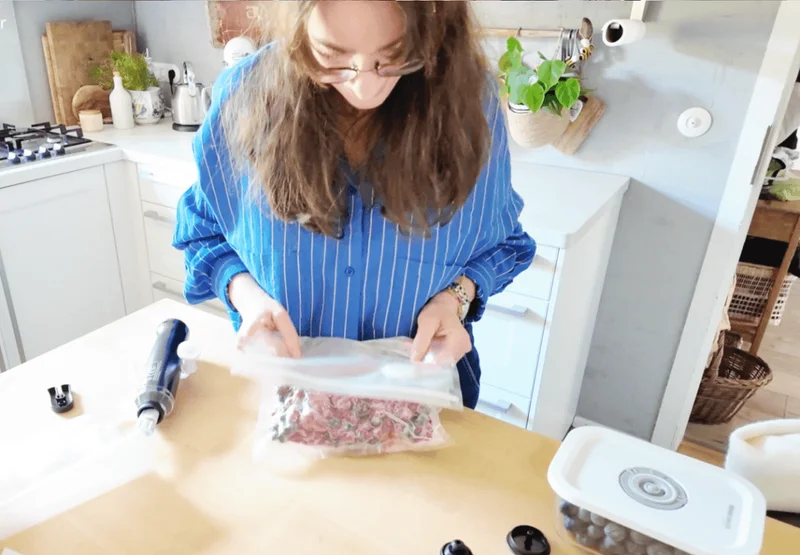
What I Learned from This
In hindsight, I would say that it’s less about storing as many things as possible and more about finding a system that really works and fits your habits, because order does not come from holding onto everything, but from conscious decisions.
By vacuum sealing, I shop more consciously, store food better, and have significantly less waste, which positively affects not only the order but also the entire daily life. Because that one drawer in the kitchen was ultimately not a coincidence, but a sign that my previous system did not work, even though it felt sensible for a long time.