Understanding Concrete Drying Times: Key Factors and Realistic Expectations
Understanding the drying times for concrete is essential for successful home construction. Learn about the factors affecting drying and how to ensure your slab is properly cured.
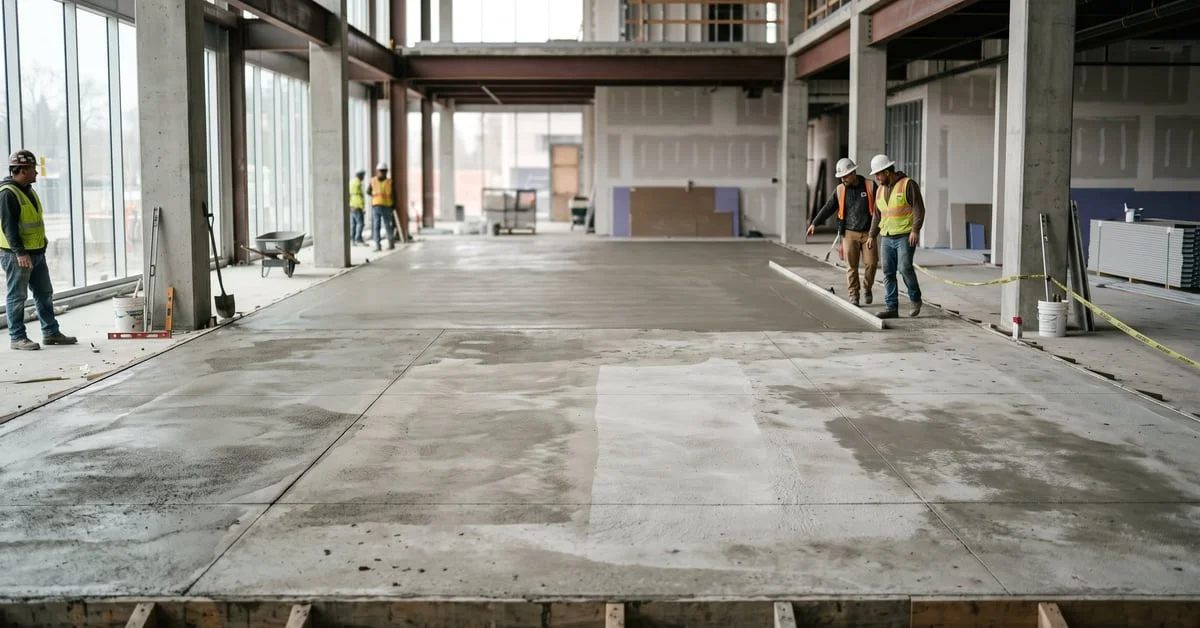
The commonly cited figure for concrete drying is 28 days. This duration is frequently reiterated by concrete manufacturers and industry standards. However, in real-world construction scenarios, this guideline is often overlooked, leading to potential costly consequences. Issues such as cracked slabs, tiles that lift months after installation, and weakened screeds under load can often be traced back to misunderstandings or negligence regarding the drying process.
Concrete drying is not merely a matter of waiting; it involves intricate chemical processes, including carbonation and hydration of cement. These processes are influenced by various factors such as temperature, slab thickness, water-to-cement ratio, and ventilation. A comprehensive understanding of these elements is crucial to avoid common mistakes and to save time without compromising safety.
Drying Times Based on Slab Type
Standard On-Site Poured Concrete Slab
For a standard slab with a thickness between 12 and 20 cm, concrete typically reaches about 70% of its final strength after 7 days. Walking on it is generally permissible within 24 to 48 hours, but introducing heavy loads before the 28-day mark remains risky. The nominal compressive strength indicated on technical data sheets is achieved at 28 days under laboratory conditions (20 °C, controlled humidity).
In practice, concrete continues to harden well beyond this period. By 90 days, it can gain an additional 10 to 15% in strength. This means that concrete poured in November and left undisturbed until spring will often be stronger than a slab poured in July that was subjected to early stress.
✅ Key Point: Walkable within 48 hours, but wait at least 28 days before applying any coverings (tiles, flooring, resin) or subjecting the slab to significant loads.
Fluid Screed and Self-Leveling Concrete
Fluid screeds, whether based on anhydrite or fluid cement, behave differently. They dry faster on the surface—some formulations can be walked on after just 24 hours—but remain damp internally for weeks. The residual moisture content must drop below 2.5% CM (carbide measurement) before installing moisture-sensitive coverings. If unsure, a CM test or contact hygrometer can provide verification without taking unnecessary risks.
Thin Slabs (Less than 8 cm)
Thin slabs dry more quickly in terms of volume but are also more susceptible to thermal shock and humidity variations. A 5 cm slab poured on a south-facing terrace may appear dry on the surface after 3 days, yet exhibit significant moisture differences with its core. Visual assessments alone are misleading.
⚠️ Factors That Influence Drying Time
Temperature and Weather Conditions
Concrete does not simply dry; it undergoes carbonation and hydration. These chemical reactions are highly sensitive to temperature. Below 5 °C, hydration slows significantly; at temperatures below 0 °C, it halts entirely, risking irreversible micro-cracking due to freezing water within the concrete. Conversely, high temperatures can speed up surface drying but create a moisture gradient between the exterior and the core of the slab.
In France, pouring concrete in extreme summer heat (35 °C and above) or during winter frosts requires specific precautions: protective tarps, curing compounds, and light watering during heat waves to slow evaporation. Sudden weather changes during the curing phase can jeopardize the integrity of the slab.
⚠️ Important Reminder: Never pour concrete during freezing conditions without thermal protection. Just one night at -3 °C can ruin a fresh slab, necessitating a complete redo. Always check the weather forecast for several days prior to starting.
Water-to-Cement Ratio (W/C)
The more water added to facilitate mixing, the longer the drying process will take—and the lower the final strength will be. A common mistake on amateur jobs is using overly liquid concrete to simplify handling. The ideal W/C ratio lies between 0.4 and 0.5. Ratios exceeding 0.6 can significantly reduce strength and increase drying shrinkage, leading to cracks.
0.45 is the optimal water-to-cement ratio for durable, strong concrete.
Thickness and Ventilation
Water evaporates from surfaces exposed to air. A 20 cm thick slab takes twice as long to dry as a 10 cm slab—not because of double the volume, but because the water in the center has a longer path to escape. The ventilation of the space also plays a critical role; a closed basement without air circulation can double the drying time compared to an airy environment. A professional dehumidifier can reduce this drying time by 30 to 40% in critical cases.
How to Ensure Your Slab is Properly Dried
Reliable Measurement Methods
Visual appearance alone is insufficient. A slab may seem completely dry on the surface while still retaining 5% residual moisture beneath. Several reliable methods exist:
- Carbide Test (CM): The reference method for professionals. A sample of the concrete is taken, and gas release is measured with calcium carbide. Results are available in under 30 minutes, accurate to 0.1%.
- Electronic Contact Hygrometer: Less precise but quick. Useful for initial diagnostics before conducting a CM test.
- Plastic Test: A plastic film is adhered to the slab for 72 hours. If condensation forms underneath, the residual moisture is too high.
💡 Tip: For parquet or LVL installations, always require a CM test before ordering the covering. The cost of the test (approximately €80-150) is negligible compared to the expenses of rectifying a flawed installation. Some flooring manufacturers even condition their warranties on this result.
Common Errors
Two recurring mistakes on construction sites include:
- Covering the slab too early with impermeable materials (tiles, epoxy resin) while residual moisture remains high. This traps moisture, leading to blisters, detachment, or white stains.
- Underestimating seasonal impacts: A slab poured in November in an unheated garage may take 60 to 90 days to reach the required moisture level, compared to just 28 days in a well-ventilated summer setting.
A good rule of thumb is to mentally double the standard drying time whenever conditions are less than ideal (temperature < 10 °C, high ambient humidity, significant thickness). This is rarely a waste of time and often results in cost savings.
Frequently Asked Questions
Can tiles be installed on a concrete slab after 28 days?
28 days is the minimum timeframe under ideal conditions (20 °C, good ventilation). Before tiling, it’s essential to check that the residual moisture content is below 4.5% CM for standard concrete. In real conditions (cold season, closed space, thick slab), this moisture level may not be achieved until 6 to 10 weeks. A carbide test remains the only truly reliable method.
How long should one wait before walking on a fresh concrete slab?
It is generally safe to walk on a standard concrete slab between 24 and 48 hours after pouring, depending on the ambient temperature. Below 10 °C, it’s advisable to wait 72 hours. Avoid heavy loads (machines, pallets) before 7 days, and refrain from any structural loads before 28 days.
Can freezing damage a concrete slab during drying?
Yes, and this is one of the most serious risks. If concrete freezes before reaching sufficient strength (usually within 48-72 hours of setting), the water inside expands, causing micro-cracks that permanently weaken the structure. Below 5 °C, protect the slab with insulating tarps or thermal protection covers, and heat the space if possible.
What is the difference between drying and curing concrete?
Drying refers to the evaporation of free water contained in the concrete. Curing, on the other hand, is an active treatment aimed at maintaining moisture in the concrete during the initial days to ensure proper hydration reactions occur. Paradoxically, concrete that dries too quickly on the surface (due to high heat or wind) may be less durable than concrete kept moist through watering or curing compounds.
Can the drying of a concrete slab be accelerated?
Yes, to some extent. A professional dehumidifier in a closed space can reduce drying time by 30 to 40%. Heating the environment (above 15 °C) also speeds up chemical reactions. However, avoid blowing hot air directly onto the slab, as this can dry the surface too quickly and create a moisture gradient that promotes surface cracking.