Aluminum Cladding: Benefits and Installation Guide
Aluminum cladding is gaining popularity for its durability and low maintenance. This guide explores its advantages, installation steps, and aesthetic options for homeowners.
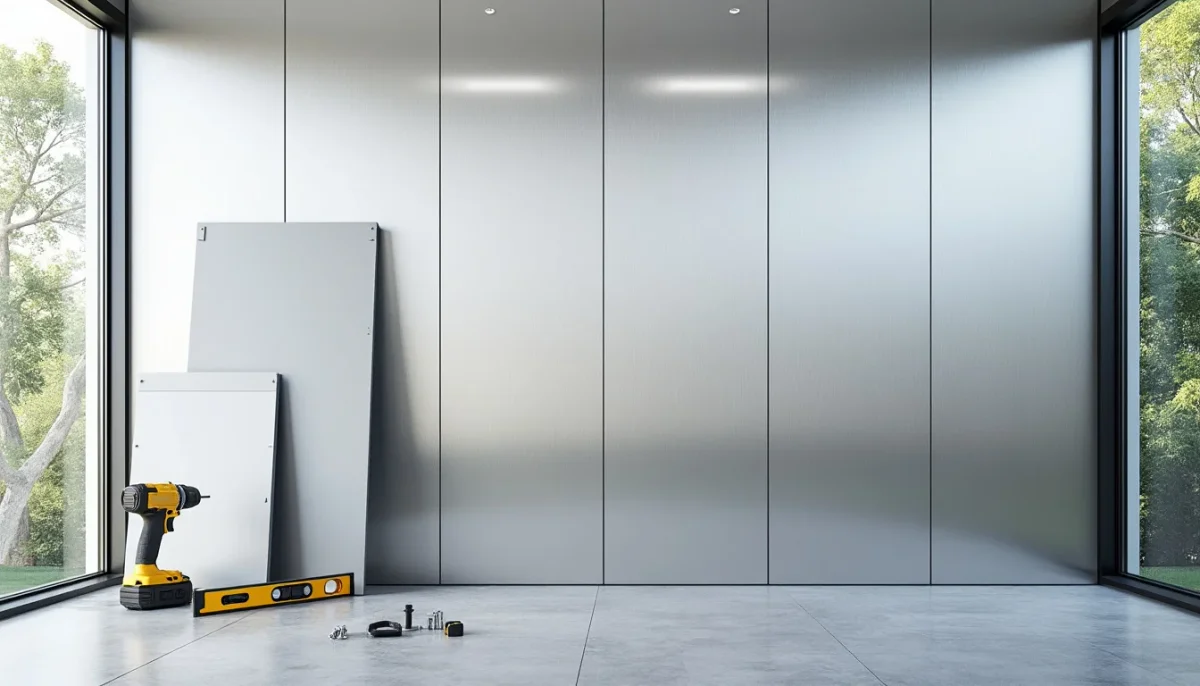
Aluminum has emerged as a top choice for exterior cladding in buildings. Once primarily associated with industrial projects or high-end new constructions, aluminum cladding has made significant inroads into the residential renovation market, thanks to its remarkable intrinsic qualities. Whether used under eaves, along porches, beneath balconies, or to cover terraces, this material addresses common challenges faced by many homeowners: time-consuming maintenance, the gradual degradation of natural materials due to weather, and the quest for aesthetically pleasing yet durable solutions. Unlike wood, which can crack, warp, or fade, or PVC, which often offers a limited and unappealing white finish, lacquered aluminum combines strength, lightness, and customization options. It withstands UV rays, frost, rain, and hail without requiring additional paint. This comprehensive guide explores why aluminum deserves serious consideration and outlines essential steps for successful installation, whether you are a seasoned professional or a knowledgeable DIY enthusiast.
- Aluminum cladding is resistant to UV rays, frost, hail, and rain without regular maintenance.
- Available in various colors: white, sand, copper, brick, brown, slate, and other shades on request.
- Installation is done on a wooden framework with an integrated expansion system and no visible screws.
- Aluminum cladding can help reduce heat loss under roofs.
- It is a superior replacement for spruce eaves boards, requiring no sanding or painting.
- Lightweight and rigid, it suits both new constructions and renovations.
Why Choose Aluminum Cladding for Exterior Covering
The choice of exterior cladding goes beyond mere aesthetics. When renovating an eave, porch, or the underside of a balcony, homeowners primarily seek a solution that stands the test of time without imposing burdensome maintenance. This is where aluminum cladding truly shines.
Consider the spruce eaves boards found on countless French homes. Over the seasons, wood deteriorates: it swells with moisture, cracks in the sun, and darkens from mold. Each spring brings the tedious ritual of sanding, treating, and painting. Aluminum breaks this cycle. Once installed, it remains stable, clean, and intact, even after years of exposure to the elements.
This material operates on the same principle as aluminum gutters, known for their longevity over decades. No progressive degradation, no surface alteration, and no swelling from moisture. For homeowners seeking a truly permanent solution, this is a compelling argument.
Technical Advantages That Make a Difference
The aluminum used for cladding is generally pre-painted to 25 microns, providing exceptional resistance to climatic aggressions. This coating thickness effectively protects the surface from ultraviolet rays, which are responsible for the yellowing and weakening of many plastic coatings.
Its lightweight nature is often underestimated. A 7/10 mm thick aluminum cladding offers remarkable rigidity while remaining easy to handle on-site, even at height. Unlike some heavy composite materials, it does not overload existing structures, which is particularly beneficial in renovations where beams may be older.
Another rarely highlighted benefit is thermal contribution. When installed under a roof, aluminum cladding can limit heat loss from the interior, thereby improving the building's energy performance—a subtle yet real advantage, especially in regions with harsh winters.
The Freedom of Colors: A Decisive Argument Against White PVC
One of the most common criticisms of traditional PVC is its lack of customization. For a long time, white was practically the only option available, imposing a visually unappealing uniformity on well-maintained facades.
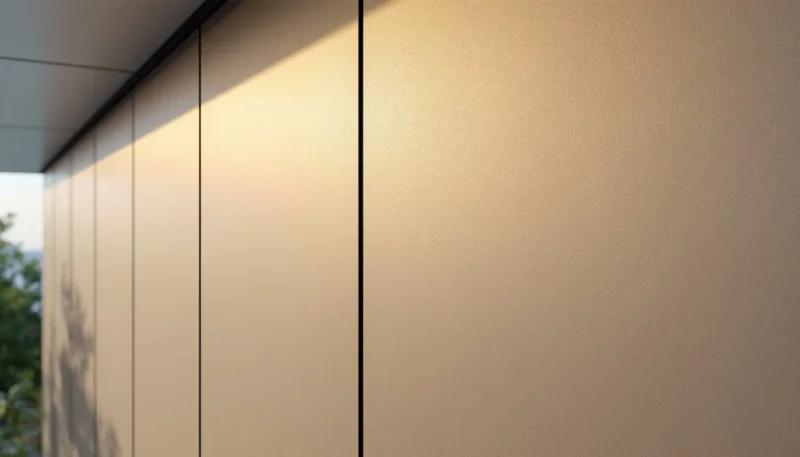
Aluminum cladding changes this narrative. It comes in an extensive color palette: white, sand, copper, brick, brown, slate, and other shades available upon request from manufacturers. This variety allows homeowners to perfectly coordinate the cladding under the roof with the color of windows, gutters, or shutters. The result is a cohesive visual appeal that truly enhances the building.
A specialized facade renovation contractor can confirm that this aesthetic criterion often sways even the most hesitant homeowners. The ability to match the color of the cladding precisely with existing joinery represents a radical shift in perspective. Aluminum no longer constrains; it liberates.
Practical Applications of Aluminum Cladding in a Home
Aluminum cladding is not limited to a single use. Its versatility makes it suitable for numerous areas of a home, whether in new construction or renovation. Each application meets specific constraints, and aluminum responds effectively.
Eaves are the most common application. This roof overhang protects the facades from rain and often leaves the space underneath neglected, sometimes left bare or covered with aging wood. Aluminum cladding fits naturally here, neatly covering this area while providing long-lasting protection.
Porches and covered terraces also represent a key application. These intermediate living spaces, between indoors and outdoors, deserve special attention. A well-finished terrace ceiling transforms the space and gives it a polished appearance that visitors immediately notice.
Eaves Boards and Gable Cladding: The End of a Recurring Chore
The eaves board is the wooden element that borders the roof at the facade or gable. It plays an important protective role but suffers from direct exposure to the elements. When made of wood, it requires regular maintenance or it quickly degrades.
The aluminum version of this board is installed in the same way as its spruce counterpart, significantly simplifying its replacement during renovations. No visible screws are apparent in well-designed systems, and an integrated expansion mechanism ensures that seasonal temperature variations do not cause deformation or loosening of attachments.
Homeowners who made this choice a few years ago often express the same relief: no more scaffolding in spring to repaint boards that suffered through winter. It’s a one-time decision that frees up time and energy for other projects.
The matching cover strip, available in the same color ranges as the cladding, ensures a perfect finish at the junctions. This seemingly minor detail greatly contributes to the visual quality of the final result.
Preparing and Successfully Installing Aluminum Cladding
The quality of the final result depends as much on preparation as on the installation itself. Well-installed aluminum cladding on a solid framework will last for decades without issues. Conversely, hastily installed cladding without attention to technical details can quickly lead to problems with sealing, deformation, or disappointing finishes.
First and foremost, it’s essential to assess the condition of the existing support. Is the wooden framework sound? Are the rafters straight and properly spaced? If any elements are degraded, they need to be treated or replaced before installing the cladding. Applying a durable covering over a weakened support would be a costly mistake in the long run.
Acclimating the material, though less critical with aluminum than with wood, remains a good practice. Allowing the panels to sit on-site for a few hours before installation helps avoid tensions due to significant temperature differences between storage and the final location.
The Wooden Framework: The Essential Base for a Durable Installation
Aluminum cladding is fixed onto a wooden framework, which plays a fundamental role in the quality of the installation. This framework must be perfectly level, as even the slightest misalignment will affect the alignment of the boards and be visible once completed.
The battens used to create this framework should be treated against moisture and insects. While aluminum itself is not affected by water, the wooden support remains exposed and must be protected to ensure the longevity of the whole system. An autoclave treatment of class 3 or 4, depending on exposure, is recommended for elements in contact with the exterior.
The spacing between the battens should be calculated based on the width of the boards and the manufacturer's recommendations. Generally, a spacing of 40 to 60 centimeters between supports ensures sufficient rigidity without overloading the site with materials.
Key Steps for Installing Aluminum Cladding
Once the framework is in place, the installation of the boards can begin. Here are the essential steps to follow for a flawless result:
- Define the starting point using a laser or bubble level to ensure the horizontal alignment of the first board.
- Respect expansion gaps around the perimeter and between the boards, usually a minimum of 5 mm, to accommodate thermal variations.
- Fix without visible screws using the clip or embedding systems provided by the manufacturer.
- Install the cover strip at junctions and connections to conceal cuts and ensure sealing in sensitive areas.
- Regularly check the level throughout the installation to correct any slight misalignments before they accumulate.
- Make cuts using a metal saw or shear to achieve clean edges without burrs.
- Finish with border elements: corner strips, start and end profiles for a polished finish on all edges.
Attention to detail in the finishing touches often makes the difference between an ordinary job and a truly professional one. Every detail counts, from well-adjusted angles to invisible junctions.
Maintenance, Longevity, and Added Value for Real Estate
One of the most compelling arguments in favor of aluminum cladding is undoubtedly its long-term benefit: the complete absence of demanding maintenance. While other materials require regular attention, lacquered aluminum simply needs an occasional rinse to maintain its original appearance.
In coastal areas, where salt-laden air relentlessly attacks unprotected materials, treated aluminum withstands remarkably well. In mountainous regions, where freeze-thaw cycles can be harsh, it does not crack. In urban areas, where atmospheric pollution quickly dulls surfaces, the lacquer retains its hue without yellowing.
This durability is not just a minor detail—it significantly enhances the property’s value and appeal, making aluminum cladding a wise investment for any homeowner seeking both aesthetic and practical benefits.