Bathtub-Shower Combos: Benefits and Costs
Explore the benefits and costs of bathtub-shower combos, a smart solution for modern bathrooms that balances space and comfort. Learn about models, installation tips, and financial aid options.
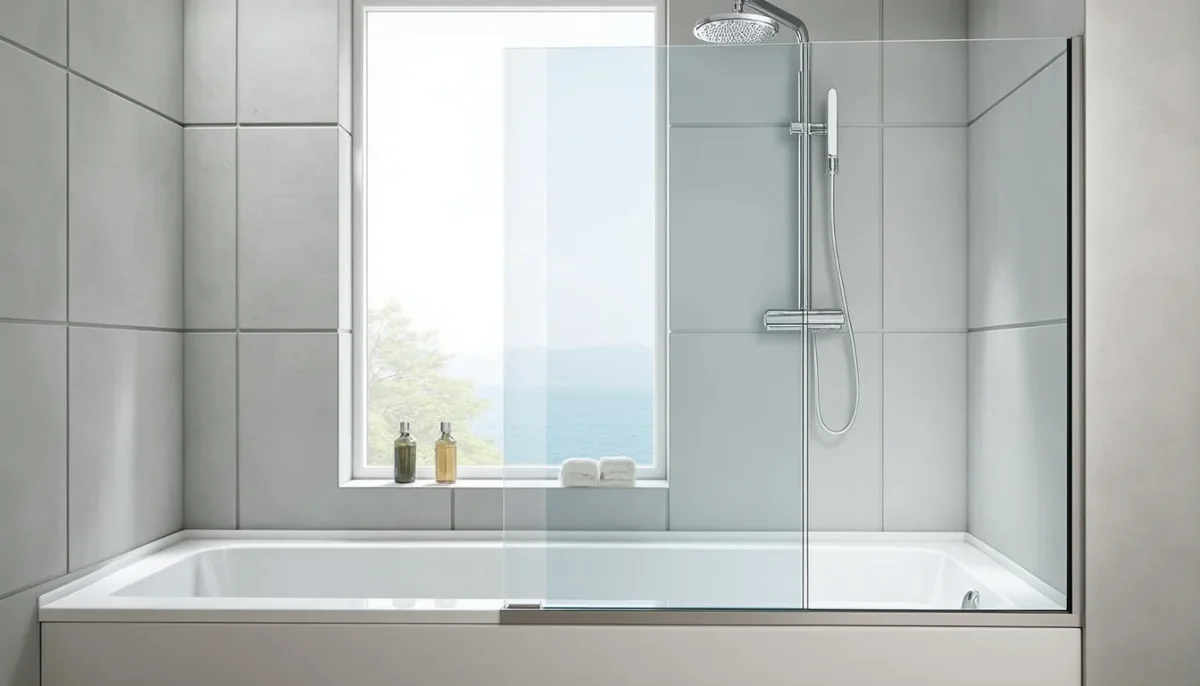
In modern bathrooms where space is often at a premium, the bathtub-shower combo emerges as a practical solution that balances comfort with constraints. Once viewed merely as a compromise, this dual-function fixture has undergone significant advancements in both aesthetics and technology. As a result, it appeals to large families and owners of small apartments looking to enhance their property value. With options that provide daily convenience, maximize usable space, and keep costs manageable, the bathtub-shower combo warrants serious consideration for any bathroom renovation project.
- The bathtub-shower combo combines two functions in one unit, making it ideal for limited spaces.
- Prices range from €700 to over €6,000 depending on the model, materials, and features selected.
- Models specifically designed for individuals with reduced mobility are available on the market.
- Professional installation is highly recommended to ensure safety and compliance.
- Financial assistance, including a reduced VAT rate of 5.5%, can ease the overall project cost.
- The choice of material (acrylic, tempered glass, composite) directly affects durability and maintenance.
- A supplementary budget of 10% is advisable to account for unforeseen construction expenses.
Why Choose a Bathtub-Shower Combo for Your Bathroom
During renovation projects, a common dilemma arises: should one sacrifice the bathtub for more space, or give up the shower to keep the bath? The bathtub-shower combo effectively resolves this issue. By consolidating both functions into a single fixture, it caters to the needs of all household members without encroaching on available space.
In a compact 45 m² Parisian apartment, each design decision carries weight. For a family of four, children may demand their evening baths while adults prefer quick morning showers. A well-chosen combo can resolve this without conflict. This practical scenario explains the growing popularity of such installations.
Beyond immediate comfort, the impact on property value is significant. Having both a bathtub and shower in the same bathroom is a strong selling point during transactions. Buyers, particularly families, are often drawn to this feature. A property renovated with this type of fixture tends to perform well in the market, typically without a disproportionate increase in investment.
A Solution Designed for Accessibility and Flexibility
The bathtub-shower combo is not solely aimed at families. For seniors or individuals with reduced mobility, certain models incorporate features designed to enhance accessibility: lowered edges, slip-resistant bottoms, and secure side entries. These fixtures support autonomy while ensuring a high level of comfort.
The flexibility of use also allows for adaptation as needs evolve. A young couple anticipating children, or someone whose elderly parents may move in, can benefit from the adaptability that neither a standalone bathtub nor shower provides.
From an energy perspective, installing a single unit simplifies plumbing, reducing long-term leak risks and easing maintenance. This often-overlooked aspect can make a considerable difference over time.
Types of Bathtub-Shower Combos and Their Technical Specificities
Today’s market offers a wide range of configurations, each catering to different space constraints and aesthetic preferences. Understanding the distinctions between these models is essential for making an informed choice.
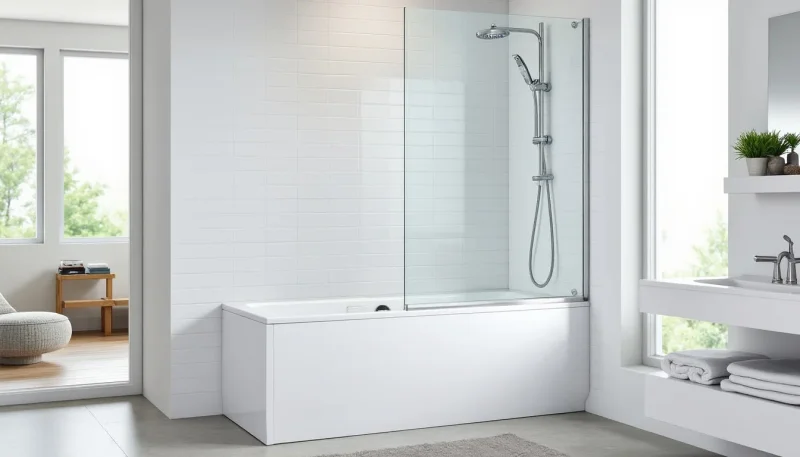
The classic model remains the standard: a rectangular bathtub equipped with a bath-shower mixer and a glass side panel. Simple and effective, it is compatible with most existing plumbing setups. This often serves as the ideal starting point for a first renovation, especially when budget considerations are paramount.
Next is the model with a side access door, designed for users who struggle to step over a traditional bathtub edge. This version provides a secure entry, making it easier to use. It is particularly suited for seniors or those in recovery, without compromising the aesthetic appeal of the fixture.
Asymmetrical Models and Semi-Island Designs
For bathrooms with unique layouts, asymmetrical models present a relevant alternative. They allow for maximizing the shower area on one side while maintaining a generous bathtub on the other. Common dimensions range from 150×70 cm to 170×85 cm, providing various options depending on available space.
The semi-island design, rarer and reserved for high-end projects, integrates both the bathtub and shower into a central block. This installation dramatically transforms the room's aesthetic, giving it a distinct architectural character. However, it requires a minimum space and entails more complex plumbing work, making it suitable only for larger areas and budgets without constraints.
Regardless of the chosen model, material selection impacts durability and daily maintenance. Acrylic is favored for its lightweight and easy cleaning properties. Tempered glass adds a contemporary touch and withstands thermal shocks well. Composite materials offer enhanced rigidity and superior scratch resistance.
Key Steps for Installing a Bathtub-Shower Combo
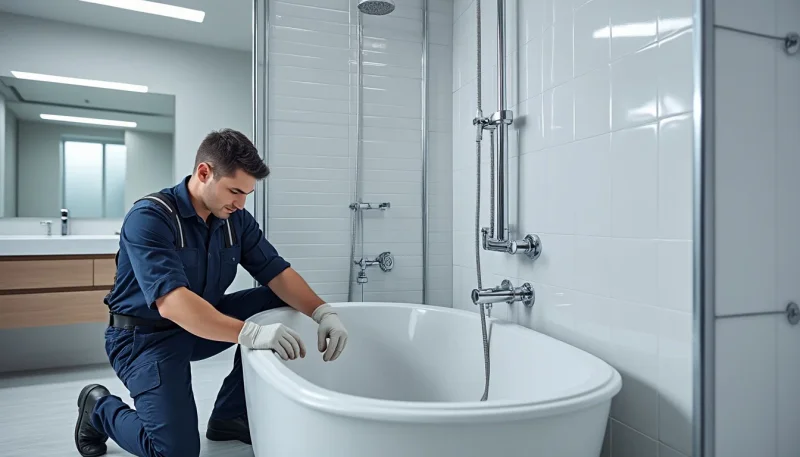
Installing a bathtub-shower combo is not a task to be taken lightly. Before considering finishes, a thorough assessment of the existing bathroom is necessary. What are the water supply lines? Where is the drainage located? Is the wall covering compatible with direct installation, or is leveling required? These questions will dictate the entire project.
The first step is to accurately measure the available space. A miscalculation of just a few centimeters could render the installation impossible without costly modifications. It is advisable to allow for a circulation width of at least 55 cm in front of the bathtub and 70 cm in front of the shower area, ensuring comfortable and secure use.
Next comes the choice of coverings. Ceramic remains the standard for walls due to its moisture resistance and ease of maintenance. Some opt for composite panels that can be directly installed over existing walls, thereby reducing project time and waste.
Hiring a Professional: A Wise Investment
Entrusting the installation to a qualified tradesperson offers tangible benefits. Besides the ten-year warranty covering potential defects, a professional can foresee technical constraints related to existing plumbing. A pipe shifted by just a few centimeters can turn a straightforward project into a costly headache.
It is recommended to obtain multiple quotes to compare not only prices but also included services: removal of the old fixture, waste management, plumbing connections, and wall covering installation. Some tradespeople offer all-inclusive packages, while others charge for each service separately. Transparency in this area is a sign of reliability.
For more complex plumbing tasks, particularly in older buildings where water columns are shared, it is preferable to schedule work outside peak hours and inform neighbors in advance. This logistical detail can prevent many tensions. A well-prepared project leads to results that meet expectations.
Budget Simulator
Bathtub-shower combo — Personalized Estimate
1 Type of model
Basic
€700 – €1,500
Intermediate
€1,500 – €3,000
High-end
€3,000 – €6,000
2 Installation & plumbing costs
€200 €800
€400
3 Optional accessories
Grab bar(s) €65
€30 €100
Shower screen €200
€100 €300
Transformable seat €100
€50 €150
4 Contingency budget
0 % 10 % ✓ 15 % 20 %
Estimate your budget
Equipment (model) €1,100
Plumbing & installation €400
Accessories €0
Contingency margin €150 (10 %)
Estimated range
€1,210 to €2,090
Total budget (median value)
€1,650
A basic combo is well-suited for small bathrooms. Ensure to select a quality mixer for durability.
- The amounts are indicative estimates. Request multiple quotes for comparison.
Layout and Space Optimization Around the Bathtub-Shower Combo
Integrating a bathtub-shower combo into an existing bathroom also involves rethinking the overall organization of the space. The fixture itself is only part of the equation; the arrangement of furniture, lighting, and storage solutions plays an equally crucial role in overall comfort.
Transparent glass partitions are particularly effective for delineating the shower area without visually weighing down the room. Unlike opaque panels that block light, glass preserves the sense of volume, a decisive advantage in smaller configurations. A well-placed shower screen is often sufficient to contain water splashes while maintaining an open atmosphere.
Vertical storage is frequently underutilized. Wall-mounted shelves above the bathtub, a storage column tucked into a corner, and recessed niches in the shower wall are all solutions that free up floor space and create an impression of openness without clutter. The golden rule is simple: everything that goes up frees what is on the floor.
Light, Materials, and Details That Make a Difference
Lighting deserves special attention. Recessed ceiling lights, aimed at the shower and bathtub areas, eliminate shadows and enhance safety. Indirect wall lighting, playing on warm tones, transforms a functional bathroom into a true relaxation space.
Mirrors, often equipped with integrated lighting, serve a dual purpose: they visually enlarge the room and provide quality light for daily tasks. Paired with suspended bathroom furniture, they contribute to a feeling of space and lightness.
For materials, consistency is key. Mixing too many textures and colors in a small room can create an oppressive effect. A limited palette of two or three complementary tones brings harmony. Large-format tiles, for instance, reduce the number of joints and create a sense of continuity that enlarges the perceived space. Every aesthetic choice directly impacts the perception of volume.
Budget, Model Prices, and Available Financial Assistance
One of the first steps before embarking on such a project is to establish a budget envelope. Understanding the costs associated with different models and potential financial aid can significantly influence decision-making.