Do It Yvette Maison: Our Complete Review of the DIY Blog - Home Maintenance
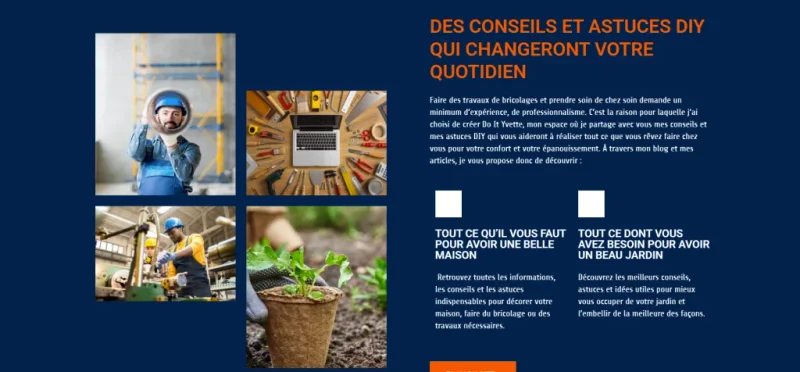
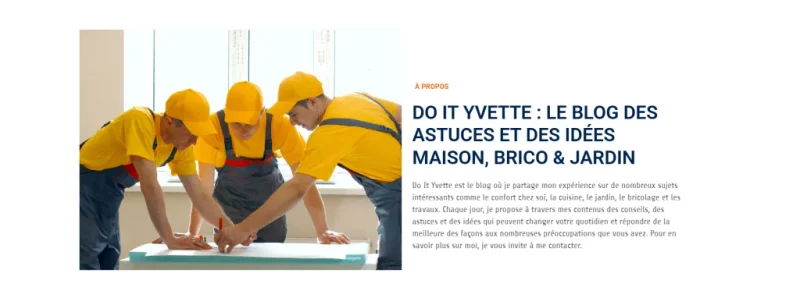
Do It Yvette is a French-speaking home blog run by Yvette, a former tour guide turned DIY expert. The blog focuses on accessible DIY, homemade products, and practical gardening for beginners and intermediate DIYers.
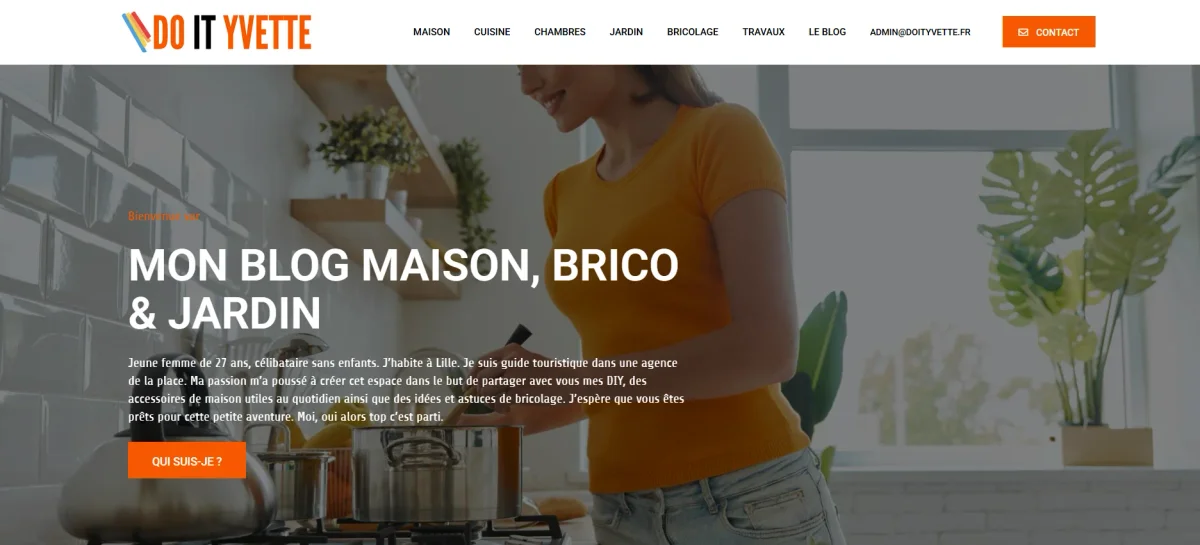
Do It Yvette is a French-speaking home blog run from Lille by Yvette, a former tour guide turned DIY reference for individuals. The site's identity is based on a conviction: one derives more satisfaction from projects completed independently, whether it involves repainting furniture, making one's own household cleaner, or designing a garden from scratch. Accessible DIY, homemade products, slow decor, and practical gardening form the four pillars of content aimed at complete beginners as well as intermediate DIYers seeking concrete ideas.
In a saturated universe of generic decor blogs, doityvette.fr stands out with a personal and non-expert tone: Yvette presents herself as a "curious and resourceful neighbor" rather than a construction professional. This positioning reassures readers who hesitate to start and largely explains the loyalty of a community that regularly returns to the site for weekend projects.
Criteria
| Our Evaluation | | |----------------|--| | 📌 Creator | Yvette, tour guide in Lille, nickname turned editorial identity | | 📚 Sections | DIY, Decor, Homemade Products, Gardening, Comfort & Kitchen | | 🎯 Target Audience | Beginners and intermediates, no prior skills required | | 💰 Typical Project Budget | €30 to €80 for most projects, favoring upcycling | | ✅ Strengths | Accessible tone, step-by-step tutorials, eco-responsible line | | ⚠️ Limitations | Few in-depth technical topics, no community forum | | 📱 Access | Free, no registration, newsletter and active social media |
Who is Yvette: The Person Behind the Blog
Yvette is a young woman in her twenties from Lille, whose name has become the entire identity of an editorial project. A trained tour guide, she launched doityvette.fr to share her DIY discoveries, recommend tested accessories, and convey her everyday tips on home and garden. The quirky nod of the name, in contrast to more conventional decor blog titles, immediately positions the tone: serious in advice, relaxed in form.
Since 2023, Clara Legrand, a graduate in interior design and a former contributor to magazines specializing in renovation, has regularly contributed to the blog. Her arrival has strengthened the depth of product reviews: each test is conducted over a minimum of four weeks, with a transparent evaluation grid. Negative reviews are published alongside positive ones, which distinguishes Do It Yvette from affiliate blogs that never mention disappointments.
The division of roles is clear: Yvette provides the narrative voice and practical anchoring of daily life, while Clara Legrand brings rigor to product analyses and aesthetic expertise on decor trends. This complementarity is felt in the reading: articles alternate between the trustworthy tone of a friend who has tested and the analytical distance of a professional who argues. It is this dual posture that makes the content useful for readers with very different expectations.
Detailed Sections: What You Really Find There
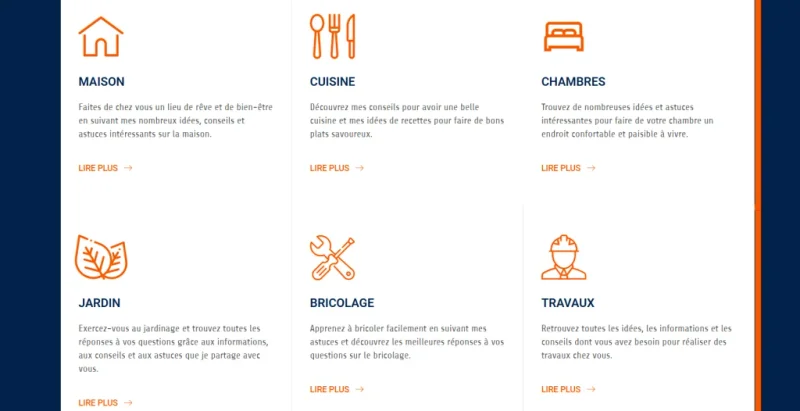
The DIY section attracts the most readers seeking concrete solutions. Tutorials are written with itemized material lists, realistic time estimates, and photographed step-by-steps. Typical projects include customizing recovered furniture, installing small wall shelves, and creating decorations with knitting or macramé. No project requires professional tools: scissors, a glue gun, a cutter, and a paintbrush are sufficient for the vast majority of proposed realizations.
The Homemade Products section is particularly developed and consistent with the blog's eco-responsible editorial line. Do It Yvette systematically favors natural ingredients: white vinegar, baking soda, black soap, essential oils. Recipes for multi-purpose cleaners, fabric softeners, and garden products are presented with precise dosages and variations according to uses. This section meets a growing demand from families wishing to reduce their chemical footprint at home without resorting to expensive products.
Gardening and interior decor complete the offering with topics as varied as natural weed treatment, balcony design in the city, or creating a plant suspension. These contents align with concerns we also address on this site, such as everything related to maintaining the easiest indoor plants, a subject on which Do It Yvette brings a creative and decorative angle that purely horticultural guides may not necessarily have.
Yvette's DIY Philosophy: Upcycling, Creativity, and Real Savings
What runs through all of Do It Yvette's content is a conviction that upcycling and repurposing everyday objects are more stimulating than buying new ones. A glass jar becomes a vase, a pallet board transforms into a shelf, and fabric scraps find new life as photo frame embellishments. This logic of reuse is both aesthetic and economical: the average cost of a project ranges from €30 to €80, far from the budgets displayed by decor stores.
The DIY kits offered or recommended on the blog simplify the initiation for readers who are still hesitant: materials gathered in one box, illustrated instructions, customization variations. This "all-inclusive" approach reduces the friction of the first project and explains why many readers quickly move on to a second realization. Progressing through small successes is at the heart of Yvette's pedagogy: starting with a simple and successful creation sparks curiosity much more effectively than an ambitious project poorly executed.
For readers who want to gauge the popularity and reach of this type of content before diving in, a search on public interest for Do It Yvette Maison confirms a steady search volume and a stable trend over the past twelve months, indicating that the community around the blog continues to grow.
What the Blog Does Better Than Its Competitors
Most DIY blogs in France focus either on pure decoration or on technical DIY. Do It Yvette covers both without compartmentalization: an article on making scented candles sits alongside a tutorial for laying tiles on pedestals in a garden. This thematic cross-section is rare and particularly useful for homeowners managing both indoor and outdoor projects in the same renovation effort.
The eco-responsible editorial line is coherent and not cosmetic. It is not limited to a few articles on "zero waste"; it permeates all sections, from household recipes to material choices for DIY projects. This constant commitment distinguishes Do It Yvette from blogs that slap a few eco labels on otherwise conventional content.
The transparency of product testing is another tangible strength. Clara Legrand publishes evaluations after at least four weeks of real use, with unfavorable reviews acknowledged. In a blogosphere where "sponsored" tests rarely lead to negative conclusions, this editorial honesty is a mark of credibility that regular readers recognize and appreciate. It aligns with the honest advice logic we also try to apply, for example, when comparing kitchen designers or evaluating platforms for connecting with contractors.

Limitations to Keep in Mind Before Consulting
Do It Yvette targets beginners and intermediate DIYers; this explicit positioning has a trade-off: advanced technical topics are not well developed. A homeowner looking to understand the calculations for the resistance of a framework, diagnose a complex electrical problem, or choose an insulation system according to the RE2020 coefficients will not find comprehensive answers on doityvette.fr. The blog directs towards professionals in these cases, which is honest, but leaves the reader searching elsewhere for advanced technical questions.
The lack of a forum or interactive community space is a real shortcoming for a blog that gathers an engaged audience. Readers can comment under articles, but there is no structured Q&A space to pose a specific issue and receive a response from the team or the community. For a DIY project that goes wrong during execution, this limitation can be frustrating: the contact form remains the only avenue, with the delays that this implies.
The articles are structured to be read quickly and activate projects, not to serve as exhaustive references. This action-oriented approach is a strength for hurried readers but may leave those wanting to delve deeper into the theoretical aspects of a technique wanting. For subjects like outdoor concrete painting or tile grouting, cross-referencing Do It Yvette with more technical guides remains the best approach, similar to what we offer on subjects like outdoor tile grouting, which requires a precision that the general DIY blog format does not always achieve.
Who Is Do It Yvette For: Profiles That Gain the Most Value
The profiles that benefit the most from Do It Yvette are homeowners or renters who want to personalize their interiors without a renovation budget, parents seeking creative activities to do with their children at home, and individuals wishing to reduce the use of chemical products in their daily maintenance. For these three profiles, the blog provides directly actionable value: each article ends with a project that can be completed within the week.
Experienced DIYers seeking technical challenges will find the level insufficient. Similarly, construction or decor professionals will not find content that meets their expectations. Do It Yvette does not claim to cover these needs and clearly states this in its FAQ: for complex work, calling a qualified professional remains recommended.
Are Do It Yvette and DIYvette the Same Site?
No, they are two distinct sites with different themes. Doityvette.fr covers home, DIY, and gardening for individuals. Diyvette.com focuses on creative hobbies and festive decor. If you are looking for practical advice for your home, visit doityvette.fr. If you are looking for decor ideas for an event or creative kits, diyvette.com is more suitable.
Are Do It Yvette's Tutorials Really Accessible Without Any Experience?
Yes, this is the central positioning of the blog. Yvette builds her tutorials on the assumption that the reader has never held a glue gun in their life. Material lists are itemized, steps are photographed or illustrated, and common mistakes are highlighted. Most projects in the decor and homemade products sections require no training or specific tools. For projects...