Effective Leather Cleaning: A Comprehensive Guide and Practical Tips
Discover effective leather cleaning techniques and tips to maintain your leather items, ensuring they remain in excellent condition without damage.
4.8/5 - (6 votes)
Leather furniture and accessories, while durable, can easily show signs of wear and stains if not cleaned properly. From a dull sofa to a handbag with watermarks, leather requires gentle care, neutral pH products, and a gradual cleaning method to avoid irreversible damage. Here’s a step-by-step approach to cleaning leather: dusting, cleaning, and nourishing.
Key Takeaways
- Always test any product on an inconspicuous area before applying it to the entire surface.
- The three-step method (dusting, cleaning, nourishing) minimizes the risk of cracks and stains.
- Glycerin soap and cleaning milk are reliable choices for pigmented and full-grain leather.
- Nubuck and suede require specific products that do not involve water or regular wax.
- Excess moisture or harsh chemicals can dry out leather and lead to cracking.
Understanding Leather Before Cleaning
Leather is not a uniform material; each finish reacts differently to water, solvents, and friction. Full-grain leather retains the natural surface of the hide, complete with pores and minute irregularities, making it both the most luxurious and the most susceptible to stains. Pigmented leather, coated with a colored finish, is more resistant to water and wear, making it the most common choice for sofas and car seats. Aniline leather, dyed throughout without a surface pigment, maintains the natural texture but quickly absorbs liquids, meaning a drop of coffee can leave a permanent mark in moments.
In addition to these three main types, two other leathers deserve special attention. Patent leather, which has a shiny finish, cannot withstand solvents or alcohol, as this can cause irreversible cracking. Nubuck and suede, created by sanding the hide, have a velvety appearance that prohibits water cleaning and instead requires dry products and a dedicated brush.
The best cleaning product for leather depends entirely on its finish. For pigmented or full-grain leather, a glycerin soap or neutral pH cleaning milk is often sufficient. For aniline leather, it's best to minimize water use. For patent leather, a slightly damp microfiber cloth is the only safe option. This variety necessitates a crucial step that many overlook: identifying the type of leather before applying any product. Once this is established, the cleaning process can begin with dusting, testing, and protection.
Preparing for Cleaning: Dusting, Testing, Protecting
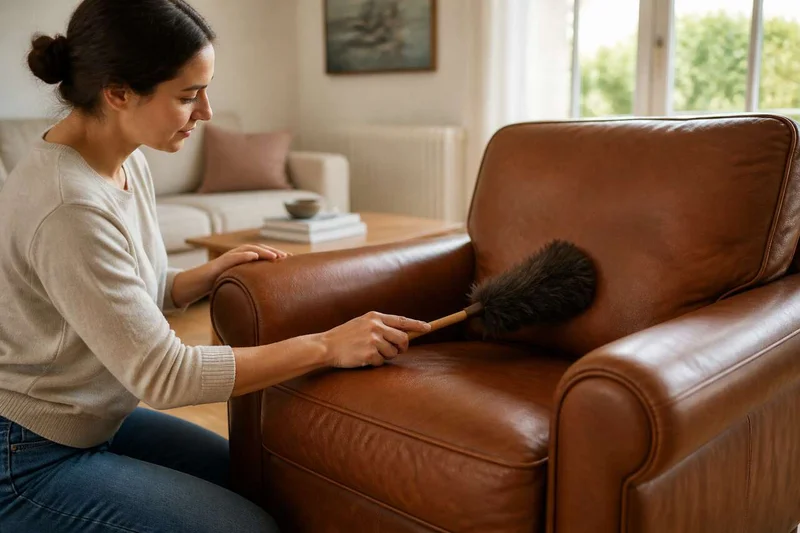
Before applying any cleaning product, thorough dusting is essential. On smooth leathers, a slightly damp microfiber cloth is sufficient to remove surface dust; on textured leathers like nubuck or suede, a soft brush is necessary to eliminate particles embedded in the grain without pushing them deeper. This often-overlooked step prevents dirt from turning into an abrasive paste when the cleaning product is applied.
Next is a non-negotiable rule: always test any product on a hidden area, such as under a sofa seat or inside a handbag. This precaution checks two vital aspects:
- The leather should not transfer color to the cotton or cloth used; if it does, the treatment must stop immediately to avoid discoloration.
- The leather should neither darken permanently nor become sticky after drying.
The amount of water used is another critical consideration. Leather is a porous natural material that does not respond well to excessive moisture; an overly wet cloth can leave difficult-to-remove rings, especially on aniline leather. It’s best to wring out the cloth or cotton thoroughly before application and to work in small sections to maintain control over drying. Once these safety rules are established, routine cleaning can proceed without major risk of damage.
Routine Leather Cleaning: The Simple Method That Works
For regular maintenance, a two-step method is effective: a gentle wash with water and soap, followed by nourishment with a quality conditioner. For sofas, bags, or shoes made from pigmented or full-grain leather, the following routine yields reliable and repeatable results:
- Dampen a soft cloth or sponge with a solution of lukewarm water and mild soap, avoiding excessive foam.
- Gently rub in circular motions, changing to a clean cotton area as it becomes dirty.
- Frequently rinse the sponge to avoid redepositing dirt on the leather.
- Wipe each treated area with a dry cloth to remove excess moisture, never rinsing the leather with clear water.
- Allow to air dry completely, away from any heat source, before using.
Glycerin soap remains one of the best products for large surfaces like sofas: dampen a sponge with the soap, clean in circular motions, wipe with a cloth, and let rest for about eight hours before polishing with a soft cloth.
- Pharmakas Glycerin Soap for Leather - 200 ML
Contains glycerin, cleans and maintains in one step, restores shine and freshness to smooth leather, shoes, and boots. Comes with a sponge.
- ARMISTOL SAPO Liquid Glycerin Soap Spray 500ml
Specifically formulated to maintain, soften, and preserve leather. Contains necessary ingredients for perfect leather care, such as glycerin and fatty acids. Suitable for all smooth, fine, soft leathers, including upholstery, clothing, and more.
- STARWAX Leather Soap 150ml
MULTI-FUNCTIONAL - Deeply cleans leather and removes stubborn dirt. Effective even on nicotine and sebum stains. Suitable for all types of leather, including sofas, bags, shoes, and clothing without causing damage.
For heavily soiled leather, clay stone is an effective alternative: foam it with a damp sponge, rinse with a second clean sponge to remove residue, and immediately dry with a soft cloth. This method removes an old layer of dirt without damaging the finish. Once the leather is clean and dry, it may appear dull and slightly stiff, signaling that it’s time for nourishment to restore its suppleness and shine.
Nourishing and Reviving: How to Restore Leather Without Greasing
How can leather be restored to its former glory? The answer lies in regular but measured nourishment. Cleaned leather that is not subsequently nourished will gradually dry out, lose its suppleness, and eventually crack. Conversely, too much greasy product leaves a sticky film that attracts dust and can stain clothing through color transfer.
Cleaning milk or makeup remover applied in small amounts on cotton, in circular motions, is ideal for regular maintenance: change cotton when it gets dirty, let dry, and then polish with a soft cloth. For fragile or slightly worn leather, pure glycerin adds extra suppleness using the same application protocol. For sturdier leathers, a specific leather conditioner applied monthly is sufficient to maintain the patina without weighing down the material.
- STARWAX Leather Care Milk 500ml Colorless
Cleans, nourishes, preserves, and maintains leather surfaces: ideal for shoes, bags, upholstery, and jackets. Hydrates and maintains suppleness.
- Bickmore Bick 4 Leather Conditioner 8 ounces - 10FPR107
PREMIUM LEATHER CONDITIONER SINCE 1882: Cleans, polishes, and protects all types of leather products, ensuring longevity without darkening the leather. Perfect for restoring old, worn leathers.