
Five Household Management Tips I No Longer Advocate
Explore five household management tips that emphasize practicality and personal needs over perfection and aesthetics. Discover how to create an organized home that truly works for you.
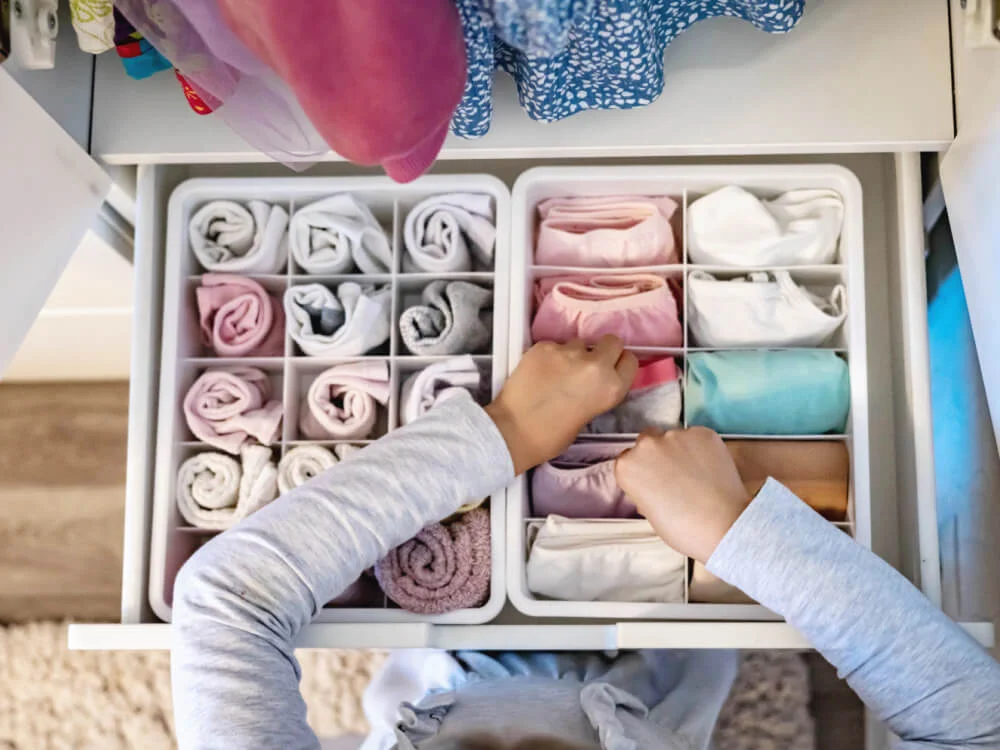
For a long time, I believed there was a universal solution for everyone when it came to household organization. I thought perfect systems, the right containers, a minimalist lifestyle, and constant motivation were the keys to success. However, my perspective has evolved significantly.
People's lives are diverse. Families change, health fluctuates, and needs shift. Therefore, organization cannot adhere to a rigid standard. Here are five organization tips I no longer endorse.
1. Organization Doesn’t Have to Be Perfect
In the past, my definition of organization was quite clear-cut: if you’re going to tidy up, it must be done correctly. Everything needed to be meticulously planned from start to finish, with each category assigned its perfect spot. There could be no chaos, no interim solutions, and no drawer that was merely “good enough.”
Today, I firmly believe that organization is not perfection. It is about what works in your life. The level of orderliness in a household can depend on countless factors:
- Are you living alone, with a partner, or with children?
- Are you in a relaxed phase of life or feeling overwhelmed?
- Is there illness, a depressive episode, or just a cold affecting the household?
- Do you have physical limitations?
- How does your brain function, and what kind of support do you need in daily life?
- Are the needs of your family currently changing?
An organizational system that works well in a student apartment may not be effective when a third child arrives, creating a sense of chaos. Likewise, someone with ADHD may require a vastly different system compared to someone who thrives on clear structures and routines.
I’ve personally experienced times when organization simply cannot be a priority. When health issues arise or life gets tough, a perfectly organized home should not be the benchmark by which you measure yourself.
The Key Question: Do the Organization Tips Work?
There are basic principles that can genuinely simplify daily life. For example:
- Children can find their clothes and shoes in the morning without stress.
- Rain boots are accessible when the weather calls for them.
- Important kitchen items are easy to locate.
- The workspace is clear enough for cooking and working comfortably.
Whether bowls are sorted by size in the cupboard is irrelevant if the kitchen functions well for you. Your organization can be pragmatic, unfinished, and adaptable.
The right level of organization is not what looks impressive in a picture; it is what supports your daily life.
2. Don’t Rush to Buy Containers
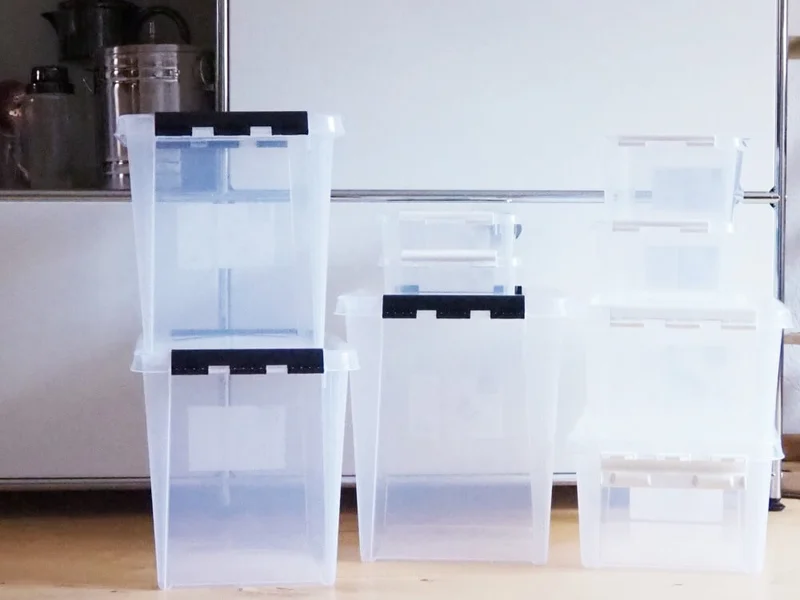
I have purchased countless containers in the past. The typical journey began at IKEA, then moved on to more stylish storage solutions, and eventually to transparent acrylic boxes, driven by the desire for everything to look perfectly organized.
Containers can be aesthetically pleasing and useful, but they are rarely the starting point.
When you head out and buy numerous storage boxes right away, you often miss the chance to truly assess what you own. You’re merely repackaging items. This can feel productive and provide a temporary sense of satisfaction, but the underlying problem remains unresolved.
Sometimes, the first box doesn’t fit perfectly, leading to the purchase of another. This cycle can continue, resulting in additional inserts, labels, and yet another box for items without a designated place. Ultimately, money is spent without clarifying what should remain.
First Declutter, Then Experiment, Then Beautify
A more sensible approach is straightforward:
- Declutter: Assess what you genuinely need and wish to keep.
- Sort Temporarily: Use shoeboxes, shipping boxes, or existing containers.
- Test in Daily Life: Determine if the sorting works in practice.
- Only Then Buy Containers: Once you know the size, shape, and function you truly need.
Of course, organization can also be visually appealing. If you choose to buy suitable containers later, that’s absolutely fine. Just don’t use them as a substitute for decluttering.
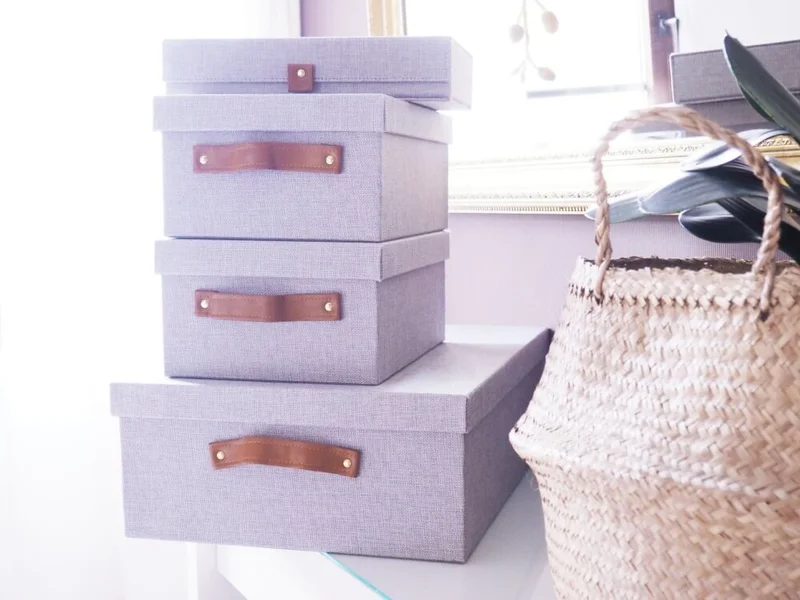
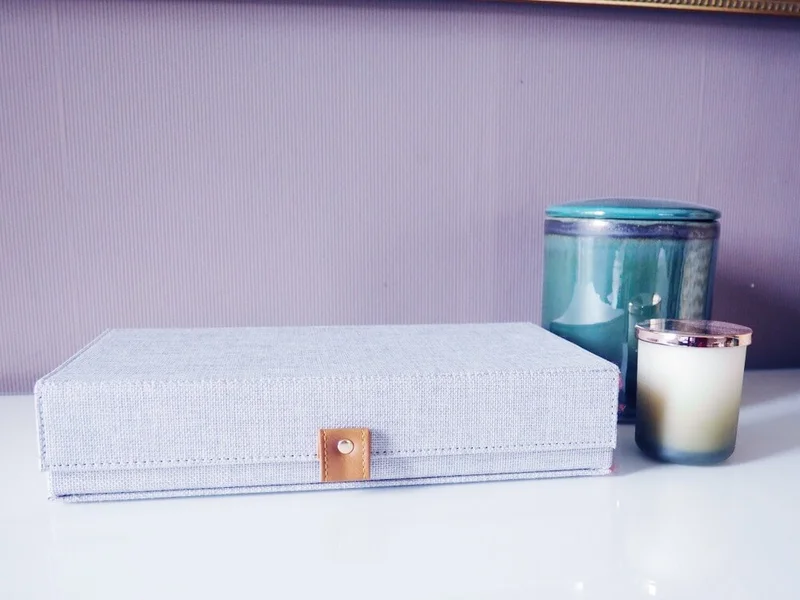
And yes, I understand the temptation. You see a beautiful little box, perhaps upholstered with fabric and adorned with a lovely brass detail, and immediately think, “I need that.” No. Not everything beautiful deserves a place in your home.
3. Don’t Prioritize Aesthetics First
Another mistake I made was focusing on the end result—perfectly divided drawers, aesthetically pleasing containers, and spaces that looked like they belonged in a Pinterest board.
While having a beautiful goal can be motivating, it can also hinder progress.
Before a drawer can look pretty, it often has to get worse first. Decluttering means taking everything out and truly examining it. When it comes to a drawer for socks and underwear, this involves asking:
- Do the items still fit?
- Are the socks intact?
- Do they have holes?
- Is the elastic in the underwear still good?
- Do you feel comfortable in these items?
There’s no point in neatly organizing stretched-out bras and unloved underwear into pretty dividers. Even 17 old T-shirts for gardening won’t become more useful just because they are color-coordinated in the drawer.
Beautiful organizational tools come after an honest inventory. First, filter out what truly supports you, brings you joy, or serves a real purpose in your life.
After this process, you may find that you no longer need an expensive drawer divider. Perhaps there’s suddenly enough space. Maybe only items you enjoy using are left, which often brings more calm than any pretty accessory could.
4. Minimalism Isn’t a Competition
In recent years, minimalism has often been portrayed as the ultimate goal, forming the basis of many organization tips: getting rid of everything, drastically reducing in 30 days, owning as little as possible, and ideally living with just two pairs of pants and a backpack.
For a long time, I thought a minimalist household was synonymous with the highest form of organization. I see it differently now.
Minimalism can be effective, but not every life situation lends itself to a radically minimalist lifestyle.
In a family, for instance, there may be individuals who require more support. A child might need specific items, or there could be medical aids necessary for living. Sometimes, materials are important for joy or mental stimulation. In such cases, “less is more” may not be beneficial.
Even in a household of six, a highly reduced lifestyle can work, but for many, it simply isn’t realistic or suitable.
Minimalism Means Enough for a Good Life
For me, minimalism now isn’t about owning as little as possible. It’s about having enough to live well without missing anything.
This looks different for everyone. For some, it means a small wardrobe. For others, a home filled with plants creates a livable space. You might need more supplies for a hobby, more clothing for daily life, or more items because of family requirements.
Instead of asking, “How little can I own?” ask yourself:
“What is the minimum I need to live my best life?”
This is a significant distinction. Don’t let extreme images and radical reduction stories unsettle you. Yes, we likely all have things we could let go of. However, you shouldn’t become a prisoner of a lifestyle that doesn’t suit you.
5. Don’t Wait for Motivation
Motivation is wonderful. It can be the spark that ignites a large decluttering project. It can help you tackle a corner you’ve been avoiding for a long time.
However, no one is consistently motivated to clean the apartment, wipe mirrors, put away laundry, or tidy up every evening. That’s just not how people operate.
While motivation can be beneficial, it is not the most crucial element. Routines are far more valuable.
Instead of waiting for a wave of motivation to wash over you, small, regular actions can yield much more significant results:
- Work on a specific project for 15 minutes each day.
- Wipe surfaces on one day.
- Tackle a small window cleaning project on another day.
- Each evening, return items to their designated places briefly.
- Break tasks down to be manageable, even on days when you lack motivation.
These small habits prevent everything from piling up into an insurmountable mountain. They also free you from relying on a fleeting burst of motivation.
You can still be organized on days when you lack motivation.
There’s No Universal Organization Recipe
Organization tips are a bit like ingredients for a cake. You can present someone with flour, eggs, butter, and sugar and think, “Perfect, now they can bake a cake.”
But perhaps that person can’t tolerate gluten. They might be vegan. They might not even want a sponge cake but prefer a tart. The ingredients can be well-intentioned yet mismatched.
The same applies to organizational systems. A tip might work beautifully for one household and not at all for another. You might need more structure in one area while requiring fewer rules in another. Maybe a large box full of shoes is the perfect solution for your family because everyone can just reach in and grab what they need in the morning.
That is organization. Not Pinterest-perfect organization. Not Instagram-worthy organization. But your organization.
Trends Come and Go, Your Daily Life Remains
Every day, we see countless images and ideas on social media, in magazines, and within our own circles. One moment everything is supposed to be white, then beige, then cozy, and soon after, another trend emerges.
There’s nothing wrong with this. It can be enjoyable to draw inspiration and refresh your home periodically. However, these trends should be rooted in what fits your life.
You are allowed to change things. You can try new ideas. You can organize differently than you did a year ago. But you don’t have to rigidly adhere to a single system.
Your Organization Can Look Exactly How You Need It
After many years of engaging with the topic of organization, my most important belief is this: Organization can exist and make your life easier. But it doesn’t have to be perfect.
Your organization must align with your daily life, your people, your energy, and your needs. If all shoes are in a large basket and that works best for you, then that’s not wrong. That is your functional organization.
Don’t overly compare yourself to the carefully curated snippets you see from other households. A beautiful image never shows the full reality of life behind a door.
Relax. Find your own path to organization. Keep what helps you, let go of what creates pressure, and don’t let organization become another task that weighs you down.