How to Elegantly Wear a Stole Over a Dress
A stole can transform the look of a dress when positioned correctly. Worn with care, it highlights the neckline, covers the shoulders, and adds an elegant touch to the silhouette.
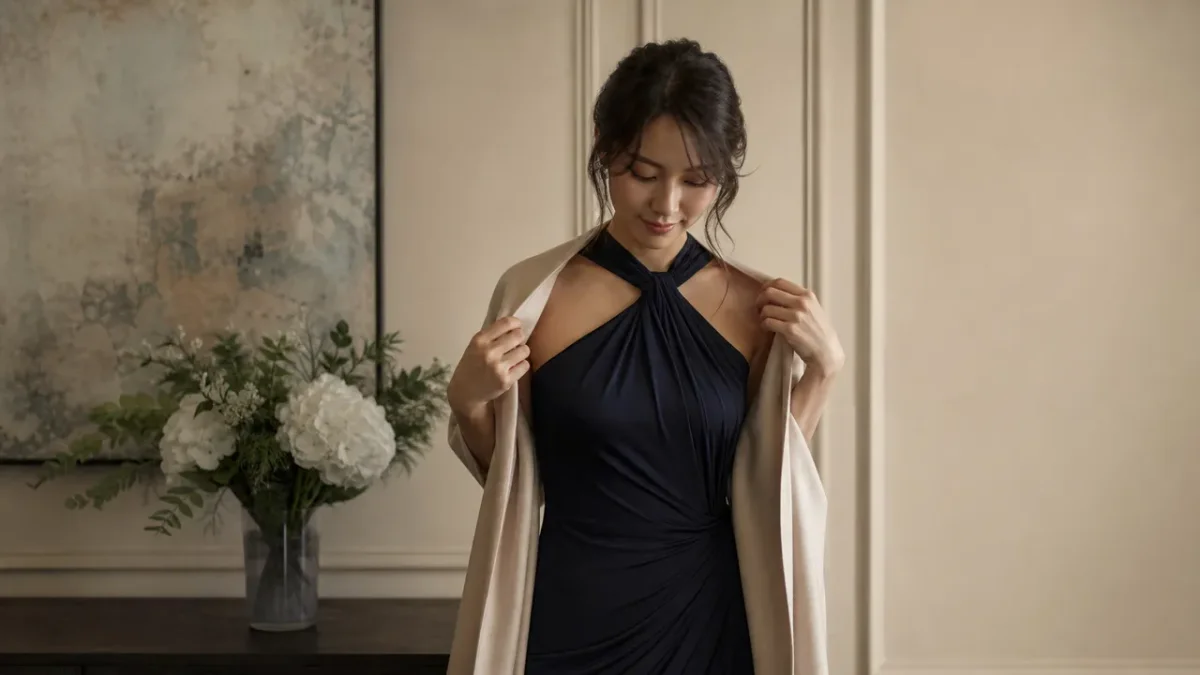
A stole can significantly enhance the appearance of a dress, provided it is positioned correctly. When worn thoughtfully, it accentuates the neckline, covers the shoulders, and adds an elegant touch to the overall silhouette.
Classic draping, a knot at the bust, or securing it with a brooch are several techniques that allow you to tailor your style to the occasion. Here’s how to wear a stole over a dress with grace.
How to Wear a Stole Over a Dress Elegantly
The fundamental rule is straightforward: place the stole at the center of the nape and let the two ends fall evenly. This approach prevents a messy look and instantly elevates the outfit's elegance.
Classic Draping Over the Shoulders
Fold the stole in half widthwise, then drape it over your shoulders like a small cape. This keeps the back well covered, while the front maintains an elegant opening that highlights the bust.
For a more romantic effect, simply let the ends fall over the arms without bringing them forward.
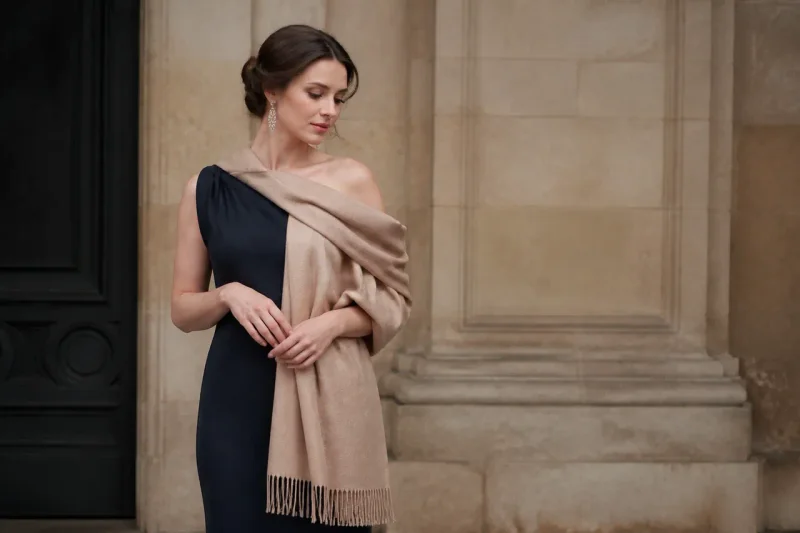
Asymmetry also brings a touch of elegance. Drape the stole over one shoulder, allowing one end to fall in front and the other to slide behind the back. This modern version pairs particularly well with flowy dresses or lighter fabrics.
Center-Bust Knot and Brooch Fixation
To create a chic collar effect, cross the ends of the stole in front and tie them lightly at the bust. This technique forms a refined drape that structures the outfit without overwhelming it.
For an evening event, a brooch provides a more secure fastening. Cross the ends at the front and secure them with an accessory that complements the dress. This ensures the stole stays in place while adding a sophisticated finish.
Wearing a Stole for a Wedding or Evening Event
At weddings, the stole often serves a dual purpose. It can cover the shoulders or décolletage during the ceremony and then become a stylish accessory during the cocktail hour or reception. The method of wearing it should depend on the time of day and the desired effect.
Knotting Techniques for the Ceremony
For a church ceremony, opt for a triangular stole tied at the front, with the point falling at the back. This way of wearing it elegantly covers the shoulders and décolletage while remaining appropriate for the religious setting.
For an outdoor ceremony, a bolero-style knot offers more comfort. Cross the stole over the bust and tie it at the back to keep your arms free while protecting against the chill.
For a cocktail evening, adopt the neck wrap style with the ends brought forward over the bust. This version works particularly well with long dresses, as it creates a vertical line that elongates the silhouette.
Bohemian Style for a Casual Wedding
The bohemian style favors a natural and soft drape without visible knots, letting the ends fall freely at the back. This style is especially suitable for rustic or outdoor ceremonies, particularly with a lightweight chiffon stole.
- Summer: Choose a light stole in silk or chiffon, which is fluid and breathable.
- Winter: Opt for a thicker material like cashmere for warmth.
- Mid-season: A lined silk stole offers a good balance between style and comfort.
Choosing the Draping Based on Dress Cut
The choice of knotting largely depends on the dress cut. With a strapless dress, simply let the stole rest on the shoulders, without tying it, to highlight the décolletage and create an elegant, natural effect.
For a dress with sleeves, position the stole in the crook of the arms, ensuring the sleeves remain visible. For a deeply cut dress, a triangular drape or a front knot can discreetly cover the bust.
With a sleeveless short dress, a butterfly knot at the front adds a sophisticated touch. For a long cocktail dress, the neck wrap with the ends brought forward creates a vertical line that enhances the silhouette.
Matching Stole Color with Your Dress
The principle is simple: favor color harmony instead of stark contrasts. A stole in a shade close to the dress or in a neutral tone achieves an elegant result effortlessly.
If the dress already features bold patterns or colors, select a more subdued stole to balance the overall look. Luxurious materials like silk or cashmere in soft tones are particularly suited for formal ceremonies.
For a bohemian wedding, natural colors and pastel tones enhance the outfit's lightness. Since the stole already draws attention, opt for more understated jewelry to maintain a harmonious silhouette. This principle of harmony also applies to cufflinks, which should remain discreet alongside visually prominent fabrics.
Stole vs. Scarf: What’s the Difference?
A stole is characterized by its generous dimensions, typically measuring between 60 and 100 cm in width and 180 to 250 cm in length. The most common sizes are around 180 × 70 cm, while some wedding stoles can reach up to 2.5 meters.
In contrast, a scarf is smaller and primarily worn around the neck. The stole, due to its width and length, covers the shoulders and décolletage, making it a favored accessory for evening or ceremonial dresses.
To tie a stole confidently, the technique resembles that used for tying a pareo: cross, adjust, and then secure without pulling too tight. A knot that is too tight disrupts the desired fluid effect, while a loose drape always provides a more natural fall.