Installing a Razor Socket in Your Bathroom: Key Considerations
Learn the proper placement and installation guidelines for a razor socket in your bathroom, including safety standards and device compatibility.
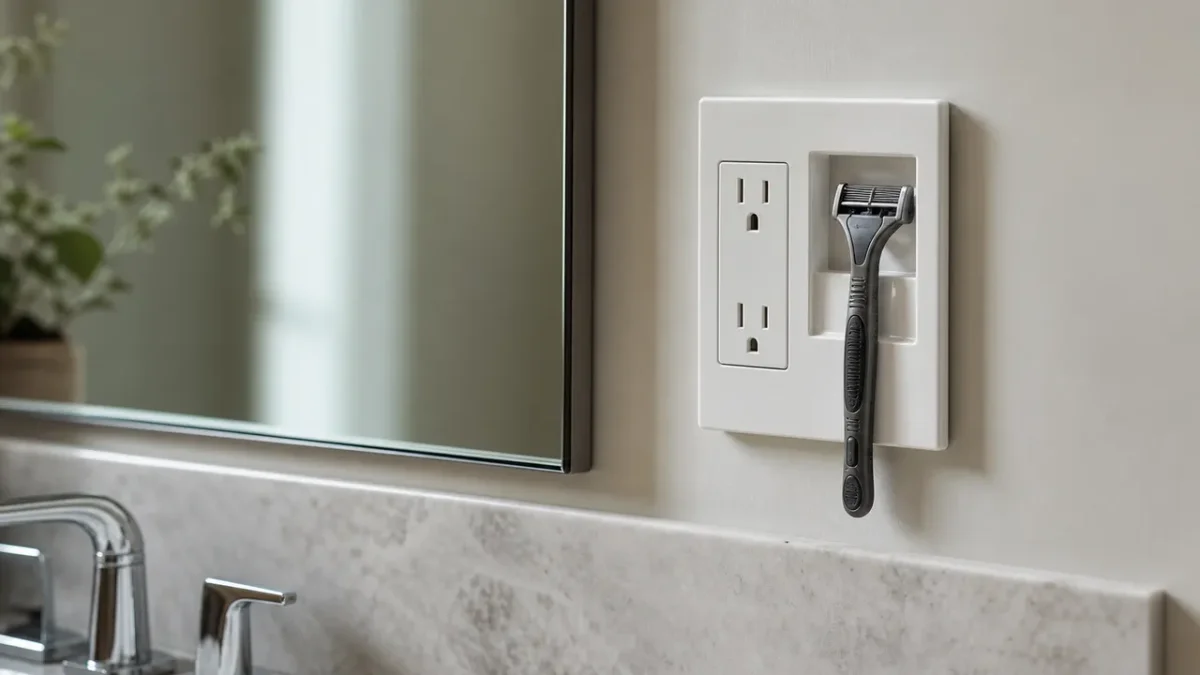
When it comes to bathroom safety and functionality, the placement of a razor socket is crucial. The NF C 15-100 standard outlines specific areas where these sockets can be installed safely around sinks and showers. This article will guide you on the appropriate locations, installation heights, and the devices that can be powered securely.
A razor socket in the bathroom should be positioned in either volume 2, which is the area around water points, or outside of these volumes. These are the two approved locations according to current electrical standards.
In Volume 2: Around the Shower, Bathtub, or Sink
Volume 2 encompasses a 60 cm radius around the shower, bathtub, or sink. This is the designated area for installing a razor socket, unlike standard sockets.
Safety regulations must be strictly followed, which include limited voltage, an integrated separation transformer, and adequate protection against water splashes. When placing the socket above the sink, ensure there is at least 25 cm of clearance between the socket and the basin to avoid any splashes.
Ideal Height for a Razor Socket Near the Mirror
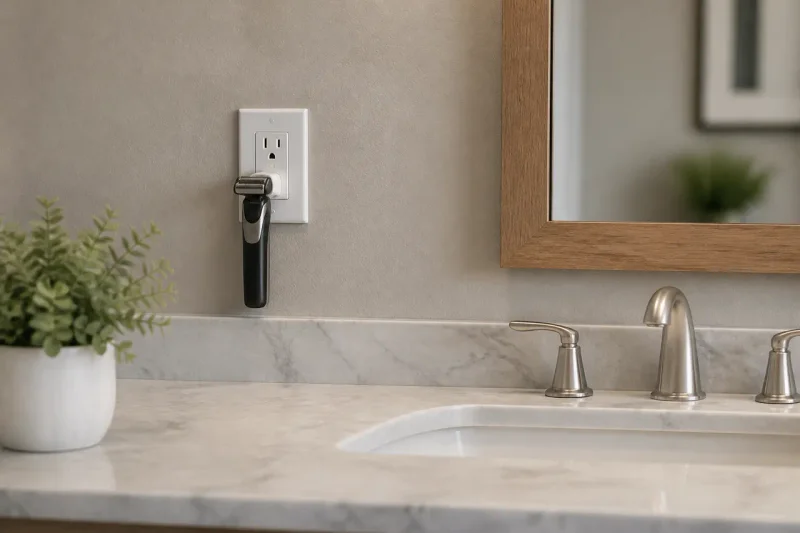
Typically, a razor socket should be installed between 0.90 m and 1.30 m from the floor, with an ideal height of around 1 m. This placement allows for easy access to plug in a razor while ensuring comfortable use in front of the mirror. If you are adding a mirror with an integrated medicine cabinet, it is wise to check how to mount the mirror on the wall to position the socket correctly from the start.
Regulations Governing Razor Socket Installation
The NF C 15-100 standard governs electrical installations in bathrooms, including razor sockets. It specifies authorized zones, suitable equipment, and necessary protections to ensure safety.
Understanding the NF C 15-100 Standard and Safety Volumes
This standard divides the bathroom into several safety zones. Volume 0 refers to the inside of the shower or bathtub, volume 1 encompasses areas directly exposed to water splashes, while volume 2 covers the next 60 cm.
Beyond these areas is considered outside of volume. Standard sockets can be installed there, provided they are sufficiently distanced from water points.
Required Voltage, IP Rating, and Transformer Specifications
Three technical elements ensure the safety of a razor socket in volume 2:
- Limited voltage: between 20 and 50 V, achieved through a separation transformer compliant with NF EN 61558-2-5.
- Protection index: a minimum of IPX4, to withstand water splashes without risk.
- Transformer power: between 20 and 50 VA, which is ample for a razor or an electric toothbrush.
The transformer for the razor socket should never be placed in volume 2. Instead, it should be located behind a mirror, within furniture, or in a false ceiling, in volume 3 or outside of volume, to comply with safety regulations.
How to Safely Install a Razor Socket in Volume 2
Start by selecting a suitable razor socket for the bathroom, ensuring it has IPX4 protection and an integrated transformer rated between 20 and 50 VA in accordance with NF EN 61558-2-5. These features are essential for a safe and compliant installation.
- Positioning: Place the socket within the authorized volume 2, adhering to minimum distance requirements from water points.
- Dedicated circuit: Connect the transformer to a circuit protected by a 30 mA differential circuit breaker, with a recommended 10 A circuit breaker.
- Equipotential bonding: Ensure that all metallic components in the room are grounded.
- Final testing: Check the entire setup before the final power-on.
These precautions help minimize the risk of electrical accidents in a wet environment. To ensure a compliant installation, it is advisable to consult a qualified electrician, especially for connections to the electrical panel.
What Can Be Plugged into a Bathroom Razor Socket?
This socket is specifically designed for small devices like electric razors and toothbrushes. Its limited power, typically between 20 and 50 VA, is not suitable for more power-hungry appliances such as hair dryers or straighteners.
Avoid plugging in high-power equipment, even if some misleading information suggests otherwise. Always adhere to the maximum power indicated by the manufacturer to ensure safe usage. If you need a device suitable for your hair type, consider our selection of hair dryers designed for fine and fragile hair, which can be used with standard sockets outside of volume.
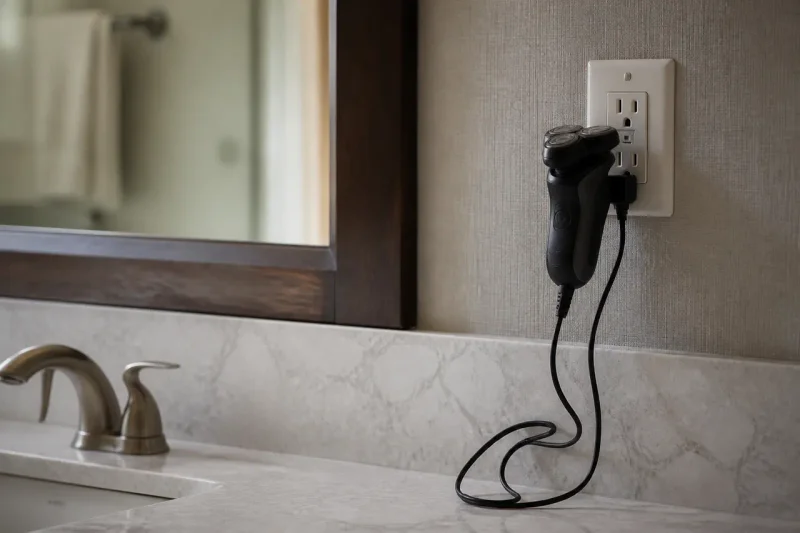
Can a Razor Socket Replace a Standard Electrical Socket?
No, a razor socket cannot replace a standard 2P+T socket. In volume 2, it is intended for small devices like razors or electric toothbrushes, but it is not suitable for everyday use.
Outside of volume, standard sockets are permitted and offer more versatility. With a maximum power limit of 50 VA, the razor socket is not appropriate for devices like hair dryers, space heaters, or straighteners. For a lighted mirror, a dedicated 230 V circuit is generally recommended.
| Criteria | Razor Socket | Standard 2P+T Socket | |---------------------------|-----------------------|-----------------------| | Authorized Location | Volume 2 and outside | Only outside | | Voltage | 20 to 50 V (TBTS) | 230 V | | Max Power | 20 to 50 VA | According to breaker | | Typical Use | Razor, toothbrush | Hair dryer, heater |