Stone Carpet: Cost and Installation for an Outdoor Driveway
Creating an outdoor driveway with a stone carpet is a choice that combines natural aesthetics, weather resistance, and longevity. This article explores costs, installation, and key considerations for using stone carpet in outdoor spaces.
Creating an outdoor driveway with a stone carpet is a choice that combines natural aesthetics, weather resistance, and longevity. This material, made from marble aggregates bound by polyurethane resin, is increasingly appealing to homeowners looking to enhance their exterior without sacrificing functionality. Whether for a pedestrian path leading to a home entrance, a driveable access in front of a garage, or a garden path, the stone carpet adapts to various configurations. However, before diving in, a natural question arises: how much does it actually cost, and how is the installation carried out? Between kits available for motivated DIYers and services provided by professionals, price ranges vary significantly. Technical choices, particularly the type of resin used or the condition of the existing substrate, directly influence the final budget. Understanding these parameters helps avoid unpleasant surprises and allows for a serene project execution.
In brief:
- The stone carpet for an outdoor driveway costs between €30 and €75 per m² for materials only, and between €80 and €120 per m² with professional installation included.
- Aliphatic polyurethane resin is highly recommended for outdoor use due to its UV resistance and durability.
- Complete kits are available for self-installation, covering areas from 8 m² to 100 m².
- The condition of the substrate can increase the bill by 30% additional if repairs are necessary.
- A driveable driveway is structurally 30 to 50% more expensive than a pedestrian path, due to a greater thickness and resin content.
- A VAT of 10% applies to renovation work on a home over two years old.
Stone Carpet for Outdoor Driveway: What You Need to Know Before Estimating
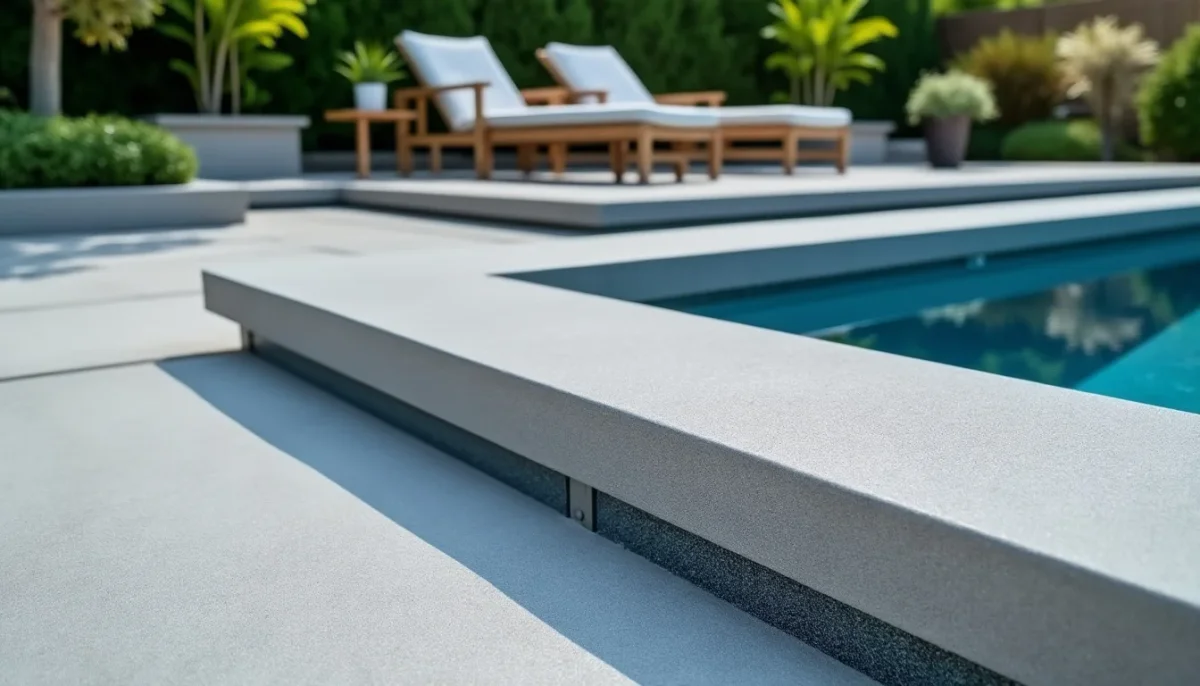
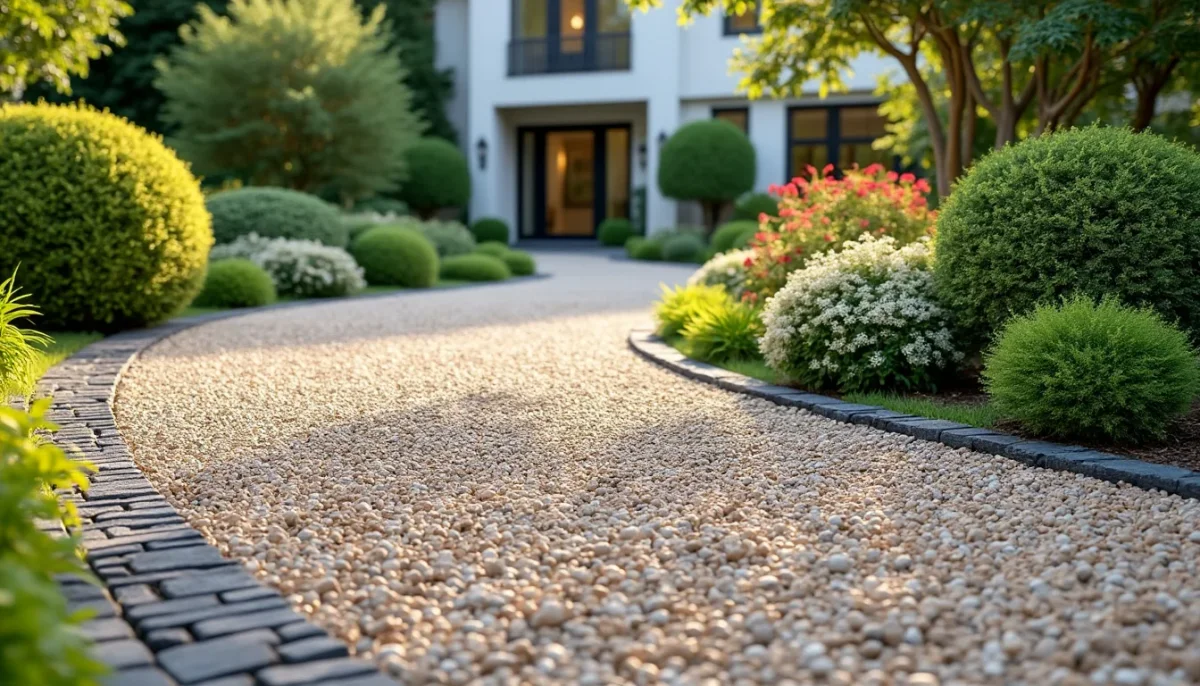
The stone carpet, also known as stone carpet flooring, is a covering made of natural aggregates, most often rolled marble, encased in a binding resin. The mixture is spread over a prepared substrate, forming a continuous, draining, and aesthetically pleasing surface. Unlike exposed aggregate concrete or slabs, it does not generate joints and offers a visual continuity highly appreciated in contemporary landscaping.
This type of covering is particularly suitable for outdoor driveways as it naturally manages rainwater drainage due to its porous structure. No more stagnant puddles after a downpour: water seeps directly through the gaps between the aggregates. This is a major advantage in regions subject to heavy rainfall, but it also represents a technical requirement in terms of substrate.
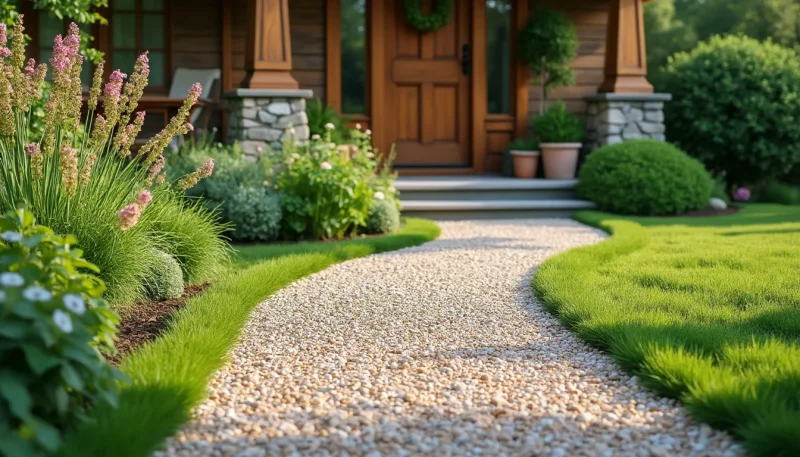
Marble aggregates are available in a variety of colors, allowing for driveway customization according to the architectural environment. A light facade will naturally call for a white or ivory carpet, while a stone house will better match beige or ochre shades. It is even possible to mix several colors to create specific visual effects, provided that the logistics of the mixtures are well anticipated.
One technical detail deserves to be highlighted from the start: the standard grain size for pedestrian paths is 2.5 to 5 mm. For a driveable area, coarser aggregates are used, and the resin content is higher, which significantly alters the cost and installation technique. Understanding these fundamental distinctions helps avoid sizing errors and disappointments after the project.
Price of Stone Carpet per m²: Realistic Ranges for a Driveway
The question of price is often the first to arise, and it is quite natural. For an outdoor driveway, prices vary depending on whether one opts for self-installation or hires a professional. For materials only, expect to pay between €30 and €60 per m² depending on the quality of the aggregates and the type of resin chosen. With installation provided by a qualified craftsman, the total budget generally ranges from €80 to €120 per m², including materials and labor.
However, these ranges conceal very different realities depending on the projects. A homeowner with a sound concrete substrate, free of cracks or moisture issues, will fall into the lower price range. Conversely, a degraded surface requiring deep leveling or moisture treatment will significantly increase the bill.
Factors That Really Affect the Budget
The type of resin used is the most underestimated variable in quotes. There are two main families: epoxy resin and aliphatic polyurethane resin. The former is cheaper to purchase but yellows under UV exposure within two to four years, necessitating an early project redo. In exposed outdoor settings, this apparent saving proves to be very costly in the long run.
Aliphatic monocomponent polyurethane resin, on the other hand, withstands UV exposure without yellowing, maintains some flexibility in cold weather, and adheres reliably to old substrates. Its lifespan can reach twenty to twenty-five years with minimal maintenance. The price difference per m² between the two resins is around €15 to €20, but this differential is largely offset by the superior longevity.
The condition of the substrate constitutes the second major factor. A simple dusting followed by a bonding primer is sufficient for recent, sound concrete, with an additional cost of €3 to €8 per m². However, as soon as the ground shows issues, preliminary interventions accumulate:
- Light leveling for minor irregularities: €8 to €15 per m²
- Deep leveling or repair of significant cracks: €15 to €25 per m²
- Moisture treatment or rising damp: €10 to €20 per m²
- Removal of an old glued covering: €5 to €15 per m²
In projects analyzed by industry professionals, the vast majority of defects observed after installation are directly linked to insufficient substrate preparation. A thorough diagnosis beforehand, including a moisture test and a flatness check, is therefore essential before any serious estimation.
The total surface area of the project also affects the unit price. Below 15 m², fixed costs for travel and material preparation are absorbed by few square meters, causing the cost to exceed €150 per m². From 50 m² onwards, a discount of 8 to 15% is generally applied. If a second area needs to be treated within two years, it may be wise to consolidate everything into a single intervention.
DIY Installation or Professional Service: Choosing Your Approach Wisely
Installing a stone carpet is accessible to experienced DIYers, provided they meticulously follow the steps and use the right materials. Complete kits are available for areas ranging from 8 to 100 m², including two-component epoxy primer, UV polyurethane resin, and marble aggregates. For a typical driveway size of about 33 m², a standard kit includes, for example, 6 liters of primer, 20 kg of resin, and 500 kg of aggregates divided into twenty 25 kg bags.
For those who wish to test the material before committing to a large area, a trial kit covering about 1.5 m² is available. It includes a 25 kg bag of aggregates and 1 kg of resin, without a bonding primer. This is an intelligent way to validate the visual result and grasp the technical gesture before ordering the final quantities.
Key Steps for a Successful Installation
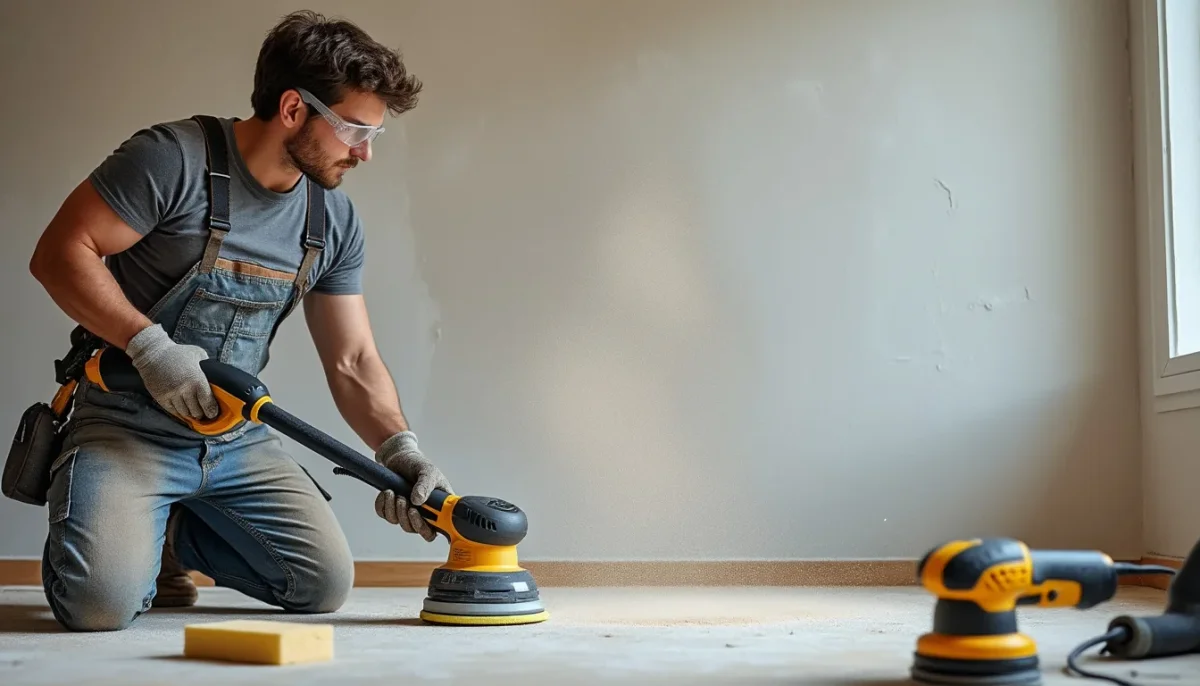
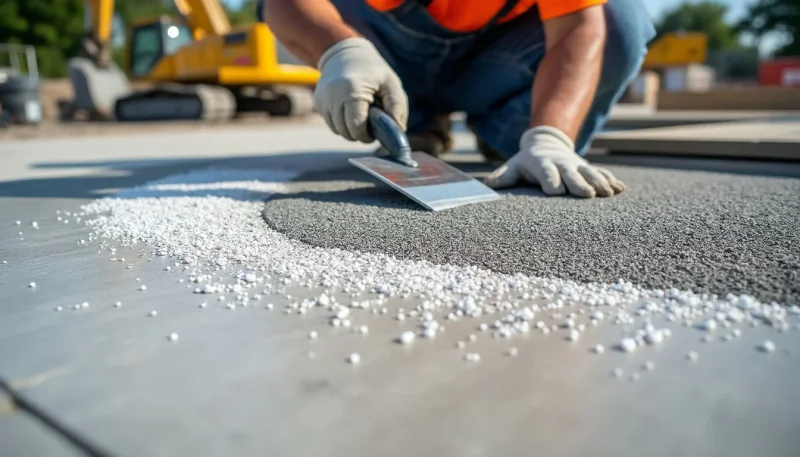
Installation must begin with substrate preparation. The ground must be clean, dry, and free of dust. Applying the two-component epoxy primer, mixed at a 1:1 ratio, creates a barrier against residual moisture and prevents bubble formation on the surface. This product is applied over the entire surface and must dry completely before the next step.
Next comes the mixing of the aggregates with the polyurethane resin. This mixture must be homogeneous, with the resin content adjusted according to use: less than 5% for pedestrian areas, more for driveable surfaces. Distributing the mixture is facilitated by using a specific pouring box, which allows for even spreading of the material over the surface without creating irregularities. This box represents a significant time saver, especially on flat and continuous surfaces.
For driveable areas, such as a parking lot or access in front of a gate, the thickness increases to 20 mm compared to 8 mm in pedestrian zones. A renovation resin can be applied as a finish to strengthen the surface and fill the gaps between the aggregates, making the covering waterproof if necessary. This surface treatment alters the draining character of the carpet but improves its mechanical resistance.
Aluminum finishing profiles, available in straight or bendable versions, allow for clean edges at the borders of the driveway and ensure a neat separation between the carpet and surrounding areas. A detail that makes all the difference in the final appearance. For well-designed projects, the overall outdoor layout deserves comprehensive consideration, akin to the approaches presented in contemporary interior inspirations that focus on material coherence.
Budget Simulator — Stone Carpet
Estimate the cost of your outdoor stone carpet driveway in seconds
Driveway Area
20 m²
Slide to adjust the area (from 8 to 100 m²)
Type of Installation
DIY Installation Professional Installation
By installing it yourself, you save on labor costs.
Type of Area
Pedestrian Area Driveable Area
Pedestrian Area: standard thickness. Driveable Area: reinforced thickness required.
Condition of Existing Substrate
Good Condition Light Leveling Deep Leveling
A substrate in good condition requires no additional preparation.
ESTIMATED BUDGET EXCLUDING VAT
Materials (resin + aggregates) —
Primer & Consumables —
Professional Labor —
Substrate Preparation —
Surface Concerned —
TOTAL ESTIMATED BUDGET (EXCLUDING VAT) —
- Indicative estimate. Prices may vary by region, supplier, and project specifics. VAT applicable in addition.
Driveable Stone Carpet: Technical Specificities and Additional Costs
The driveable driveway represents a particular use of the stone carpet, subject to mechanical constraints much higher than simple pedestrian traffic. Cars, scooters, motorcycles: the covering must withstand repeated loads without deforming or detaching. Technical rules change profoundly compared to a terrace or garden path.
The minimum thickness for a driveable area is 20 mm, compared to 8 mm for pedestrian use on concrete slabs. The grain size of the aggregates is also adapted, with coarser grains providing better mechanical grip. The resin content, which remains below 5% in pedestrian areas, rises to about 10% for surfaces intended for light vehicles. These technical adjustments directly impact the volume of materials required and thus the cost per m².
Driveable Kits: What They Really Include
A complete kit for a driveable driveway covering 12 m² typically includes 2 liters of epoxy primer, 20 kg of polyurethane resin, twenty bags of aggregates, and other necessary components to ensure a robust installation. This ensures that the driveway can withstand the demands of regular vehicle traffic while maintaining its aesthetic appeal and durability over time.