Understanding and Reducing Energy Consumption in the Kitchen
Discover how to reduce energy consumption while cooking by understanding different stove types, cooking behaviors, and practical tips for energy savings.

Which type of stove is the most energy-efficient when cooking?
Induction cooktops are recognized for their high efficiency, as they convert energy directly into heat within the pot, resulting in minimal energy loss.
Why is cooking with a lid more energy-efficient?
Using a proper lid retains heat in the pot, significantly shortening cooking times and thereby reducing energy consumption.
Can you lower energy usage while cooking without new appliances?
Adjusting cooking habits, reducing cooking times, and utilizing residual heat can noticeably decrease energy consumption.
Cooking is an essential daily activity in every household, and the energy demands in the kitchen can be substantial, particularly for those who cook regularly. The electricity usage during cooking is influenced not only by the type of stove but also by cooking habits, the pots used, and the types of food prepared.
This article will examine the efficiency of various cooking appliances, provide practical tips for reducing energy consumption, and explore long-term strategies for saving energy.
1. How efficient are different types of stoves?
The energy consumption during cooking varies significantly depending on the cooking technology used. Induction cooktops are particularly efficient, as they generate heat directly in the cookware.
More than 80 percent of the energy supplied is utilized for heating the contents of the pot, whereas traditional electric stoves only use about 65 to 75 percent of the energy for cooking, with the remainder lost as waste heat.
Note: Induction devices utilize a magnetic alternating field to directly convert electrical energy into heat at the base of the cookware. This eliminates the need for preheating the cooking surface and reduces energy loss through radiation. However, the cookware must also be magnetic, meaning pots made of aluminum or copper without a ferromagnetic base are unsuitable for induction cooktops.
In contrast, gas stoves demonstrate lower energy efficiency, as a significant portion of the generated energy is lost as radiant heat in the surroundings. The efficiency of gas stoves averages around 44 percent, with a maximum of 55 percent, which is considerably lower than that of induction stoves.
Electric ceramic cooktops require energy to heat the surface before transferring heat to the pot, leading to
- longer heating times
- and higher energy consumption.
Consequently, the energy efficiency of electric ceramic cooktops is less than that of induction cooktops.
A two-person household typically consumes between 2,000 to 3,500 kWh of electricity annually.
However, not only the efficiency of your appliances matters; the choice of electricity tariff also impacts your costs. A tariff tailored to your actual consumption can offer significant savings without much effort.
You can find your actual annual consumption on your last bill or use general average values from comparable households as a preliminary reference.
2. How does your cooking behavior affect energy consumption?
Individual cooking habits have a substantial effect on energy consumption. Key factors include how long and at what temperature food is cooked. Boiling water is particularly energy-intensive. Once the water reaches a boil, the heat can be reduced without affecting cooking time.
Additionally, utilizing residual heat saves energy. Cooking surfaces, especially ceramic plates, continue to emit heat after being turned off, which can be used for keeping food warm or further cooking. This practice lowers actual energy consumption because the power can be shut off earlier.
Moreover, the choice of cookware plays a significant role. It is essential to match the size of pots and pans to the cooking zones appropriately.
Using a small pot on a large burner or vice versa leads to energy loss around the pot. This can be easily avoided by ensuring that cookware and burner sizes are well coordinated.
Caution: There is an increased risk of injury when using a small pot on a large burner, especially with gas and ceramic stoves. The handles of the pot are exposed to direct heat, causing them to become significantly hotter and potentially resulting in burns if touched without protection.
The material of the cookware can also greatly influence your energy consumption while cooking. Pressure cookers, for example, can substantially reduce cooking time and thus energy needs, as they cook food faster by operating under pressure.
3. Practical tips for saving energy while cooking
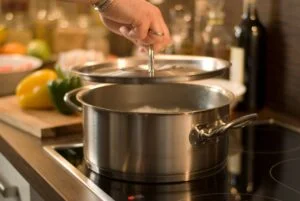
Lids with silicone seals allow less energy to escape from the pot compared to metal elements, as they fit more snugly.
There are several concrete measures you can take to sustainably reduce energy consumption while cooking. One effective method is covering pots with appropriate lids, which helps retain heat inside. This can lead to a significant reduction in energy needs because less heat is lost to the environment.
For cooking small amounts or reheating food, consider using alternative appliances such as microwaves or kettles, which often operate more efficiently than a stove.
Kettles, in particular, are generally quicker and use less energy for boiling water compared to using a stove, as they only heat the liquid rather than the surrounding elements. Additionally, always heat only as much water as needed to avoid wasting energy on unnecessary amounts.
Note: The environmental label “Blue Angel” marks particularly energy-efficient kettles. These certified models must achieve an efficiency of at least 85 percent. When selecting a new kettle, be sure to look for this certification.
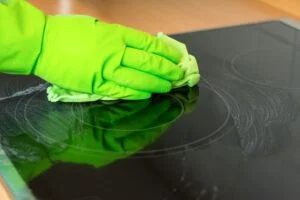
Regularly cleaning the cooking surfaces and stove is also crucial for maintaining your stove in good condition. Residues or crusts can hinder heat transfer, thereby increasing energy consumption since more energy is required for the same cooking performance.
By regular cleaning and maintenance, the efficiency of cooking surfaces can be preserved, reducing energy needs in daily use.
To facilitate a thorough and gentle cleaning of your cooking surface, consider the following tips:
- Wipe down the cooking surface after each use with a damp cloth and, if necessary, dish soap.
- Mix baking soda with water, apply it to heavily soiled areas, and let it sit for about 15 to 60 minutes before wiping it down thoroughly.
- For light stains, apply baking soda to the cooking surface and rub it with half a lemon, then wipe with a damp cloth.
Caution: Avoid using abrasive sponges on ceramic surfaces, as they can damage the cooking surface.