Understanding Firewood Drying Times: Key Insights and Tips
Understanding the importance of drying firewood, moisture content thresholds, and effective storage methods to ensure efficient burning and optimal heat output.
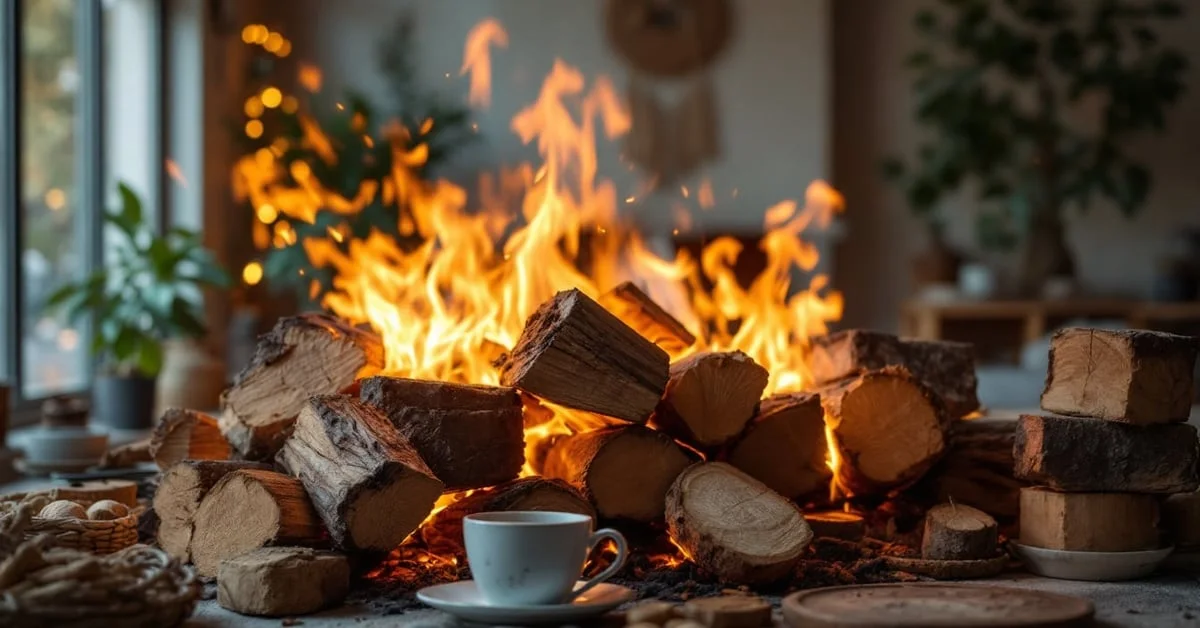
Burning wet firewood is a common mistake made by many stove and fireplace owners, often leading to diminished heat output, increased smoke, rapid buildup in the flue, and overall inefficiency. The drying time for firewood is not a fixed figure; it varies based on wood species, local climate, storage conditions, and numerous often-overlooked variables.
On average, one should expect 18 months to 2 years for properly split and sheltered wood in France. However, this duration can drop to 12 months in Provence, where the mistral wind accelerates drying, or extend beyond three years in a humid northern region without wind. Here’s how to navigate these factors and optimize your firewood drying.
Why Moisture Content of Wood Matters
The 20% Humidity Threshold
Freshly cut wood contains between 50% and 60% water. For an efficient fire, the moisture content must drop below 20%—this is the standard set by EN 17225 in France since 2022 for commercial firewood. Below this level, combustion is clean, heat output is maximized, and flue deposits are minimized.
When moisture exceeds 25%, a significant portion of the energy is wasted on evaporating water. For instance, a cubic meter of wet oak can produce up to 40% less heat than a dry one, impacting both energy bills and comfort levels.
How to Measure Moisture Content
A wood moisture meter (bûchmètre) typically costs between €15 and €40, which can be recouped within a season. Insert the two electrodes into the heart of a split log—never on the bark, which can yield inaccurate readings. Measure multiple logs from different parts of the stack and calculate the average.
✅ Key Takeaway: Firewood ready to burn will show less than 20% moisture on the moisture meter, exhibit a grayish surface color, have cracks at the ends, and produce a hollow sound when two logs are struck together.
⏱️ Drying Times by Wood Species
Hardwoods: A Lesson in Patience
Species such as oak and hornbeam are known for their high calorific yield but require time to dry. For instance, oak split into 50 cm logs needs at least 24 months under normal conditions. Beech dries slightly faster (around 18 months), but it remains a dense wood that does not tolerate rushing.
- Oak: 24 to 36 months
- Hornbeam: 24 to 30 months
- Beech: 18 to 24 months
- Ash: 12 to 18 months (relatively quick for a hardwood)
- Birch: 12 to 18 months
Softwoods: Quicker but Different
Softwoods like pine, spruce, or larch can dry in 12 months or less. However, their resin content can lead to more flue deposits. They are suitable for kindling or supplementary fires but not ideal for overnight heating.
18 months
drying time for split beech stored in a ventilated shelter
🌬️ The Critical Impact of Climate and Region
Wind: The Natural Accelerator
Wind is the most powerful variable affecting drying times. A log exposed to the mistral (in Rhône-Alpes, Provence) or tramontane (in Roussillon, Pyrénées-Orientales) can dry twice as fast as one stored in a calm corner of Limousin. These winds often exceed 60 km/h and continuously circulate air around the wood, carrying moisture away before it can condense.
In Aquitaine, the situation is more complex. The oceanic climate brings heavy autumn and winter rains. Without a solid shelter and an open face oriented towards the prevailing wind, wood can remain at 30% moisture for months.
Concrete Regional Differences
| Region | Dominant Climate | Estimated Duration (Oak) | |----------------------|------------------------|---------------------------| | Provence / Côte d’Azur | Mediterranean + Mistral | 12 to 18 months | | Alsace / Lorraine | Dry Continental | 18 to 24 months | | Aquitaine / Brittany | Humid Oceanic | 24 to 36 months | | Auvergne / Massif Central | Semi-Continental | 20 to 30 months |
Climate Change Shifts the Landscape
Increasingly hot summers speed up summer drying—wood stored during July and August benefits from significantly higher evaporation rates than two decades ago. However, climate change also brings intense rain episodes and wetter autumns, which can negate some of these gains. Adjusting cutting and delivery schedules is the best response: ordering firewood in spring allows for optimal summer drying.
💡 Tip: If you live in a humid climate, order your firewood in April-May to maximize summer drying. A full summer under an open shelter can often equal six months of drying during autumn conditions.
Storage: Rules That Make a Real Difference
Orientation and Structure of the Woodpile
A poorly designed woodpile can result in a loss of 6 to 12 months of drying time. Here are essential principles to follow:
- Orient the open side towards the prevailing wind: In France, the dominant wind usually comes from the southwest. The open side of the woodpile should face this direction to maximize air circulation.
- Elevate wood off the ground: Place logs on pallets or wooden beams. The ground continually emits moisture, causing the lower logs to rot.
- Cover only the top: A tarp or roof protects from precipitation without blocking lateral ventilation. Covering the sides turns the woodpile into a damp greenhouse.
Splitting Wood: The Sooner, The Better
A round log dries two to three times slower than a split log of the same diameter. The bark acts as a waterproof membrane. Splitting exposes the heartwood to air and increases the evaporation surface. Ideally, split the wood at the time of felling or upon delivery, but never six months before using it.
The size of the logs also matters: logs of 33 cm dry faster than 50 cm logs. If your insert allows, opt for shorter lengths to reduce drying time by 20% to 30%.
⚠️ Reminder: Never store wood directly against a house wall; moisture can migrate to the facade, promoting mold growth. Maintain at least 20 cm of space between the wood stack and any wall.
Frequently Asked Questions
Can wood that has only been drying for six months be burned?
After six months, hardwoods like oak or beech are still too moist, typically showing 35% to 45% humidity. You may burn softwoods or ash after six months in summer if storage conditions were optimal (wind, sun, shelter), but always check with a moisture meter before lighting up. If it’s below 20%, you’re good to go.
Which wood species dries the fastest?
Ash and birch are the fastest drying hardwoods, often ready in 12 to 18 months. Softwoods like pine or spruce can be usable in 10 to 12 months in a dry and windy climate. While they have lower energy content per kilogram than oak, they compensate with quicker availability.
Can wood dry too long?
Wood that is overly dry (below 12% moisture) burns quickly but produces less heat over time. Additionally, wood stored too long without protection may begin to rot or fragment, losing its calorific density. Practically, properly stored oak can remain usable for 4 to 5 years, but beyond that, degradation becomes a concern.
How to accelerate the drying of firewood?
Three practical strategies: split logs upon delivery (increasing evaporation surface), orient the woodpile towards the prevailing wind, and store in full sun during summer while covering only the top. In windy regions (mistral, tramontane), combining these three measures can reduce drying time by six months for medium-hard hardwoods.
Is dry wood more expensive than wet wood?
Yes, generally 10% to 25% more per cubic meter depending on suppliers and regions. However, the math is straightforward: a cubic meter of wet wood loses 30% to 40% of its useful calorific value. Purchasing certified dry wood is often more economical for equivalent yield, not to mention savings on flue cleaning and maintenance.