
When Your Oven Lights Up but Doesn't Heat: Causes and Checks
An oven that lights up but doesn't heat can be alarming, especially when preparing a dish. This guide outlines common causes and checks to identify the issue quickly.

An oven that lights up without generating heat can be concerning, particularly when preparing a meal. The light works, the display remains active, but no warmth is emitted.
Typically, the issue is related to the heating circuit rather than the entire appliance. A faulty heating element, a malfunctioning thermostat, or an activated safety feature may explain this lack of heat. Here’s how to pinpoint the cause.
Why Does My Oven Light Up but Not Heat?
An illuminated display merely indicates that the basic electrical supply is functioning. It does not guarantee that the heating system is operational. In most modern ovens, the display and the heating circuit operate on separate circuits.
Focus on the Heating Circuit, Not the Entire Appliance
The electronic board, display, and indicators can receive power without the heating element doing the same. Several factors may exclusively hinder heating:
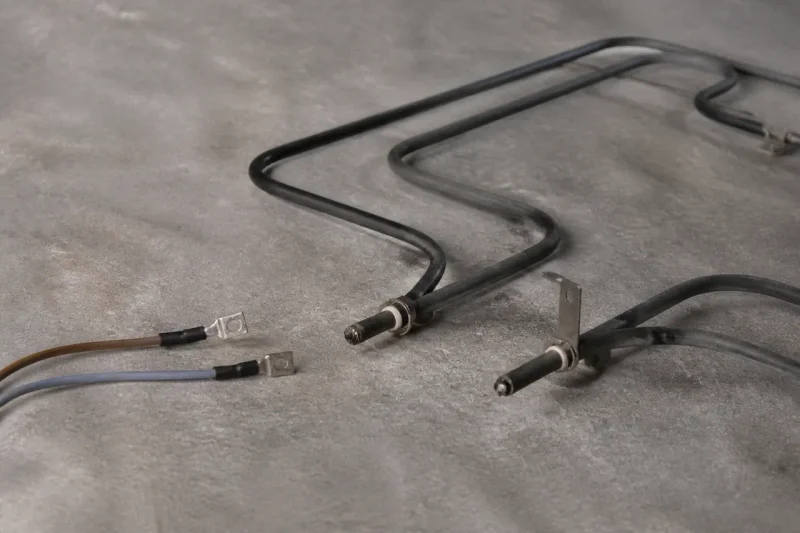
- Burned-out heating element: it does not glow even after several minutes.
- Faulty thermostat or probe: the temperature regulation fails to activate correctly.
- Malfunctioning electronic board: it no longer sends the heating command.
- Triggered thermal safety: it cuts off heating in case of abnormal overheating detected.
- Disconnected connection: a loose wire prevents power from reaching the heating element.
Is It One Mode Affected or All Cooking Modes?
This distinction can help quickly direct the diagnosis. If no cooking mode heats, the failure may involve the power supply, clock, door lock, a general safety feature, or the electronic board.
If only one mode fails to heat, such as the grill or convection heat, the associated heating element for that function should be the first area to check. Testing each mode separately can help identify the problematic circuit more easily.
What Are the Possible Causes of an Oven That No Longer Heats?
Five main categories of failures are commonly encountered. Here are the primary causes to check to quickly identify the one relevant to your situation.
Power Supply, Programming, and Door Safety
A standard electric oven usually operates at 230 V. Check the dedicated circuit breaker, whose rating depends on the installation and manufacturer recommendations.
After a power outage, an unadjusted clock may prevent heating on certain electronic ovens. Some models also feature a demonstration mode, sometimes indicated by "dEMo" or "d", which disables heating.
The door also plays a crucial role. An incorrect closure, a latch stuck after a self-cleaning cycle, or an activated safety device can prevent the oven from starting to heat.
Heating Elements, Thermostat, Probe, and Electronic Board
The bottom, top, grill, and circular heating elements operate independently. Thus, one can fail without affecting the functionality of the others.
The thermostat, temperature probe, safety switch, and power board constitute another group of components to verify. They control or interrupt heating based on the measured temperature and the appliance's safety features.
What to Check First When an Oven Won't Heat?
Before disassembling anything, five simple checks often help identify the cause without needing specific tools.
- Clock and programming: set the time, cancel delayed start, disable demo mode.
- Circuit breaker and outlet: ensure it hasn't tripped and that the power cable is properly connected.
- Door closure: make sure it shuts firmly, without a latch stuck after self-cleaning.
- Mode testing: try static, grill, bottom heat, and convection mode in turn, noting the results.
- Visual observation: the heating element should glow after five to ten minutes on a standard program.
This video demonstrates step-by-step how to identify a faulty heating element in an oven that won't heat.
How to Determine if the Heating Element or Thermostat is Faulty?
Visual testing is the quickest method. A functioning heating element typically turns red when heating. If it remains cold, ensure to cut off the oven's power before taking any measurements with a multimeter.
A working heating element usually has an electrical resistance of several tens of ohms, but the exact value depends on the model. An infinite reading typically indicates a break in the circuit, meaning the element needs replacement.
For a CTN probe, the value varies with temperature and depends on the model. As a reference, some probes show around 1,000 ohms at 20 °C. A significant discrepancy between the displayed temperature and the actual measured temperature can suggest an issue with the probe or regulation system rather than the heating element.
Observed Symptom | Likely Cause --- | --- No glow, infinite value on test | Burned-out element Heating present but incorrect temperature | Probe or thermostat Normal display, no heating | Thermal safety or electronic board
Why Isn’t My Oven Heating in Convection Mode?
The circular heating element, located around the fan, is a common cause when convection mode fails to heat. However, assigning a precise percentage to this failure is challenging, as frequency varies by model and appliance.
The fan may also be at fault. If it doesn't spin, the circulation of hot air won't occur properly, even if the heating element operates.
To guide the diagnosis, select convection mode at about 180 °C and observe the operation for a few minutes. If the fan spins but the oven remains cold, check the circular heating element. If it functions correctly, the thermostat, probe, or power board may be involved. If the grill or bottom heat works normally, the issue is likely confined to the convection heating circuit.