Exploring Arabescato Marble: Beauty and Cost Unveiled
Arabescato marble, sourced from Tuscany, is celebrated for its unique beauty and durability. Explore its characteristics, variants, and pricing to make informed choices for your renovation projects.
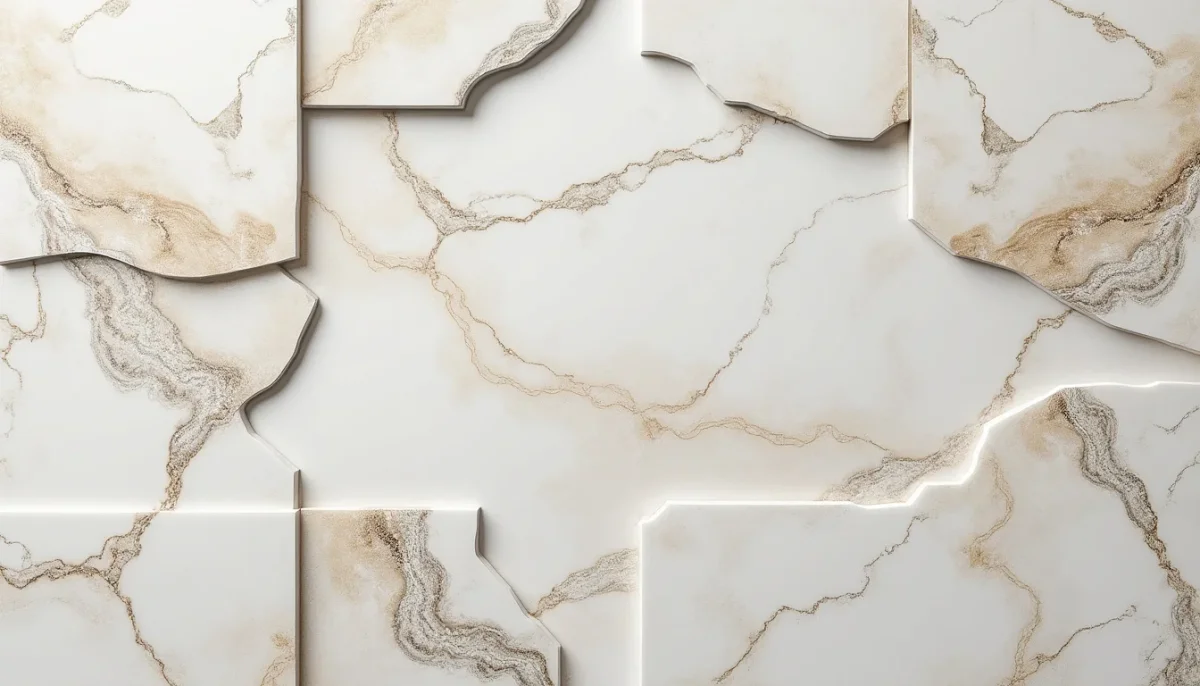
Arabescato marble has captivated admirers for centuries. Hailing from the renowned quarries of the Apuan Alps in Tuscany, this exceptional Italian stone features a luminous white background interspersed with intricately patterned veins. Esteemed by architects, interior designers, and discerning homeowners alike, it stands out as one of the most sought-after noble materials in the global market. Understanding its technical characteristics, variations, uses in renovation, and pricing can empower informed decisions, whether renovating a Haussmannian apartment in Paris or designing a contemporary villa on the French Riviera.
- In Brief:
- Arabescato marble is primarily extracted in Carrara and Versilia, Tuscany.
- Its white base is adorned with unique gray, black, and occasionally golden veins.
- Several variants exist: Arabescato Carrara, Arabescato Orobico, and Arabescato Corchia.
- Its technical features make it a robust material, with a density of 2724 kg/m³.
- Pricing varies based on quality, format, and finish.
- It suits both modern interiors and classic or luxurious spaces.
- Installation and maintenance require professional expertise to ensure longevity.
Origins and Identity of Arabescato Marble: An Exceptional Italian Stone
The name Arabescato is derived from the term "arabesque," referencing the complex, swirling patterns formed by its veins. These designs evoke the ornamental interlacing typical of Islamic art, a connection recognized by Italian quarry workers since the earliest days of extraction.
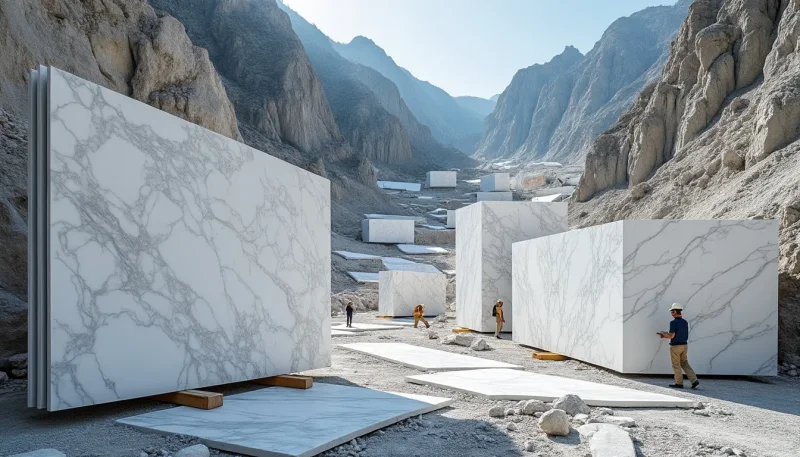
The primary extraction area is the Apuan Alps, a Tuscan mountain range renowned for housing some of the world's most prestigious quarries since antiquity. This is where Michelangelo personally selected his blocks for sculptures, and it is still in this region that Arabescato marble is extracted today, combining industrial precision with rigorous artisan selection.
Two notable geographic areas stand out: Carrara and Versilia. Each imparts slightly different nuances to the stone, although the signature crystalline white remains constant. The most recognized variant, Arabescato Carrara, is characterized by a pure white backdrop with fine gray to black veins, making it a preferred choice for grand architectural projects.
Another noteworthy variant is the Arabescato Orobico. This stone is among the most historic globally, having been mined for over a century for its unique chromatic qualities. Its natural patterns, distinctively unique, are reminiscent of floral guilloche decorations in Islamic arts. Each slab is essentially a unique work of art.
What sets Arabescato apart from classic Carrara is its relative rarity. Extracted in smaller quantities and subjected to stricter selection for its pronounced veining, it is logically priced higher. This exclusivity contributes to its reputation as a symbol of opulence and refinement in high-end residential and commercial projects.
Technical Characteristics of Arabescato Marble: What the Numbers Reveal
Beyond its visual allure, Arabescato marble boasts mechanical properties that justify its use in demanding contexts. Understanding these technical specifications is crucial for builders and individuals wishing to utilize this material sustainably and appropriately.
Its density is 2724 kg/m³, making it a compact and stable stone. This high volumetric weight indicates a dense crystalline structure, favorable for the overall mechanical strength of the slab.
The compressive strength reaches 1829 kg/cm², remaining at 1818 kg/cm² after freeze-thaw testing. This near-stability after exposure to freezing conditions is a valuable indicator for outdoor projects or in climates subject to significant thermal variations.
The flexural strength is 165 kg/cm², a satisfactory value for applications such as countertops, flooring, or wall cladding. The coefficient of linear thermal expansion is 0.0051 mm/ml °C, indicating that the stone expands very little with heat, a notable advantage in kitchens or bathrooms where temperature fluctuations are common.
The water absorption coefficient is only 0.06%, classifying Arabescato among the least porous natural stones, thereby reducing the risk of staining and simplifying daily maintenance, provided the surface is properly treated.
The impact resistance is tested for a minimum drop height of 35 cm. This often-overlooked data is essential for flooring in high-traffic areas, such as entry halls or commercial spaces.
Slabs are available in standard thicknesses of 2 and 3 cm for immediate delivery. Upon request, thicknesses of 4, 5, 6, 8, 10, and 12 cm can be supplied, allowing for a range of applications from simple decorative cladding to structural elements like massive countertops or column coverings. Possible finishes include glossy (standard), polished, brushed, flamed, bush-hammered, and resin-treated, depending on the volumes ordered.
Comparing Italian Marbles
Compare the technical characteristics of Arabescato Carrara against other prestigious Italian marbles.
Arabescato Carrara
Statuaire
Calacatta
N°1 Best value for the criterion
Indicative data may vary based on the extracted block. Sources: technical specifications from Italian quarries.
The Various Variants of Arabescato: Choosing the Right Stone for Every Project
Arabescato is not a monolithic stone stylistically. Several variants exist, each with its own chromatic nuances and distinct character. Knowing how to differentiate them allows for refined choices based on the desired aesthetic and available budget.
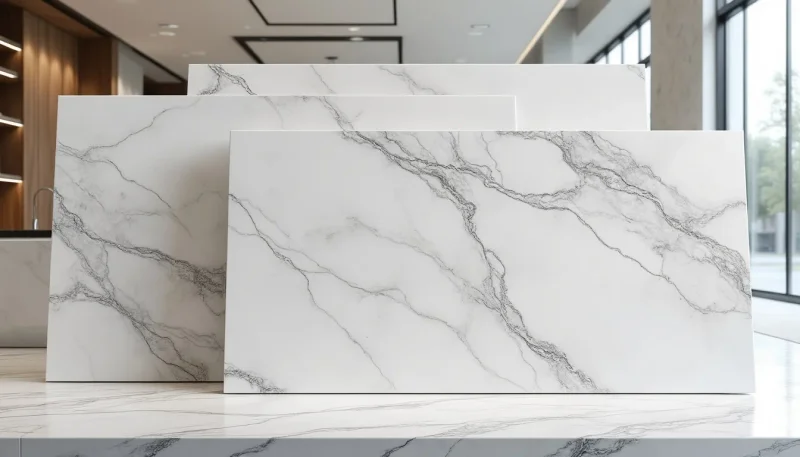
The Arabescato Carrara is the most recognized and widely available variant on the international market. Its crystalline white background, almost translucent in places, is interspersed with fine gray and black veins. This marble is commonly found in Parisian palaces, high-end kitchens, and luxurious bathrooms. Its pronounced veining gives it a strong personality without overwhelming the space.
The Arabescato Corchia features a slightly warmer background with more pronounced and thicker veins. It is often chosen for projects requiring a more impactful visual presence, such as wall cladding in hotel lobbies or reception areas of large spaces.
The Arabescato Orobico stands in stark contrast to the previous two. Its background is not white but ranges from burgundy red to brown and green, depending on the blocks. The white and cream veins running through it create a dramatic contrast. This stone is typically reserved for exceptional projects, serving as architectural elements with significant impact, such as columns, monumental staircases, or fireplace cladding in historic homes.
There are also variants with warm white backgrounds featuring dark and golden veins, sourced from Tuscany, particularly favored by architects and homeowners seeking a material that is both classic and inviting. These slabs are available in ready-to-install panels and raw blocks from suppliers.
Selecting the right variant depends on several factors: the brightness of the space, the color palette of the project, the desired finish, and, of course, the allocated budget. A narrow, poorly lit hallway would benefit from a light Arabescato Carrara, while a spacious dining room could accommodate the boldness of a contrasting Orobico.
Pricing of Arabescato Marble: What You Need to Know Before Buying
The cost of Arabescato marble is one of the primary concerns for project managers and construction professionals. This is a valid inquiry, as price disparities can be significant depending on the chosen variant, slab format, finish, and ordered volumes.
As a guideline, polished standard quality Arabescato Carrara typically falls within a range of 80 to 200 euros per square meter, depending on the quality of the veining, thickness, and supplier. Larger formats, which help minimize joints and create a more luxurious visual effect, are naturally more expensive.
Due to its rarity and limited extraction, Arabescato Orobico can easily exceed 300 euros per square meter for high-quality polished slabs. Raw blocks intended for marble workers and processors are priced by the ton, with costs fluctuating based on market rates and quarry availability.
It’s important to remember that the price of the slab is just one part of the total cost. The installation by a qualified marble worker, waterproof treatment, any custom cutting, and logistics represent a significant portion of the overall investment. In a 10 m² bathroom project, it is not uncommon for the installation cost to exceed that of the material itself.
Wholesale suppliers typically offer bulk pricing discounts, and real-time stock availability allows for checking stock before placing an order. For urgent projects, it is advisable to confirm delivery timelines directly with the supplier, especially during summer when delays may occur based on destination.
Here are the main factors influencing the price of Arabescato marble:
- The chosen variant: Carrara, Corchia, Orobico, each has its own pricing structure.
- The quality of the veining: slabs with the most pronounced and aesthetically pleasing veining are selected and sold at higher prices.
- The thickness of the slab: ranging from 2 cm for wall cladding to 12 cm for massive elements.
- The surface finish: glossy, brushed, flamed, bush-hammered, each treatment incurs a different transformation cost.
- The volume ordered: wholesale prices are significantly lower than retail purchases.
- Delivery distance: Italy remains the primary source, and transportation costs can impact the final budget.
Applications and Installation Tips for Arabescato Marble in Renovation
Arabescato marble adapts to a wide array of applications, from the most classic to the most contemporary. Its versatility is one of its major strengths: it enhances modern bathrooms as well as traditional kitchens, Haussmannian entry halls, and architectural offices. The stone's ability to blend seamlessly into various styles makes it a favored choice for homeowners and designers alike, ensuring that it remains a timeless option in home and household management.