
Transforming Your Terrace: The Essential Guide to Professional Winter Gardens in Bielefeld
A professional winter garden in Bielefeld enhances your terrace for year-round use, combining careful planning, structural integrity, and effective shading.
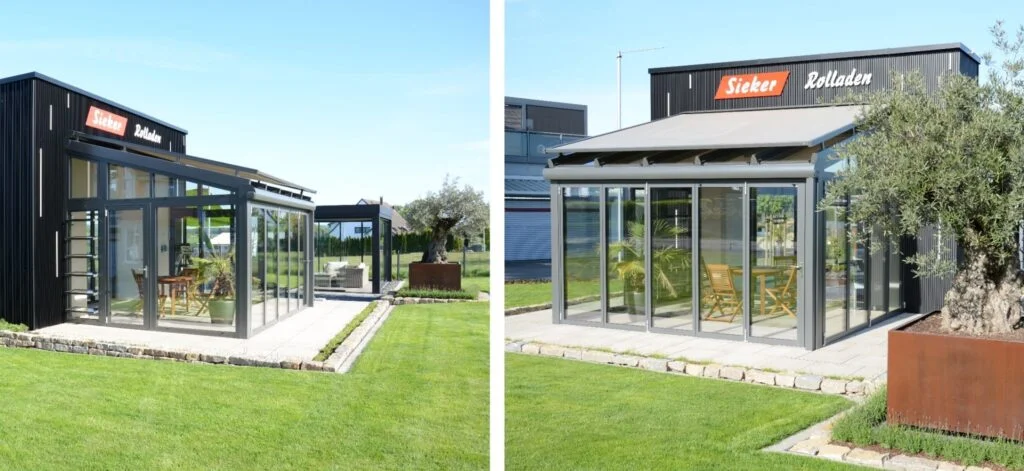
A professionally designed winter garden in Bielefeld can turn your terrace into a versatile space that remains usable even during colder months or rainy days in summer. However, achieving this requires careful planning, structural integrity, and effective shading from the outset. In a region like East Westphalia, where weather can be unpredictable, selecting the right professional partner is crucial. Those who choose to build a winter garden with a specialist benefit from customized craftsmanship that integrates construction and shading as a cohesive system.
We spoke with Heiko Sieker, managing director of Sieker Rolladen GmbH, to delve into the key aspects of planning, constructing, and shading a winter garden.
Interview: “A Winter Garden is More Than Just a Glass Extension”
Housebuilding Blog & Construction Diary: Mr. Sieker, why do you believe a winter garden is more than just an attractive glass extension?
Heiko Sieker: A well-constructed winter garden harmonizes living space and garden, extending the usability of the terrace and providing additional living area. The client’s requirements are vital: Is the space intended as a cold winter garden for plants to survive frost, or as a heated winter garden for year-round use? Each option has specific demands regarding glass, profiles, ventilation, and shading, which distinguishes professional construction from standard solutions.
Housebuilding Blog & Construction Diary: What materials have proven effective for construction?
Heiko Sieker: Powder-coated aluminum has become the standard for load-bearing profiles in our industry. It is weather-resistant, offers a slim appearance, and allows for expansive glass surfaces. When paired with modern thermal insulation glass, it creates a space that retains warmth in winter and does not become overly hot in summer. An experienced contractor will plan structural integrity, drainage, connections to existing buildings, and thermal separation as an integrated process rather than as isolated tasks.
Housebuilding Blog & Construction Diary: Shading is often an underestimated factor. What common mistakes do you observe in practice?
Heiko Sieker: Many homeowners are taken by surprise in the second summer: the sun heats the winter garden to the point where it becomes nearly unusable. Therefore, shading should not be an afterthought but a fundamental part of the planning process.
Housebuilding Blog & Construction Diary: What specific shading options do you recommend?
Heiko Sieker: A combination of several components is usually advisable:
- External awnings on the glass roof to intercept heat before it enters the space
- Vertical screens on side elements for glare-free seating
- Interior pleated shades for evening privacy
- Automatic controls using wind, sun, and temperature sensors
A specialized company with extensive experience in roller shutters, awnings, and shading solutions offers a significant advantage. The shading is not improvised but is technically integrated into the winter garden construction.
Housebuilding Blog & Construction Diary: How does the planning process work at your company? What steps do you take for a winter garden project?
Heiko Sieker: Typically, we follow a four-stage process:
- On-site consultation: We assess measurements, orientation, existing structures, and usage preferences together.
- Design: We calculate the form, roof pitch, glass composition, and shading concept in detail.
- Approval: In North Rhine-Westphalia, heated winter gardens always require building permits. Cold winter gardens up to 30 m² may be exempt under certain conditions (building class 1-3, minimum 3 m boundary distance). An experienced company knows the regional requirements and assists in clarifying matters with the relevant authority.
- Manufacturing and installation: Custom-made profiles and glass are installed on-site by trained technicians.
Housebuilding Blog & Construction Diary: What should homeowners consider when selecting a provider?
Heiko Sieker: Ask for references from the region, inquire about experience with similar constructions, and determine who will handle the installation—company employees or subcontractors. Request material samples, ask about the U-values of the glazing, and inquire about warranties on construction and coating. A reputable provider will not push the most expensive option but will recommend the right system for your needs and provide a clear understanding of what can be achieved within your budget.
Housebuilding Blog & Construction Diary: Can you provide a rough estimate of costs?
Heiko Sieker: Flat-rate pricing is not reliable. Costs depend on size, glass composition, structural integrity of the existing building, shading, and heating. A cold winter garden as a terrace cover with side elements generally costs significantly less than a fully heated winter garden with high-quality glazing and automated controls. It is crucial to obtain a detailed quote that clearly outlines items such as foundations, connections, drainage, and electrical work.
Housebuilding Blog & Construction Diary:
In conclusion, careful planning is essential! A winter garden is a long-term investment. Collaborating from the start with a locally rooted specialist who provides both construction and shading solutions will save you from costly retrofits and ensure a space that functions year-round. In and around Bielefeld, it's worth searching for companies that combine custom work, in-house installation, and extensive experience in shading solutions—qualities that Sieker Rolladen, as a specialist in roller shutters, awnings, shading, and winter gardens, brings to the planning of a winter garden. This combination ultimately determines whether your winter garden becomes a cherished space or just an expensive glass box. Thank you, Mr. Sieker, for this informative conversation!