The Radiance of White Bougainvillea: A Guide to Enhancing Your Terrace or Garden
Looking for a white bougainvillea to brighten your terrace without turning maintenance into a chore? Learn how to identify, plant, and care for this stunning plant from spring to autumn.
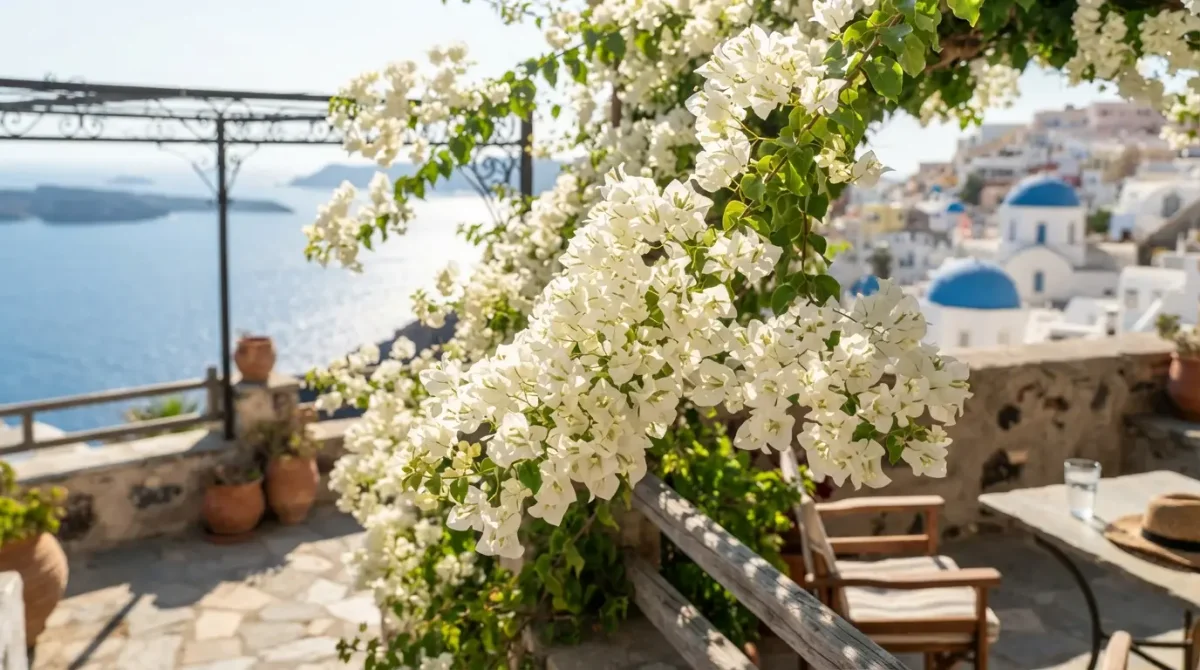
Are you looking to brighten your terrace with a stunning white bougainvillea without turning maintenance into a chore? This guide will help you identify the plant, choose the right location for planting, and keep it flourishing from spring until the first chills of winter.
Key Takeaways
- The white bougainvillea is a South American vine, commonly known as Bougainvillea spectabilis alba.
- Its white "flowers" are actually bracts, modified leaves that encase small, inconspicuous flowers.
- It thrives in full sunlight, requires light soil, and most importantly, needs excellent drainage.
- The blooming period typically lasts from May to November in mild climates.
- In winter, it's advisable to protect it from frost or bring it indoors to a bright location.
For practical planting and maintenance tips, I recommend watching this informative video.
What is a White Bougainvillea?
A Climbing Vine from South America
The white bougainvillea is a climbing vine native to South America. It is commonly found in warmer gardens due to its preference for heat, light, and support structures to climb on. Classified as Bougainvillea spectabilis alba, it belongs to the Nyctaginaceae family, which includes the four o'clock flower.
This explains its affinity for sunny environments.
Modified Leaves, Not True Flowers
What many perceive as flowers are actually bracts, which are modified leaves that change color to attract pollinators. The true flowers are small, tubular, and often cream or yellow-green, making them almost unnoticeable.
As a result, the plant gives off a luminous appearance, mainly through its ivory bracts, which is precisely what makes the white bougainvillea so elegant.
Prolonged Blooming Season
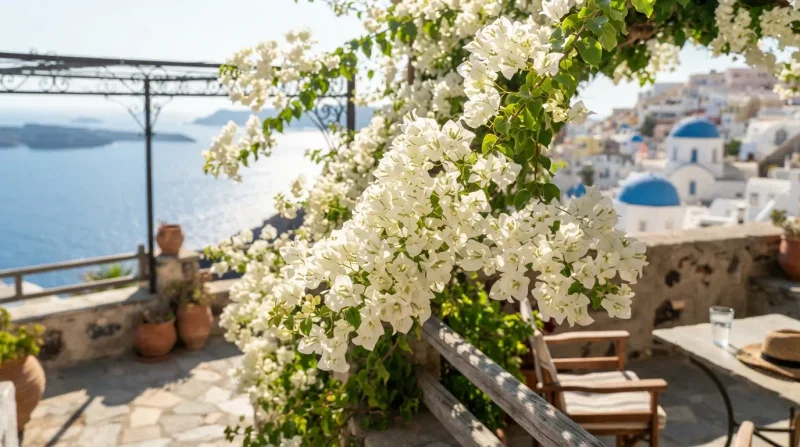
The blooming season is lengthy because the plant produces bracts over a significant part of the warm season, particularly if it is exposed to heat and well-drained soil. In mild climates, expect a blooming period from May to November, peaking sharply between June and September.
The more sunlight it receives, the more compact and generous its appearance.
Why You Should Consider It for Your Terrace or Garden
A Brightening Effect
The primary advantage of the white bougainvillea is its ability to reflect light. The white color bounces sunlight, creating a striking contrast against stone walls, wooden terraces, or terracotta pots. Even a small area can appear brighter and fresher visually.
This is a clever way to illuminate a dim corner without resorting to artificial decorations.
A Natural Privacy Screen
Another benefit is its capacity to climb and form a dense mass that shields from prying eyes. On a wall or pergola, it can reach heights of about 5 meters and spread equally wide if given enough space. The result serves as a natural privacy screen, and the plant can even filter some wind when properly established.
A Blooming Display from May to November
The blooming from May to November transforms your terrace into a vibrant display for several months. It stands out as one of the few climbing plants that can provide such a spectacular effect for an extended period, provided it is not planted in the shade.
If you're seeking an attractive outdoor space from spring to autumn, this plant is a strong contender.
A Mediterranean Touch
Finally, it instantly brings a Mediterranean ambiance. It evokes images of warm facades, vacations, and southern gardens. When paired with grasses, lavender, or an olive tree, it creates a cohesive scene.
For those interested in sculptural forms, this short video showcases a white bougainvillea bonsai with a striking silhouette.
Optimal Placement for Flourishing Blooms
Full Sunlight
For generous blooming, aim for full sunlight, ideally positioned to the south, southeast, or southwest. The plant should receive at least 6 hours of direct sunlight each day. This is crucial as warmth encourages bract formation and helps limit excess moisture around the foliage.
In shaded areas, the plant may survive, but it will bloom significantly less.
Support Structures
The type of support is as important as the exposure. A trellis is a grid where stems can be trained, a pergola provides horizontal shade, and training involves attaching and directing branches to grow where desired.
The white bougainvillea loves these supports, as they allow it to spread out without collapsing.
Remember: the earlier you guide it, the quicker it will cover the surface and the more uniform the blooming will be.
Protection from Wind and Frost
It's also essential to shield it from cold winds and frost. A plant is considered non-hardy if it struggles with low temperatures; in this case, a frost episode can damage leaves, young stems, or even the base.
In borderline regions, some older plants may briefly tolerate a few degrees below zero, but it’s best not to rely on this if you want consistent blooms.
Planting a White Bougainvillea
In the Ground
Planting is best done in spring when the risk of frost has passed. Dig a hole about twice as wide as the root ball, which is the block of roots and soil surrounding the plant.
At the bottom, add a drainage layer of gravel, clay balls, or pumice: these porous materials allow water to circulate rather than stagnate.
- Place the root ball without burying it too deeply.
- Fill in with light soil, then gently pack it down with your hands.
- Water thoroughly to eliminate air pockets, and then install a stake or guide the initial stems onto the support.
Note: at the start, generous watering aids rooting, but afterward, return to measured watering.
In a Pot
In colder regions, pot cultivation is often the best option for the white bougainvillea. Choose a pot with a diameter of at least 40 to 50 cm to avoid it becoming root-bound too quickly.
At the bottom, place a layer of clay balls to improve drainage, then mix garden soil, potting mix, and a bit of coarse sand. The goal is to create a light substrate that dries quickly between waterings.
A Rich, Light, and Draining Substrate
The term substrate refers to the mix in which the roots grow, especially in pots. For this plant, it should be both nourishing and highly draining. A special potting mix for Mediterranean plants works well, as it retains minimal water while remaining aerated.
If your mix becomes dense, heavy, or smells musty after watering, it’s time to lighten it before the next season.
Seasonal Care for the Plant
Watering with Care
Watering requires finesse. The white bougainvillea clearly prefers a slight lack of water to excessive moisture. In spring and autumn, expect about 1 to 2 waterings per week depending on the heat; in summer, increase slightly in pots if the soil dries too quickly; in winter, space out significantly.
I advise against permanent automatic watering: continuous moisture can yellow the leaves and damage the roots.
To simplify: in spring and autumn, check the soil every 3 or 4 days; in summer, check almost daily in pots; in winter, let the plant rest.
Reminder: during hot spells, check the soil with your finger at a depth of 3 to 4 cm; if it’s dry at this level, it’s time to water.
Light Feeding
When it comes to fertilization, be gentle. In the ground, it often doesn’t need fertilizer if the soil is already adequate. In pots, I prefer a flowering plant fertilizer or slow-release granules, such as Osmocote, as they distribute nutrients over several weeks without sudden spikes.
In practice, feed from April to September, then stop entirely in winter.
Pruning After Blooming
Pruning should be light, as flowers form on the wood of the previous year, meaning last year’s stems. If you cut too heavily at the wrong time, you risk removing future bracts.
I recommend intervening primarily after blooming or at the end of winter solely to shape, remove dead wood, and limit overcrowding.
Protecting the White Bougainvillea in Winter
Bring It Indoors Before Frost
As soon as nights threaten to drop below 0°C, bring the pot indoors. In colder areas, I prefer to do this before the first frosts, without waiting for the plant to show damage. If the white bougainvillea is in the ground and your climate is mild, a thick layer of mulch at the base can help, but it does not replace proper frost protection.
Place It in a Bright Conservatory
The best solution remains a bright conservatory or a cool winter garden. A conservatory is a closed, well-lit space, often unheated, that allows light in without the heat of a living room.
Ideally, keep the plant around 8 to 12°C, with as much light as possible. Too warm, and it will exhaust itself; too dark, and it will lose its leaves.
Limit Watering
In winter, water sparingly. The substrate should dry almost completely between waterings without becoming dusty for weeks. Generally, a check every 15 to 20 days suffices, sometimes less if the room remains cool.
The goal is not to promote growth but to keep it dormant without drying out the roots.
Restart Growth in Spring
As the risk of frost diminishes, gradually reintroduce it outdoors: start with a few hours in the bright shade, then morning sunlight, and finally to its permanent spot. Resume more generous watering when growth begins again.
This is also the right time to check the roots, repot if necessary, and clean tired stems. The white bougainvillea thrives better when the transition back outside is smooth.
Common Mistakes to Avoid
Overwatering
The first mistake is overwatering. Why am I so firm on this? Because the roots of the white bougainvillea need air. In waterlogged soil, they suffocate and then rot.
Signs are clear: yellowing leaves, leaf drop, and weak growth. If you’re unsure whether to water or wait, I recommend waiting a little longer.
Poorly Drained Soil
The second pitfall is poorly drained soil. Drainage refers to the soil's ability to allow water to escape. If water stagnates at the bottom of the pot or in heavy soil, the plant's roots remain in constant moisture.
The result: it struggles, blooms less, and often ends up declining. This is why a perforated pot and an airy mix are non-negotiable.
Insufficient Sunlight
Without ample sunlight, you’ll primarily get foliage and far fewer bracts. The white bougainvillea requires light energy to initiate blooming; in the shade, it stretches, becomes sparse, and loses its spectacular appearance.
This is also why northern placements or overly covered balconies often yield disappointing results.
If you notice a slight color change, don’t panic immediately: depending on the light, age of the bracts, or water stress, white can shift to cream or pale pink.
This video illustrates just how stunning the white bougainvillea can be when properly cared for.